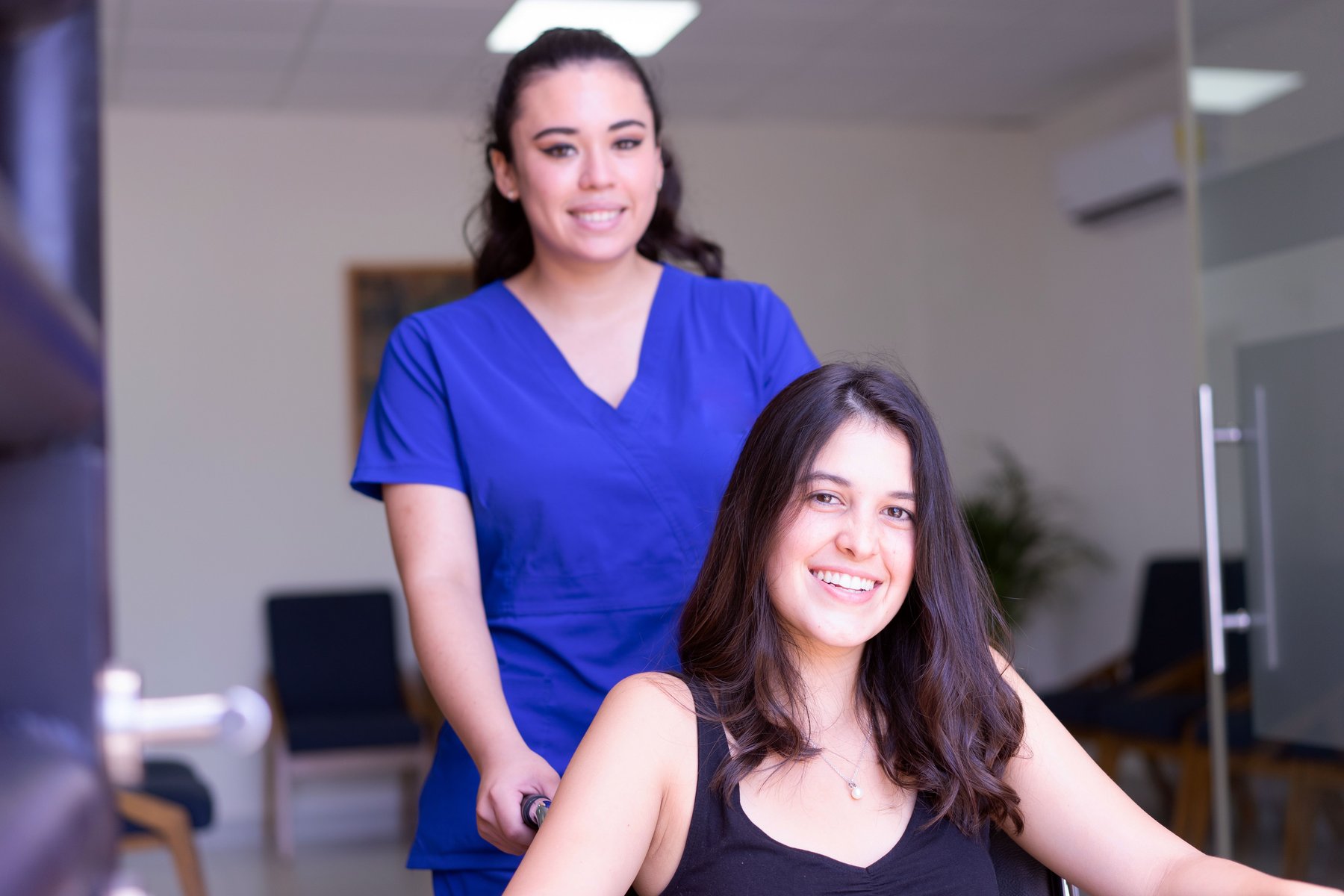
Attending medical appointments shouldn’t feel like an insurmountable challenge, yet for many Australians living with disability, the journey to healthcare access involves far more than simply booking an appointment. The physical barriers, communication complexities, and coordination requirements can transform a routine medical visit into an overwhelming task that leaves individuals feeling isolated and underserved.
For NDIS participants across Queensland—from the tropical reaches of Cairns to the bustling streets of Brisbane—understanding what support is available can be the difference between maintaining vital health connections and falling through the gaps. The National Disability Insurance Scheme provides comprehensive assistance for accessing medical appointments, yet navigating this support landscape requires clarity, knowledge, and often, expert guidance.
What Types of NDIS Transport Support Are Available for Medical Appointments?
Transport funding through the NDIS recognises a fundamental truth: accessing healthcare requires getting there first. For participants who cannot safely or independently use public transport due to their disability, the scheme provides structured funding levels designed to match individual circumstances and activity patterns.
Understanding the Transport Funding Framework
The NDIS operates a tiered transport funding system that acknowledges different levels of community participation and medical appointment needs. These funding levels provide:
| Funding Level | Annual Amount | Eligibility Criteria |
|---|---|---|
| Level 1 | Up to $1,606 | Participants not working/studying but seeking community access including medical appointments |
| Level 2 | Up to $2,472 | Participants working or studying part-time (up to 15 hours weekly) or attending day programmes |
| Level 3 | Up to $3,456 | Participants working, seeking work, or studying 15+ hours weekly who cannot use public transport |
These amounts are regularly reviewed and adjusted according to NDIS pricing arrangements, ensuring funding remains relevant to actual transport costs across Australia.
Activity-Based Transport: A Flexible Alternative
Beyond general transport funding, participants can access activity-based transport when support workers accompany them to medical appointments. This funding model allows claims for:
- Support worker travel time at agreed hourly rates
- Road tolls and parking fees
- Vehicle running costs: up to $0.85 per kilometre for standard vehicles
- Up to $2.40 per kilometre for wheelchair-accessible vehicles
“Activity-based transport recognises that for many participants, getting to a medical appointment isn’t just about the journey—it’s about having the right support throughout the entire experience,” explains disability support frameworks. This approach proves particularly valuable in regional Queensland areas where medical specialists may be located considerable distances from home.
Queensland-Specific Considerations
Participants in Cairns and Brisbane should note that Queensland’s Taxi Subsidy Scheme (TSS) may operate alongside NDIS funding. The TSS provides a 50% subsidy up to $25 per fare, plus a $10 service call fee for wheelchair-accessible taxis. Whilst you cannot claim both subsidies for the same trip, strategic use of each scheme can maximise your transport capacity for different medical appointment types.
How Does NDIS Fund Personal Care Assistance for Healthcare Visits?
NDIS support for medical appointments extends far beyond simply arranging transport. For many participants, the assistance needed encompasses personal care, communication support, and practical help that transforms healthcare access from theoretical to achievable.
Core Supports for Medical Appointment Attendance
Personal care assistance funded through Core Supports can include:
- Support worker accompaniment throughout medical appointments
- Assistance with personal hygiene and presentation before appointments
- Mobility support and safe transfers
- Medication reminders and management coordination
- Communication facilitation during consultations with healthcare providers
This comprehensive support acknowledges that disability impacts every aspect of the healthcare experience. A participant with communication challenges requires different support than someone with mobility restrictions, and the NDIS framework allows for this individualisation.
High-Intensity Daily Personal Activities
For participants with complex medical needs, high-intensity support provides specialist assistance including:
- Complex wound management and pressure care
- Enteral feeding and tube management
- Catheter care and ongoing management
- Respiratory support and tracheostomy care
- Complex bowel care programmes
- Subcutaneous injections for participants unable to self-administer
These services require registered NDIS providers meeting strict quality and safety standards, ensuring participants receive appropriate clinical oversight alongside their disability support. In both Cairns and Brisbane, registered providers deliver these specialised services under careful supervision and with appropriate qualifications.
Telehealth: Expanding Medical Access
Recent research involving 2,391 NDIS participants reveals that 63% now receive allied health services via telehealth, with 11-13% reporting virtual consultations superior to in-person appointments. This approach:
- Reduces transport costs from NDIS plans
- Provides equal quality outcomes for many service types
- Costs the same as in-person sessions (no additional telehealth surcharge)
- Suits occupational therapy, speech pathology, physiotherapy, psychology, dietetics, and exercise physiology
For Queensland participants in regional areas, telehealth can eliminate lengthy travel whilst maintaining essential therapeutic relationships.
What’s the Difference Between NDIS Advocacy and Support Coordination?
Understanding the distinction between advocacy and support coordination proves crucial for participants navigating the medical appointment support landscape. These two services, whilst complementary, serve fundamentally different purposes and operate under different frameworks.
Independent Advocacy Through NDAP
The National Disability Advocacy Program (NDAP), funded independently by the Department of Social Services with approximately $17.7 million annual investment, provides:
- Rights-based advocacy independent of NDIS providers
- Support to exercise legal and human rights
- Assistance identifying and addressing abuse, neglect, or exploitation
- Help navigating complaints processes
- Connection to community and legal services
Critically, advocates maintain independence from the NDIS system itself. They represent your interests, reflect your expressed wishes, and operate free from conflicts of interest that might arise from provider relationships or funding dependencies.
Support Coordination Within Your NDIS Plan
Support Coordination, funded directly through NDIS plans as a capacity-building support, helps participants:
- Understand their NDIS plans and available funding
- Connect with appropriate service providers for medical appointment support
- Coordinate services to achieve stated goals
- Monitor plan budgets and support effectiveness
- Build capacity to eventually manage plans independently
The NDIS provides two main coordination levels for medical appointment support:
- Level 2 Support Coordination: Standard coordination connecting you with transport and personal care providers
- Level 3 Specialist Support Coordination: For complex needs, involving specialists such as occupational therapists or social workers
“Whilst support coordinators help implement your plan, they cannot serve as independent advocates due to potential conflicts of interest,” disability frameworks clearly establish. Participants benefit most when they access both services—support coordination for practical plan implementation and independent advocacy when rights need protection or complex system navigation arises.
What Disability-Related Health Supports Can NDIS Provide?
The NDIS funds disability-related health supports that complement—never replace—mainstream healthcare services. Understanding this boundary proves essential for maximising your medical appointment support whilst respecting the scheme’s parameters.
Funded Disability-Related Health Supports
The NDIS provides ongoing support for health conditions directly impacted by your disability, including:
- Continence management: Ongoing support for toileting programmes and managing continence aids
- Respiratory care: Assistance for participants requiring respiratory equipment or techniques
- Nutrition support: Help with dietary management related to disability impacts
- Wound and pressure care: Regular wound management by trained support workers
- Medication management: Assistance with medication administration where clinical need exists
- Nursing services: For complex health needs assessed as reasonable and necessary
These supports require thorough assessment demonstrating they’re directly related to your disability. They’re typically funded under Core Supports and must meet the “reasonable and necessary” criteria that underpins all NDIS funding decisions.
The “Reasonable and Necessary” Framework
For NDIS to fund support related to medical appointments, it must:
- Relate directly to your disability (not general health conditions)
- Support achievement of goals in your NDIS plan
- Represent value for money compared to alternative approaches
- Be likely to be effective based on evidence
- Not be reasonably provided by informal supports or mainstream services
- Not constitute general healthcare costs covered by Medicare or state health systems
This framework ensures NDIS funding supplements rather than duplicates Australia’s comprehensive healthcare system. Your medical appointments themselves—consultations with doctors, specialist treatments, hospital care—remain funded through Medicare and state health services. The NDIS funds the disability-specific support enabling you to access these healthcare services effectively.
How Do You Access NDIS Medical Appointment Support in Queensland?
Successfully accessing medical appointment support through your NDIS plan requires clear communication, appropriate evidence, and strategic planning meeting preparation. Whether you’re in Cairns or Brisbane, the process follows consistent frameworks whilst allowing for regional considerations.
Preparing for Your Planning Meeting
During NDIS planning conversations, articulate your medical appointment needs clearly:
- Explain specifically why you cannot use public transport due to your disability
- Provide evidence from healthcare providers about appointment frequency and necessity
- Link transport needs directly to NDIS goals (health maintenance, employment preparation, community participation)
- Discuss any personal care or assistance needs before, during, and after appointments
- Outline disability-related health supports required for medical management
- Highlight any regional challenges specific to your Cairns or Brisbane location
Gathering Supporting Evidence
Documentation strengthening your medical appointment support request includes:
- Medical reports detailing ongoing appointment requirements
- Functional capacity assessments from occupational therapists
- Letters from treating practitioners about frequency and clinical necessity
- Communication needs documentation for appointments with healthcare providers
- Evidence demonstrating inability to use public transport safely or independently
“The quality of evidence directly correlates with funding outcomes,” disability planning experts emphasise. Detailed, specific documentation from qualified professionals carries significantly more weight than general statements.
Regional Queensland Considerations
Participants in Cairns face different transport challenges than those in Brisbane’s metropolitan area. Regional considerations may include:
- Greater distances requiring more substantial transport funding
- Fewer specialised providers necessitating travel to major centres
- Limited public transport infrastructure in outer areas
- Potential eligibility for exceptional circumstances funding when treatment requires interstate travel
The NDIS recognises these regional variations through flexible application of funding frameworks. Participants requiring regular travel from Cairns to Brisbane for specialist treatment may receive higher transport allocations reflecting genuine need.
What Medical Appointment Costs Does NDIS Not Cover?
Understanding NDIS funding boundaries proves as important as knowing what support is available. The scheme maintains clear parameters distinguishing disability support from healthcare services, ensuring each system fulfils its intended purpose without duplication.
Healthcare Services Remaining Outside NDIS
The NDIS explicitly does not fund:
- Doctor’s appointments for general healthcare (covered by Medicare)
- Hospital care, surgery, or medical treatments (state health system responsibility)
- Medications (covered by Pharmaceutical Benefits Scheme)
- General medical and dental services
- Specialist consultations not related to disability management
- Family member or informal carer transport costs
- Vehicle fuel for your personal vehicle
- Vehicle insurance, registration, or general maintenance
- Tips or additional charges during medical transport
These exclusions reflect the scheme’s foundational principle: the NDIS funds disability-related supports enabling you to access mainstream services, not the mainstream services themselves. Australia’s healthcare system, through Medicare and state health services, remains responsible for medical care delivery.
The Complementary System Design
This division creates a complementary rather than competitive framework. Medicare funds your specialist consultation; NDIS funds the support worker who travels with you, assists with communication, and helps you understand and implement the specialist’s recommendations. The state health system provides hospital treatment; NDIS provides the disability-specific equipment and personal care enabling you to manage recovery at home.
“Understanding these boundaries prevents planning disappointments and ensures your NDIS budget focuses on genuinely disability-related supports,” disability advocates consistently advise. When participants clearly distinguish what NDIS can and cannot fund, they make strategic decisions maximising available resources.
Making Medical Appointments Accessible: The Path Forward
NDIS support for medical appointments represents more than funding allocation—it embodies a commitment to health equity for Australians living with disability. Through comprehensive transport funding, personal care assistance, advocacy services, and disability-related health supports, the scheme dismantles barriers that have historically prevented equal healthcare access.
For participants across Queensland, particularly in Cairns and Brisbane where services continue expanding, understanding available support transforms medical appointment attendance from overwhelming challenge to manageable reality. Whether you require activity-based transport for regular physiotherapy, high-intensity personal care for complex medical management, or support coordination connecting you with appropriate providers, the NDIS framework accommodates diverse needs through flexible, individualised planning.
The distinction between disability support and healthcare service remains fundamental to effective NDIS participation. Mainstream health services provide medical care; NDIS provides the disability-specific support enabling you to access that care successfully. This complementary approach strengthens rather than fragments Australia’s support landscape.
As the NDIS continues evolving—with recent reforms focusing on sustainability and evidence-based purchasing—participants benefit from staying informed about funding frameworks, eligibility criteria, and quality standards. The scheme’s success ultimately depends on informed participants making strategic decisions about their support needs and providers delivering responsive, quality services.
Can NDIS pay for taxi fares to medical appointments in Cairns and Brisbane?
Yes, NDIS can fund taxi transport to medical appointments if you cannot use public transport due to your disability and this support is included in your plan. You can access general transport funding (Level 1: up to $1,606 annually, Level 2: up to $2,472, or Level 3: up to $3,456) or claim activity-based transport when a support worker accompanies you. Queensland participants may also access the state Taxi Subsidy Scheme separately, though you cannot claim both subsidies for the same trip.
What’s the difference between a support coordinator and an advocate for medical appointment assistance?
Support coordinators are NDIS-funded professionals who help you understand your plan, connect with providers, and coordinate services for medical appointments. They work within the NDIS system. Advocates, funded through the independent National Disability Advocacy Program, represent your rights and interests free from conflicts of interest. They help when you face barriers, need complaint support, or require independent representation.
Does NDIS cover support workers to attend doctor’s appointments with me?
Yes, NDIS funds support workers to accompany you to medical appointments through Core Supports under ‘Assistance with Daily Life’ or ‘Assistance with Social and Community Participation.’ The support worker’s time can be claimed at agreed hourly rates, and you can also claim associated costs like parking fees and vehicle running costs (up to $0.85/km for standard vehicles). This support must be reasonable and necessary, relating to your disability and helping you achieve your NDIS goals.
Can I claim NDIS funding for medical appointments via telehealth?
Whilst NDIS doesn’t fund the actual medical consultations (which are covered by Medicare), it can fund support workers to assist you during telehealth appointments if you need help with communication, technology, or understanding medical information. This approach can reduce your transport costs while maintaining quality healthcare access, as support worker time during telehealth sessions is claimable under your NDIS plan’s Core Supports.
What evidence do I need to get NDIS transport funding for medical appointments in my plan?
To secure transport funding, provide detailed documentation such as medical reports outlining your appointment requirements, functional capacity assessments from occupational therapists, and letters from treating practitioners that explain the frequency and clinical necessity of the appointments. Additionally, include evidence demonstrating why you cannot use public transport safely or independently, linking these needs directly to your NDIS goals.