For many people living with disability in Cairns, the desire to contribute, to be seen as capable, and to find a genuine sense of belonging is just as strong as it is for anyone else. Yet too often, those opportunities feel just out of reach – not because of limitations in ability, but because of barriers in access, attitude, and awareness.
That gap matters. It matters to the individual who wants to give something back to their community. It matters to families who watch their loved ones flourish when given the right environment and encouragement. And it matters to a society that is richer – emotionally, socially, and economically – when every person has the chance to contribute.
Disability-inclusive volunteering, particularly when supported through the National Disability Insurance Scheme (NDIS), is one of the most powerful tools available for bridging that gap. In Cairns, a city with over 28,000 residents living with disability and nearly 4,000 NDIS registered participants, the opportunity to build something truly meaningful is right here – and growing.
What Is Disability-Inclusive Volunteering and How Does the NDIS Support It in Cairns?
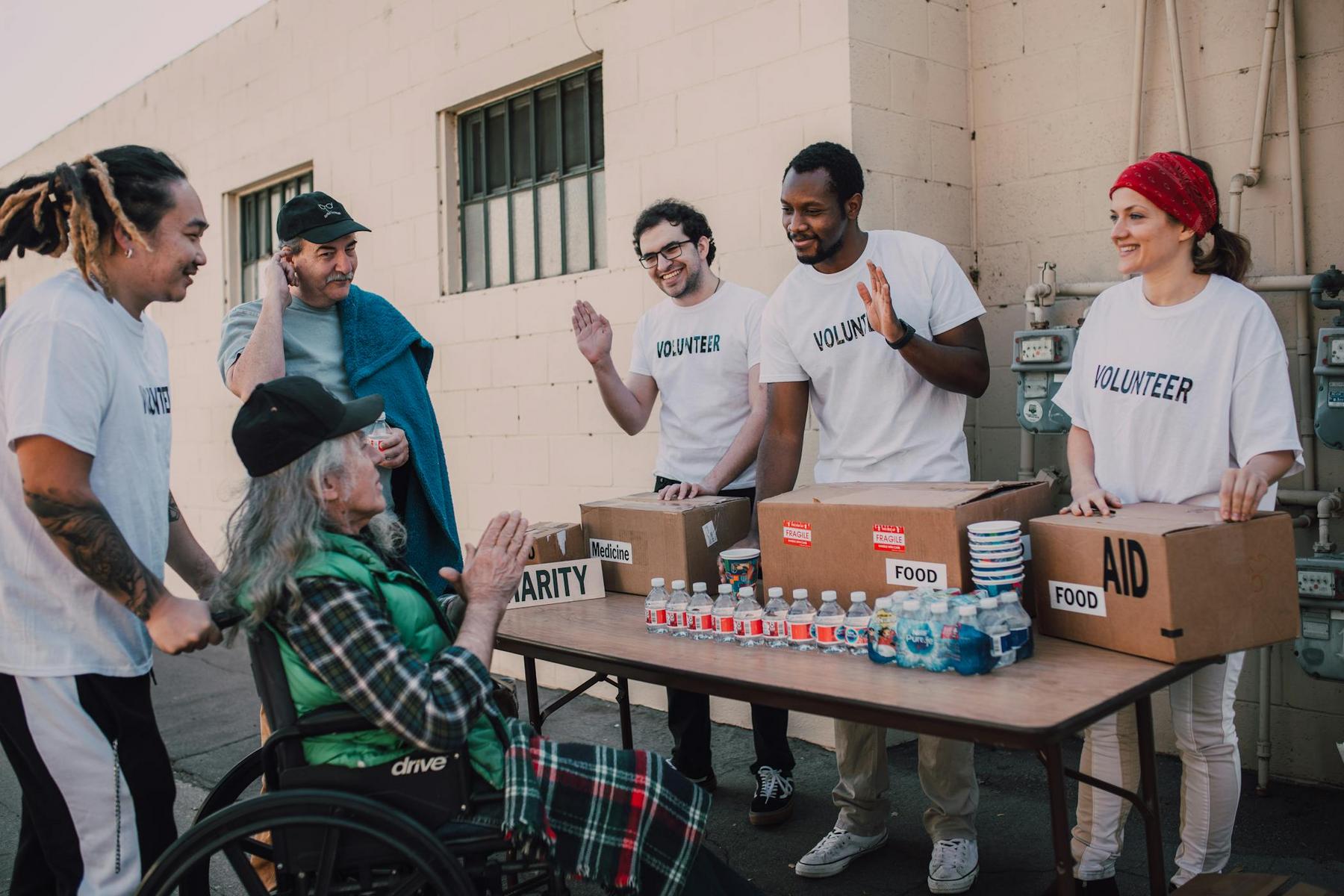
Disability-inclusive volunteering refers to volunteer programmes that are intentionally designed to welcome, support, and empower people with disability as active participants – not merely as recipients of care. These programmes ensure that physical environments, communication approaches, scheduling, and volunteer roles are accessible and flexible enough to enable genuine, meaningful participation.
In Australia, the NDIS plays a critical role in making disability-inclusive volunteering a reality. Through the Information, Linkages and Capacity Building (ILC) programme, funding is directed toward building skills, community connections, and pathways to participation for people with disability – regardless of whether they hold an individual NDIS package.
Within individual NDIS plans, funding can be accessed for:
- Support workers to accompany and assist participants in volunteer roles
- Transport to and from volunteer locations
- Workplace adjustments and assistive technology
- Skills development activities connected to volunteering goals
Cairns is particularly well-positioned to embrace disability-inclusive volunteering. The Cairns Regional Council has developed a Disability Access and Inclusion Plan (DAIP) 2024–2026, and the city boasts over 250 Braille and tactile street signs – the largest such programme in regional Australia. Combined with Changing Places facilities at key venues, free beach wheelchair hire at Palm Cove and Ellis Beach, and hearing loop technology at major sites such as the Cairns Performing Arts Centre, the city has made a meaningful commitment to accessibility and inclusion.
How Does Volunteering Help People with Disability Build Real-World Skills in Cairns?
One of the most compelling arguments for disability-inclusive volunteering is its proven capacity to develop transferable, workplace-ready skills. This isn’t about keeping people occupied – it’s about building genuine capability with real-world application.
Through structured volunteer roles, participants develop skills across several key areas.
Communication and Interpersonal Confidence
Engaging with the public, collaborating with fellow volunteers, and navigating workplace dynamics builds the kind of communication confidence that is directly applicable to employment settings.
Problem-Solving and Critical Thinking
Real-world volunteer environments present authentic challenges. Supporting participants to navigate those challenges – with appropriate backing – builds resilience and decision-making capability over time.
Workplace Readiness
Many disability-inclusive volunteering programmes include formal components such as résumé writing, job application assistance, interview preparation, and workplace etiquette training – practical skills that translate directly into employment readiness.
Professional Networks
Volunteering creates meaningful opportunities to build relationships with community members, employers, and professionals – networks that can open genuine doors to paid employment.
The employment data tells an important story. People with disability in Australia face a significant employment participation gap, with a labour force participation rate of 60.5% compared to 84.9% for those without disability (ABS, 2024). Research shows that volunteering improves a person’s chances of gaining paid employment by 27%. For NDIS participants in Cairns and Brisbane, disability-inclusive volunteering is not merely a stepping stone – it is a launching pad.
What Mental Health and Wellbeing Benefits Come from Disability-Inclusive Volunteering?
The mental health and wellbeing benefits of volunteering are extensively documented – and for people with disability, the evidence is particularly compelling.
Research consistently shows that volunteers experience greater self-assessed psychological wellbeing, higher self-esteem, improved happiness, and greater life satisfaction compared to non-volunteers. They also report lower symptoms of depression and anxiety, and lower indicators of suicide risk (Volunteering Australia, 2023). For people with disability specifically, interview-based research demonstrates that volunteering empowers individuals to achieve personal goals and contributes significantly to their sense of self-worth.
Two primary mechanisms explain this powerful link.
Meaningful Social Roles
Volunteering creates a sense of purpose and belonging that goes beyond what many people with disability may experience day-to-day. Being valued for what you contribute – rather than defined by the support you need – is profoundly restorative to identity and wellbeing.
Community Integration
Regular participation in community life reduces feelings of alienation and loneliness. Disability-inclusive volunteering helps rebuild self-identity and a sense of living a full, connected life – something the NDIS explicitly champions as a core goal for all participants.
Those who contribute more than 100 hours per year through volunteering experience even stronger wellbeing outcomes, according to Volunteering Australia. For NDIS participants, embedding volunteering as a consistent, supported goal within their plan can therefore deliver genuine, lasting mental health value.
What Barriers Do People with Disability Face When Volunteering in Cairns – and How Can They Be Overcome?
Despite the clear benefits, barriers to disability-inclusive volunteering remain real and significant. Understanding them honestly is the first step to addressing them effectively.
| Barrier Type | Common Examples | Potential Solutions |
|---|---|---|
| Physical/Accessibility | Inaccessible venues, lack of transport | NDIS transport funding, accessible venue audits |
| Attitudinal | Ableism, unconscious bias, low expectations | Disability awareness training, inclusive culture-building |
| Organisational | Inflexible roles, insufficient support structures | Flexible role design, volunteer buddy systems |
| Policy/Funding | Unclear NDIS pathways, limited ILC funding | Increased ILC investment, clearer NDIS guidelines |
| Digital | Inaccessible online platforms | Accessible website design, multiple application pathways |
Research highlights that young people with disability face a combination of challenges: lack of accessible volunteer opportunities, difficulties arranging transport, and negative attitudes from potential volunteer supervisors (PubMed, 2016). In regional areas like Cairns, transport can be an even greater obstacle – with 26% of people with disability reporting transport as a significant barrier to finding work, compared to 16% of jobseekers without disability (ABS, 2024).
Volunteer organisations and disability support providers working together to dismantle these barriers must commit to inclusive recruitment language, flexible role structures, physical accessibility, and disability-aware training for all coordinators and staff. Cairns organisations that get this right will attract dedicated, capable volunteers – and contribute to building communities that are genuinely inclusive, not just outwardly compliant.
How Does Disability-Inclusive Volunteering in Cairns Connect to NDIS Employment Goals?
The connection between disability-inclusive volunteering and NDIS-supported employment pathways is intentional, clear, and well-evidenced.
The NDIS offers School Leaver Employment Supports (SLES) for participants aged 16 to 22, which can encompass work experience, travel training, and job-readiness activities – all of which align naturally with structured volunteering programmes. Beyond SLES, the NDIS Finding and Keeping a Job support stream helps participants set meaningful work goals, access Disability Employment Services (DES), and build the practical skills needed for sustained paid employment.
Disability-inclusive volunteering feeds directly into these goals by providing:
- Documented work experience for résumés
- Professional references from volunteer supervisors
- Demonstrated capability to prospective employers
- Exposure to workplace culture and expectations
- Confidence to apply for and accept paid roles
At a national level, approximately 319,000 volunteers are engaged across Australian disability services – representing 4.7% of all Australian volunteers (Volunteering Australia, 2022). Locally, the Cairns Disability Network and the region’s established network of providers are building the community infrastructure that makes disability-inclusive volunteering not just possible, but sustainable and scalable.
Australia’s overall disability employment rate sits at 56.1%, compared to 82.3% for those without disability – a gap that has remained largely stagnant for two decades (Bankwest Curtin Economics Centre, 2024). Disability-inclusive volunteering, properly resourced and supported through the NDIS, is one of the most practical and immediate ways to begin closing it.
Volunteering as Contribution: The Bigger Picture for Cairns and Brisbane
Disability-inclusive volunteering is about far more than filling community roles – it is about fundamentally shifting the narrative around what people with disability can contribute, achieve, and lead. When organisations in Cairns and Brisbane commit to truly inclusive volunteer practices, they do not only benefit the individual participant. They enrich their entire community.
Nearly one in four people volunteering for an organisation in Australia is a person with disability (Volunteering Australia, 2021). That is not a footnote – it is a testament to the motivation, commitment, and capability that people with disability bring to their communities every single day.
The most meaningful and lasting outcomes emerge when disability-inclusive volunteering is embedded as a genuine, prioritised goal within an NDIS plan – supported by skilled support coordinators, flexible and welcoming organisations, and compassionate carers who truly understand what each participant needs to thrive.
In Cairns, with its strong and growing network of disability services, accessible public infrastructure, and a council committed to the DAIP 2024–2026, the conditions for impactful disability-inclusive volunteering are well and truly in place. The same is true in Brisbane, where a growing disability services community is creating new pathways for participation, purpose, and employment.
Volunteering, for people with disability, is not a consolation for paid work. It is a powerful, evidence-based pathway to it – and to a fuller, more connected, more purposeful life.
Can NDIS funding be used to support volunteering activities for participants in Cairns?
Yes. NDIS plans can include funding for support workers to assist participants during volunteering activities, as well as transport assistance to and from volunteer locations. This support is typically funded under Core Supports or Capacity Building within an individual plan, depending on the participant’s goals. A Local Area Coordinator (LAC) or support coordinator can help clarify what is appropriate for a specific plan.
How does disability-inclusive volunteering connect to NDIS employment goals in Cairns and Brisbane?
Disability-inclusive volunteering builds workplace-ready skills, professional references, and practical experience that directly support NDIS employment goals. Research shows volunteering improves chances of gaining paid employment by 27%, and key NDIS supports – such as School Leaver Employment Supports (SLES) and Finding and Keeping a Job – explicitly recognise volunteering as a valuable component of employment pathways.
What types of volunteer roles are well-suited to people with disability in Cairns?
There is a broad range of suitable volunteer roles, including community events support, gardening, customer service, catering, administrative assistance, and peer mentoring. The key is identifying roles that match an individual’s strengths, interests, and support needs, and working with a disability support provider or LAC to ensure the placement is appropriately accessible and supported.
What mental health benefits does disability-inclusive volunteering offer NDIS participants?
Research consistently demonstrates that volunteering is associated with improved psychological wellbeing, higher self-esteem, and reduced symptoms of depression and anxiety. For people with disability specifically, volunteering builds a sense of purpose, self-worth, and community belonging – outcomes that align directly with NDIS goals of supporting participants to live full, meaningful, and connected lives.
Are there disability-inclusive volunteering opportunities specifically available in Cairns?
Yes. Cairns has an established and growing disability services ecosystem – including local NDIS providers, the Cairns Disability Network, and Mission Australia as the NDIS Partner in Community – that can help connect individuals to suitable volunteering opportunities. A disability support provider or NDIS support coordinator can assist in identifying programmes that align with personal goals and support needs.