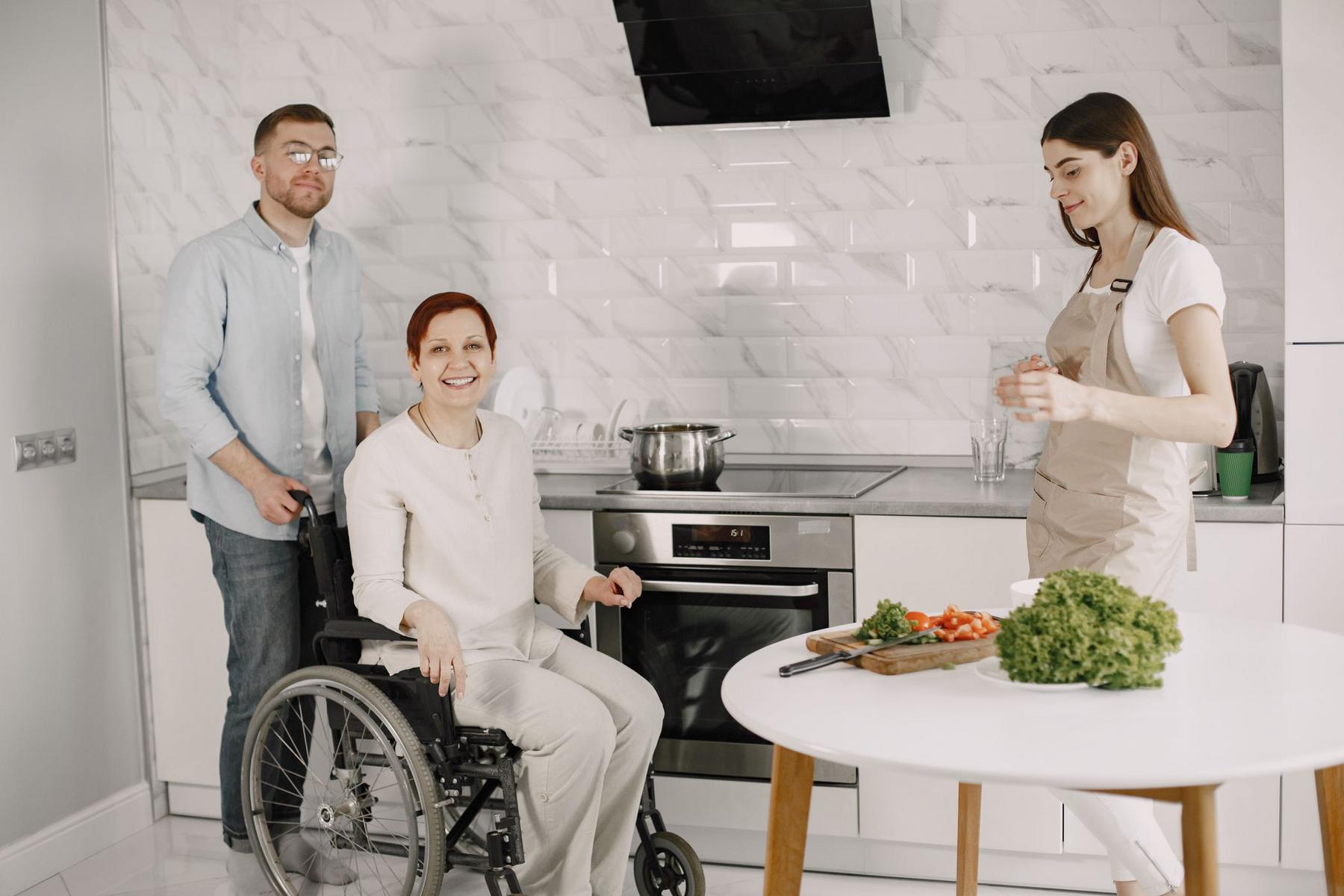
For many Australians living with disability, something as fundamental as preparing a nutritious meal can feel impossibly out of reach. The challenge isn’t simply about cooking – it’s about safety, energy, capacity, and dignity. Whether a physical impairment makes it unsafe to use a stovetop, a cognitive disability makes meal planning overwhelming, or a swallowing difficulty transforms every mealtime into a risk, the barriers are real, deeply personal, and profoundly impactful on daily wellbeing.
The good news? The National Disability Insurance Scheme (NDIS) recognises just how essential meal preparation and nutrition support are to a participant’s health and independence – and provides meaningful funding pathways to address them. If you or someone you care for is an NDIS participant in Cairns, understanding these funding options could be genuinely life-changing.
This guide breaks down everything you need to know about accessing meal preparation and nutrition support under the NDIS in Cairns in 2026 – clearly, honestly, and with the warmth you deserve.
What Does the NDIS Fund for Meal Preparation and Nutrition Support in Cairns?
The NDIS does not fund food itself – groceries and ingredients are considered everyday living expenses that all Australians incur. However, the scheme comprehensively funds the supports surrounding food that a person with disability requires: the preparation, the delivery, the professional nutritional guidance, and the specialised equipment needed to eat safely and well.
There are three primary funding categories relevant to meal and nutrition support:
Core Supports – Assistance with Daily Life
This is the primary funding category for meal preparation. Under support item code 01023012011, the NDIS funds the labour and time involved in preparing and delivering meals, support worker assistance with grocery shopping and cooking, and skill-building programmes designed to develop greater cooking independence.
To meet the “reasonable and necessary” test, meal preparation support must directly arise from the participant’s disability, not simply from convenience. The support must also help achieve the participant’s NDIS plan goals and represent genuine value.
Capacity Building – Improved Health and Wellbeing
This category funds professional nutrition services, including consultations with Accredited Practising Dietitians (APDs), development of individualised meal plans, and nutritional assessment for disability-specific needs such as dysphagia, weight management, or chronic conditions directly related to disability.
Capacity Building – Improved Daily Living
This pathway supports the development of cooking and meal planning skills – empowering participants to move towards greater independence in the kitchen over time.
How Does the 70/30 Cost Split for NDIS Meal Delivery Work?
One of the most misunderstood aspects of NDIS meal preparation and nutrition support in Cairns is the cost-sharing arrangement for meal delivery services.
Because food ingredients are categorised as an everyday living expense, the NDIS covers approximately 70% of the cost of a delivered meal – encompassing the labour, cooking, packaging, and delivery – while the participant pays approximately 30% as a co-payment for the ingredient cost itself.
The NDIS funds the support around the meal. The participant contributes to the food itself. Together, these elements work in concert to deliver nutritious, safe, disability-appropriate meals to people’s doors.
Registered NDIS meal providers are required to provide fully itemised invoices that clearly separate the ingredient cost from the preparation and delivery cost. This makes the claiming process straightforward, regardless of whether a participant is agency-managed, plan-managed, or self-managed.
It’s also worth knowing that since a significant policy change in March 2022, the NDIS no longer requires participants to obtain formal quotes before commencing meal delivery services. This means registered providers in Cairns can typically activate service within 24 hours of receiving approval from a Local Area Coordinator (LAC) or NDIS planner – a meaningful improvement for people who need support quickly.
How Can Cairns NDIS Participants Access Meal Preparation Support?
Accessing NDIS meal preparation and nutrition support in Cairns depends on what your current plan already includes. Here are the three most common scenarios:
If Meal Preparation Is Already Listed in Your Plan
Contact a registered NDIS meal provider, provide your participant number and plan details, select your meals, and arrange your delivery schedule. You pay your 30% co-payment and the provider invoices the NDIS directly for the remainder.
If You Have Core Support Funding But Meal Preparation Isn’t Explicitly Listed
Many participants have “Core Supports – Assistance with Daily Life” in their plan without meal preparation explicitly named. In this situation, contact your LAC or NDIS planner and request written confirmation via email that your core funding can be used flexibly for meal preparation and delivery under item code 01023012011. Once received, you can commence with a registered provider promptly.
If You Need to Add Meal Support During a Plan Review
This requires supporting evidence from allied health professionals. An Occupational Therapist (OT) assessment documenting why meal preparation is unsafe or not possible due to disability is the most critical piece of evidence. A letter from your GP, a dietitian’s meal plan, and quotes from registered providers will also strengthen your application.
Cairns participants have access to several registered meal providers, including Meals on Wheels Cairns (which offers hot, chilled, and frozen meals including pureed, minced, gluten-free, and dairy-free options), alongside in-home support worker cooking services and state-wide delivery providers extending service into the region. Telehealth dietitian services are also widely available, meaning Cairns participants can access professional nutritional guidance without needing to travel.
What Role Do Dietitians and Allied Health Professionals Play in NDIS Nutrition Support?
Professional nutrition support is not a luxury – for many NDIS participants, it is foundational to health and safety.
Accredited Practising Dietitians (APDs) funded through the NDIS’s Capacity Building budget can provide comprehensive nutritional assessments, develop disability-specific meal plans, advise on managing swallowing difficulties, support participants with fussy eating and mealtime behaviours, and train support workers to implement nutrition plans safely and confidently.
The following table summarises the key allied health professionals involved in meal and nutrition support, and their primary roles under the NDIS:
| Allied Health Professional | Primary Role in Meal & Nutrition Support |
|---|---|
| Occupational Therapist (OT) | Assesses functional capacity for cooking; documents disability-related barriers; recommends assistive equipment |
| Accredited Practising Dietitian (APD) | Nutritional assessment; individualised meal planning; condition-specific dietary advice; support worker training |
| Speech Pathologist | Swallowing assessment; dysphagia diagnosis; Mealtime Management Plans; texture-modification recommendations |
| General Practitioner (GP) | Documents disability diagnosis; links nutritional needs to disability; refers to allied health professionals |
| Psychologist / Psychiatrist | Documents cognitive or psychosocial barriers to meal preparation (e.g., anxiety, intellectual disability) |
The most powerful NDIS applications for meal preparation support are built on clear, professional evidence that directly connects a participant’s disability to their barriers around food – and the OT assessment sits at the heart of that evidence.
What Is Dysphagia Support Under the NDIS, and Who Qualifies?
Dysphagia – difficulty swallowing – affects many Australians living with disability, including those with neurological conditions, cerebral palsy, acquired brain injury, and intellectual disability. It transforms every meal into a potential risk, and managing it safely requires a coordinated, evidence-based approach.
The NDIS funds a broad range of dysphagia-related supports, including:
- Speech pathologist assessment and ongoing Mealtime Management Plans
- Texture-modified meal preparation aligned with the International Dysphagia Diet Standardisation Initiative (IDDSI) framework (pureed, minced and moist, soft and bite-sized, and easy to chew)
- Liquid thickeners and thickened fluids
- Specialised feeding equipment, modified cutlery, and food processors
- Home Enteral Nutrition (HEN) formulas and tube feeding supplies where required
- Comprehensive support worker training on safe mealtime management, recognising signs of aspiration, and responding appropriately
The NDIS Commission is clear that support workers assisting participants with dysphagia must be properly trained, must follow Mealtime Management Plans, and must understand fluid thickness levels. This is a critical safeguarding responsibility – and ensuring your support team is equipped with this knowledge is essential.
Support Worker Assistance vs. Meal Delivery: Which Approach Suits You Best?
There is no single “right” approach to meal preparation and nutrition support under the NDIS. For many Cairns participants, the most effective strategy is a combination of both support worker cooking assistance and meal delivery services.
Support worker assistance offers flexibility, the ability to accommodate cultural food preferences, and the opportunity to build genuine cooking independence over time. Meal delivery, on the other hand, provides reliable nutritional consistency, suits participants who experience high levels of fatigue, and removes the physical and cognitive burden of meal planning on difficult days.
Many participants successfully use support worker assistance several times per week for skill development and personal food choices, combined with meal delivery on other days – with both funded through Core Supports, provided sufficient funding is available in the plan.
The key is ensuring the approach aligns with your goals, your disability-related needs, and what your NDIS plan genuinely supports. Your Local Area Coordinator and support team can help you identify the right combination.
Nourishment Is Not a Privilege – It’s a Right
As of December 2025, there were 761,442 NDIS participants across Australia, with Queensland receiving $12.15 billion in NDIS funding for 2025. Behind every one of those figures is a person – a human being with preferences, health needs, and an inherent right to eat well and safely.
Meal preparation and nutrition support under the NDIS in Cairns is not a minor add-on. It is a meaningful, often life-sustaining form of assistance that can transform a participant’s health, comfort, and sense of independence. With the right evidence, the right provider, and the right support team, these services are genuinely accessible – and you deserve them.
Have questions? Need support? Reach out to us here at Advanced Disability Management. Our team of compassionate, highly trained carers is proud to serve participants across Cairns and Brisbane, providing personalised support that puts your independence and wellbeing first.
Does the NDIS pay for meals and groceries in Cairns?
The NDIS does not fund food ingredients or groceries, as these are considered everyday living expenses. However, the NDIS does fund the preparation, cooking, packaging, and delivery of meals through registered providers – approximately 70% of the total meal cost – with the participant contributing around 30% as an ingredient co-payment. Support workers assisting with grocery shopping and cooking at home can also be funded through Core Supports.
What evidence do I need to get NDIS meal preparation support approved?
The most important piece of evidence is an Occupational Therapist (OT) assessment that clearly documents why your disability prevents you from safely or consistently preparing meals. Supporting documents typically include a GP letter linking your disability to the barrier, a dietitian’s meal plan if nutritional needs are complex, and quotes from registered NDIS meal providers. The evidence must demonstrate that the support is directly related to your disability – not convenience.
Can I access a dietitian through the NDIS in Cairns?
Yes. Accredited Practising Dietitians (APDs) can be funded through the NDIS’s Capacity Building – Improved Health and Wellbeing budget for participants whose disability impacts their ability to meet nutritional needs. Telehealth dietitian consultations are widely available and fully recognised by the NDIS, making professional nutrition guidance accessible to Cairns participants without requiring travel.
What is dysphagia support under the NDIS, and can it be funded in Cairns?
Dysphagia is difficulty swallowing, commonly experienced by people with neurological conditions, cerebral palsy, acquired brain injury, or intellectual disability. The NDIS funds comprehensive dysphagia management, including speech pathologist assessments, Mealtime Management Plans, texture-modified meal delivery aligned with the IDDSI framework, liquid thickeners, specialised feeding equipment, and support worker training on safe mealtime practices.
What if meal preparation isn’t listed in my NDIS plan – can I still access it in Cairns?
Yes, in many cases. If your plan includes ‘Core Supports – Assistance with Daily Life’ funding, you may be able to use that funding flexibly for meal preparation and delivery without it being explicitly named. The recommended first step is to contact your Local Area Coordinator (LAC) and request written email confirmation that your core funding covers meal preparation under support item code 01_023_0120_1_1. Once confirmed, most registered providers in Cairns can commence service within 24 hours.