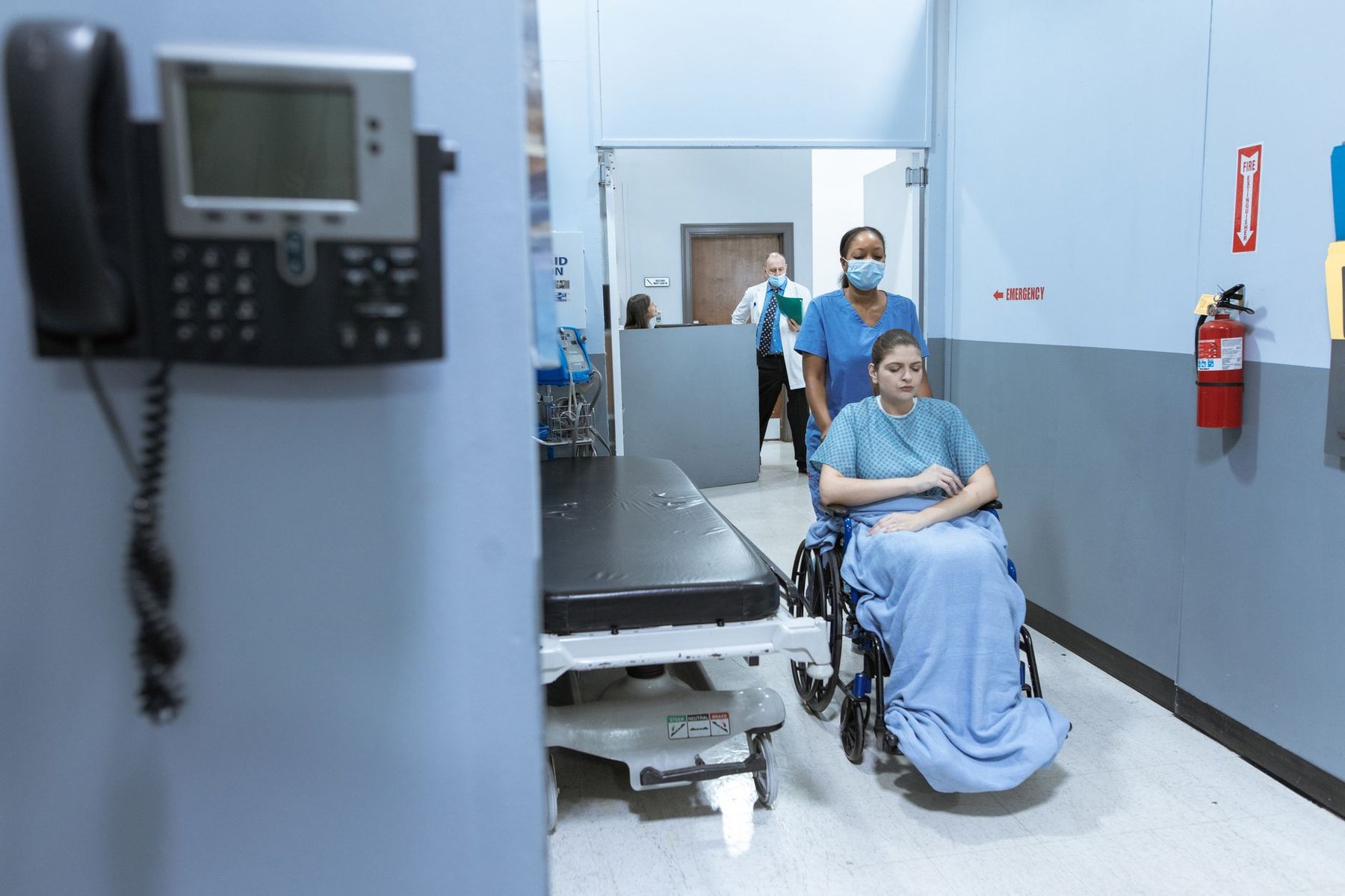
Hospital discharge complex care needs planning means coordinating two separate systems, the hospital’s clinical process and the NDIS’s plan and funding process, well before a doctor signs off on discharge day. The safest transitions start at admission, not on the day someone becomes medically ready to leave. Get that sequencing wrong and a person can be medically fit for home while still stuck in a hospital bed for weeks, sometimes months, waiting for the disability system to catch up.
Two Systems, Two Clocks
While a person is admitted, the health system covers everything, including the disability related daily support they’d normally receive at home. That arrangement works well until the day discharge is on the table, because the NDIS operates on its own separate timeline for approving, varying, or building the plan a person will need once they’re back in the community. Support needs frequently change during a hospital admission, whether that’s new personal care requirements, altered mobility, or a change in behavioural support needs, and any of those changes usually require the participant’s NDIS plan to be updated before they can safely go home.
This is precisely why an interim NDIS plan exists. The National Disability Insurance Agency recognises that participants often need a short to medium term plan specifically to enable a safe and timely discharge, covering things like support coordination or medium term accommodation while longer-term arrangements are finalised. It’s a sensible mechanism on paper. In practice, it only works if someone starts the conversation early enough for the paperwork to catch up with the calendar.
An optional Discharge Assessment template exists for hospital staff to pass on details about a participant’s personal care, daily living, and Home and Living support needs, and a separate version applies for psychosocial disability given how different those care histories and needs can be. Neither is compulsory. Hospitals are responsible for supplying the health information the NDIS needs to plan appropriately, and the NDIA will fund any assessments required once someone is home, but nothing forces a hospital to use the template unless the treating team chooses to.
Hospital Discharge Complex Care Needs: What the Plan Must Cover
Complex care needs rarely come down to one missing piece. A peer-reviewed Australian study following NDIS participants through hospital admissions found that personal care support and support coordination were needed by every participant in the cohort, and the recurring drivers of complexity were accommodation, assistive technology, behavioural support, home modifications, and Supported Independent Living (Health & Social Care in the Community, 2023). None of those sit in isolation. A wheelchair user waiting on home modifications might also be waiting on a support coordinator to locate a provider who can deliver the right hours at the right skill level, and both processes can stall independently of each other.
The same study found something worth sitting with: 72% of the hospitalised NDIS participants tracked experienced a delayed discharge, with a median NDIS plan approval time of 89 days and a median implementation time of 39 days. A longer implementation window was linked to a 3.41 times higher likelihood of delayed discharge (Health & Social Care in the Community, 2023). That gap between “plan approved” and “supports actually running” is where most of the real waiting happens, and it’s the gap families feel most acutely because it looks, from the outside, like nothing is happening at all.
Readiness Is Not the Same as Approval
An approved plan tells you funding exists. It does not tell you a support worker has been trained for this specific person’s needs, that a property has been made accessible, or that equipment has arrived and been fitted. Those three things, staff, premises, and equipment, are usually the actual bottleneck once funding clears, and they take real weeks to organise properly, not a phone call.
A funded support is not the same as a support that’s ready. One is a decision on paper; the other is a trained person standing in the doorway on the day it matters.
This is the readiness versus approval distinction in practice, and it gets missed constantly in discharge conversations because “the plan’s been approved” sounds like the hard part is over. Often it’s the easier part. Recruiting and training staff for someone with PEG feeding, seizure monitoring, or complex behavioural support needs is a genuine lead-time item, and it should be treated as one from the moment discharge becomes a realistic prospect, not from the week it becomes urgent.
The Five Things That Most Often Stall a Complex Discharge
Australian research on discharge delays keeps landing on the same handful of causes, in roughly this order of frequency:
- NDIS planning and plan variation delays, cited as the leading cause in just over a third of delayed cases (Summer Foundation, 2022)
- Difficulty locating a suitable discharge destination, whether that’s an accessible home, Supported Independent Living vacancy, or appropriate Specialist Disability Accommodation
- Time required to arrange the actual supports once funding is confirmed, including recruiting and training staff
- Behavioural support needs that complicate both provider matching and property suitability
- Friction at the interface between the treating hospital team and the NDIA itself, including slow responses and delays between planning milestones (Health & Social Care in the Community, 2023)
At a national level, one advocacy analysis put the overall discharge delay rate at 34.5% of tracked patients, with NDIS planning delays, unsuitable discharge destinations, and arranging supports on discharge as the three biggest named causes (Summer Foundation, 2022). The same body of work identified 1,140 NDIS participants stuck in hospital at one point awaiting the housing and support arrangements needed to go home (Summer Foundation, 2022). Those aren’t abstract numbers. Each one is a person occupying an acute hospital bed they no longer clinically need, for reasons that have nothing to do with their health.
The national picture has genuinely improved. Government data shows the average wait from “medically ready for discharge” to actual discharge fell from 41 days in October 2022 to 16 days by March 2025, with the national median reaching 0 days by August 2025 (Department of Health, Disability and Ageing, 2025/26). Some of that improvement reflects real investment: the NDIA had grown to almost 200 dedicated staff working in hospital transition and liaison roles by late 2024, alongside reform commitments to contact participants within four days of a hospital notification and finalise a discharge plan within 30 days (DSS Ministers, 2024).
A national median of zero days sounds like the problem is solved. It isn’t, and the word “median” is doing a lot of quiet work in that sentence.
The Far North Queensland Reality
National averages flatten regional outliers, and Queensland’s regional data shows exactly why that matters here. Queensland’s own figures split the delayed-discharge population into two distinct groups with two entirely different causes: 73% of delays among older patients trace back to a lack of residential aged care placements, while roughly 58% of delays among younger long-stay patients are attributed to NDIS support and funding delays specifically (Queensland Government, 2025/26).
Townsville University Hospital’s own reporting makes the regional gap concrete. In August 2025, Townsville Hospital and Health Service recorded 85 long-stay patients, 17 of them younger patients and 68 older. Just over 80% of the older cohort were waiting on a residential aged care place, and the median length of stay for a younger long-stay patient sat at 489 days (Townsville Hospital and Health Service, 2025). Compare that to a national median of zero and the mismatch is stark. A family in Cairns or Townsville navigating this isn’t dealing with the improved national picture; they’re dealing with a regional system where specialist workforce, accessible housing stock, and equipment supply all take longer to mobilise than in a capital city.
That’s not a criticism of any hospital or provider. It’s a description of distance and workforce density. Far North Queensland has fewer specialist allied health providers per capita, fewer accessible rental properties, and longer lead times on home modifications and custom equipment than Brisbane or Sydney. Discharge planning here has to account for that lead time from day one, not treat it as an unfortunate surprise in week six.
The Funding Mechanisms That Bridge the Gap
When a long-term home isn’t ready but a hospital bed is no longer needed, several NDIS-funded supports can bridge that gap. They serve different purposes and shouldn’t be confused with each other.
| Support type | What it covers | Typical role in a discharge |
|---|---|---|
| Short Term Accommodation (STA) | Brief accommodation and support, often used for respite or short transitions | Bridges very short gaps, days rather than months |
| Medium Term Accommodation (MTA) | Accommodation costs only, typically funded for up to 90 days, while a longer-term home is prepared (NDIS Price Guide) | The standard bridge between hospital and a permanent home |
| Supported Independent Living (SIL) | Ongoing personal care and daily living support funded separately from accommodation | Funds the actual support hours once someone is home or in MTA |
| Specialist Disability Accommodation (SDA) | Purpose-built or modified housing for eligible participants with significant functional needs | The long-term housing outcome MTA is often bridging toward |
MTA covers the roof, not the care. Personal care, daily living support, and other high-intensity supports are funded through separate parts of a participant’s plan, which is exactly why a “confirmed” MTA placement can still stall if the personal care side of the plan hasn’t been sorted out in parallel.
What Families and Support Coordinators Can Do Now
Start the disability-system conversation the moment it becomes clear support needs will have changed by the time of discharge, not once a doctor mentions a date. Ask the treating team early whether they’ll use the Discharge Assessment template, and if not, request they document personal care, daily living, and Home and Living needs in writing regardless. Treat family carers as genuine partners in the planning conversation rather than people who receive information after decisions are made; Australian discharge-planning guidance consistently recommends this, alongside a written, shared post-discharge plan that GPs and community providers can actually act on.
Push for clarity on staffing and property readiness separately from funding approval. A support coordinator who can answer “who is trained, and is the property fitted out” is worth more at this stage than one who can only confirm a plan number exists. And if behavioural support needs, complex medical care, or degenerative conditions are part of the picture, ask specifically how the provider being lined up handles registered nurse oversight and staff training for that individual’s needs, because generic SIL staffing models don’t always translate to high-intensity or degenerative presentations.
None of this removes the waiting entirely. It does mean the waiting is spent on the right things: matching, training, and fitting out, rather than administrative back-and-forth that could have started weeks earlier.
If you’re supporting someone with a spinal cord injury, an acquired brain injury, a degenerative condition, or another high-intensity need heading toward hospital discharge, Advanced Disability Management can talk through what a safe, well-staffed transition home looks like for that specific person. We’re a Cairns-based, NDIS-registered provider with registered nurse oversight and experience across complex and high-intensity care in Far North Queensland, Townsville, and Brisbane. Call us on 0425 168 053, email [email protected], or reach out through our contact page, there’s no pressure, just a conversation about what your family needs next.
Who decides when a participant is ready to leave hospital?
Medical readiness is determined by the treating hospital team, based on clinical criteria. Whether a safe discharge can actually happen also depends on disability supports being in place, which is a separate process involving the NDIS, the participant’s support coordinator, and any providers being engaged. Both processes need to align before discharge is genuinely safe, not just clinically possible.
Can a participant be discharged before their NDIS plan is updated?
It happens, but it’s not recommended and can create real risk if personal care, equipment, or accommodation supports aren’t yet funded or arranged. Good practice is to align discharge timing with confirmed, ready supports. If pressure to discharge before supports are ready arises, a support coordinator or the treating team should raise this directly with the NDIA.
What happens if a family disagrees with a proposed discharge destination?
Families can raise concerns with the treating team and support coordinator, and request the discharge plan be reviewed before a decision is finalised. If disagreement continues, seeking advice from an independent advocate or the relevant complaints body is the appropriate next step, rather than relying solely on informal negotiation with hospital staff.
Does NDIS funding cover home modifications needed before someone can be discharged?
Home modifications can be funded through a participant’s NDIS plan where assessed as necessary, but approval and installation both take time and should be requested as early as possible once discharge becomes likely. Speak with an occupational therapist and support coordinator early to understand the process and realistic timeframes for the specific modifications needed.
What should a family do if hospital discharge planning feels rushed or unclear?
Ask the treating team directly for a written discharge plan, and request that the support coordinator, treating team, and any disability providers communicate directly with each other rather than through the family alone. If timeframes change without notice or responsibilities feel unclear, raising this early with the hospital’s discharge liaison role can help realign expectations.