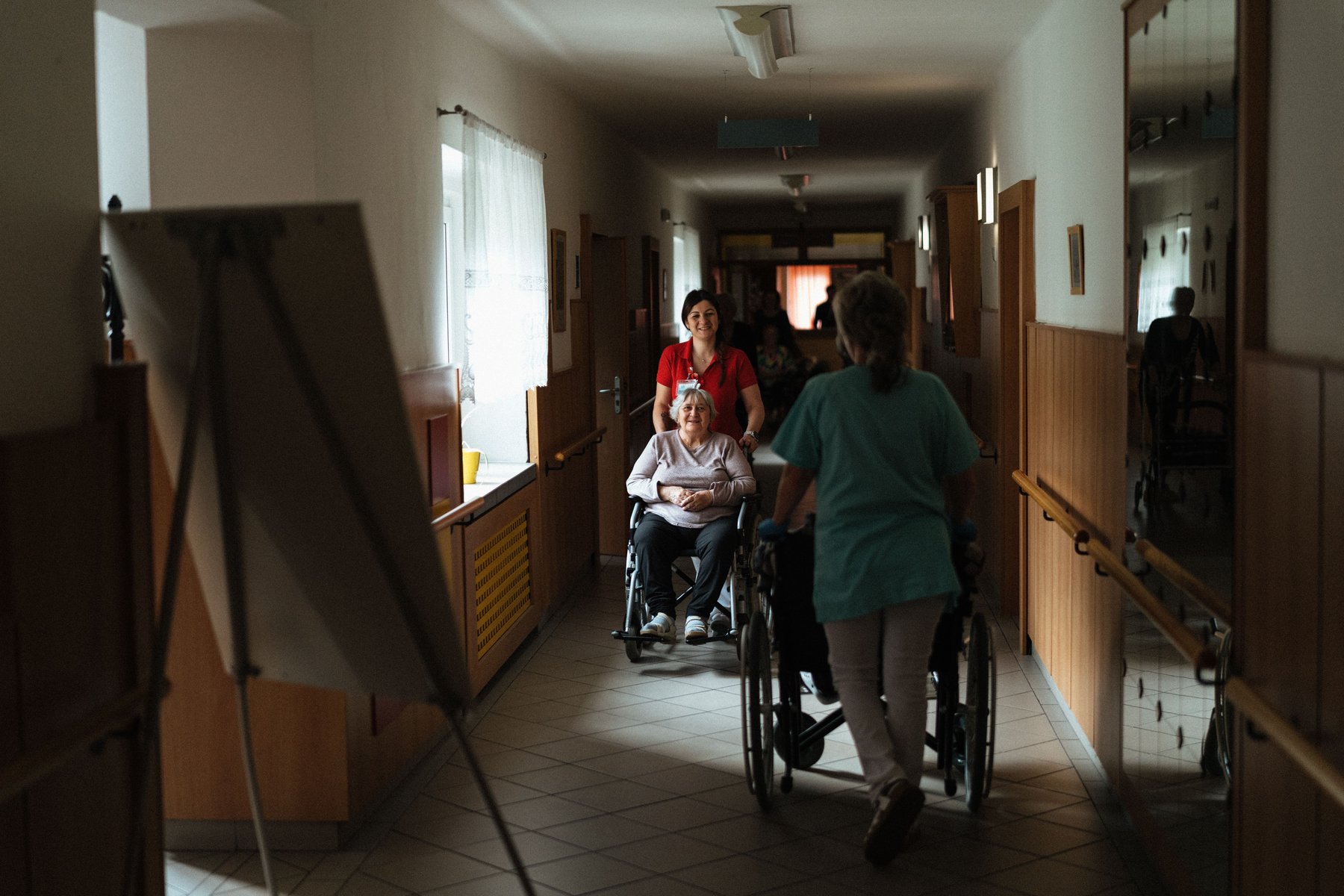
1:1 disability support makes sense when an adult needs a skilled worker beside them for high-intensity personal care, safety, communication or behaviour support, or when groups leave them overwhelmed. It makes less sense when the person enjoys company, needs only light prompting, or would get the same quality from a shared ratio that stretches their plan further. The person decides the ratio, not habit.
That is the whole answer in one paragraph. The rest of this article is the reasoning behind it, written the way we would talk it through with a family at their kitchen table in Cairns. Our founders spent years caring for their own child with Sanfilippo Syndrome, so we know what it is like to sit on the other side of that table, weighing up hours, budgets and trust all at once.
What 1:1 disability support looks like day to day
One support worker works with one participant. That sounds simple, and in a sense it is. The worker might help with a morning routine at home, drive to a physio appointment, sit beside the person at a local market, or spend an afternoon practising a life skill such as preparing a simple meal. The ratio stays the same wherever the support happens.
Under the NDIS, this kind of support is usually paid from Core Supports, mainly the Assistance with Daily Life category for personal care and household routines, and Assistance with Social, Economic and Community Participation for time out in the community. Providers also offer shared ratios such as 1:2 or 1:3, where one worker supports two or three people and the cost is split between them.
For the adults we support, 1:1 work goes well beyond companionship. It includes high-intensity daily personal activities such as PEG feeding, wound management and seizure monitoring. Our trained staff deliver these services under registered nurse oversight, following the plans set by each participant’s doctor and allied health team. Clinical decisions stay with those professionals. Our role is to carry out the plan consistently and to notice when something changes.
Good 1:1 support is also active rather than passive. The worker does things with the person, not for them, offering just enough help for the person to take part in their own day. NDIS Commission research into group homes found that people who consistently received good Active Support were more engaged in meaningful activities and relationships than those whose support was patchy (NDIS Quality and Safeguards Commission, 2022). That finding holds just as true in a 1:1 setting. A worker who hovers and takes over is using the ratio badly, however attentive they look.
Why the same face matters more than the ratio
Families ask us about hours first. They should be asking about people first.
A scoping review of paid disability support found that consistent support is an essential precursor to quality support. Continuity led to better relationships and more individualised care, and helped people exercise choice and control. Poor continuity caused stress and anxiety for people with disability and their families, because the relationship had to be rebuilt with every new worker (Disability and Rehabilitation, 2020). Anyone who has explained a loved one’s swallowing plan, seizure signs and favourite music to a fifth new face in a month knows exactly what that research describes.
The NDIS Practice Standards treat continuity of supports as a formal quality requirement, defining it as timely and appropriate support delivered without interruption (NDIS Quality and Safeguards Commission, 2024). For adults with behaviours of concern, the case is even stronger. The Council for Intellectual Disability argued that funding arrangements should, at minimum, keep trusted relationships between workers and participants going (Council for Intellectual Disability, 2019). For a person who communicates through behaviour, a familiar worker is the one who can read a change in mood before it becomes distress.
A 1:1 roster with six different workers a fortnight is just a group program spread out over time.
This is why we build small, stable teams around each person and run regular client-specific training workshops, so every worker on the roster knows that individual rather than a generic care plan. That training shows up in the small things: patience at mealtimes, warmth with visiting relatives, a willingness to sit quietly when that is what the person needs.
When shared support is the better choice
We recommend 1:1 for plenty of people. We also talk families out of it when it does not fit. A person who lights up around peers can find a full day of 1:1 isolating, and a worker shadowing a confident adult at every step can erode the independence everyone is trying to build.
The table below shows how we weigh the decision. Most people land on a mix rather than one ratio for everything.
| Situation | Lean towards 1:1 | Lean towards a shared ratio |
|---|---|---|
| Health needs | High-intensity care such as PEG feeding, wound care or seizure monitoring during the shift | Stable health with no clinical tasks during the activity |
| Social preference | Groups cause distress, sensory overload or withdrawal | The person enjoys company and draws energy from peers |
| Behaviour support | Behaviours of concern that need a familiar worker and a consistent response | Behaviours are well understood and settle in a group |
| Communication | Non-verbal or uses a system only a trained worker reads reliably | Communicates needs clearly to a range of people |
| Skill-building stage | Learning a new skill that needs close, step-by-step prompting | Practising an established skill with light supervision |
| Plan budget | Funding covers the hours needed without cutting other supports | 1:1 would squeeze out therapy or other supports the person values |
A common pattern among the adults we support is 1:1 for personal care and medical tasks, with some shared community time layered on top once the person is settled and wants it. That combination respects both safety and the ordinary human wish to be around other people.
One more note if short-term accommodation (respite) is part of the picture: the 2026-27 update removed the separate STA ratio items (SupportAbility, 2026). Check with your plan manager how respite is now billed before assuming the old structure still applies.
What 1:1 hours cost a plan in 2026
This is the question almost no provider answers plainly, so we will.
From 1 July 2026, the national price limit for weekday daytime 1:1 self-care support (item 01_011_0107_1_1) is $73.58 per hour (NDIA, 2026). Weekday daytime means Monday to Friday, 6am to 8pm (NDIA, 2026). Evenings, Saturdays, Sundays, public holidays and overnight support each carry their own, higher price limits.
A worked example makes the maths real. Twenty hours a week of weekday daytime 1:1 support at the price limit comes to $1,471.60 a week, or $76,523.20 across a year. Move some of those hours to evenings or weekends and the total rises. Share some community hours at a 1:2 ratio and the cost per person for those hours falls. Twelve or 24 hours a day of 1:1 care is a different scale again, which is why adults with that level of need are usually supported through Supported Independent Living arrangements and not ad hoc hourly bookings.
Keep two things in mind. Price limits are caps on what a provider can charge, not a statement of what a plan will fund. The NDIA decides plan budgets, and from 1 April 2027 existing participants begin moving to new framework planning, where a support needs assessment looking at functional capacity, life stage and environment will inform the budget (Department of Health, Disability and Ageing, 2026). If a participant’s needs have changed, their support coordinator is the right person to talk to about evidence and next steps.
Evidence is what usually carries a request for 1:1 hours. Families commonly draw on an occupational therapist’s functional assessment, a behaviour support plan, nursing or medical reports describing high-intensity needs such as PEG feeding or seizure management, and records of incidents or distress in group settings. Notes from workers and family about day-to-day life can add useful context. The NDIA decides how much support is funded and at what ratio, and clinical recommendations should come from the person’s doctor and allied health team.
The Far North Queensland picture
Location changes the numbers. In remote and very remote areas, the same self-care item rises to $103.01 and $110.37 per hour respectively (NDIA, 2026). These loadings follow the Modified Monash classification, so communities in parts of Cape York, the Torres Strait and some outlying areas may attract them while urban Cairns, Townsville and Brisbane use the standard national limits. Confirm your own classification with your plan manager or support coordinator rather than assuming.
Demand is real too. The Cairns service area had 7,997 active NDIS participants in the March 2026 quarter (NDIA Quarterly Report, 2026), and families outside the city know how thin the worker pool gets past the Tablelands. The wet season adds another layer. Road closures and flooding can cut a worker off from a client for days, so any 1:1 arrangement in the Far North needs a contingency plan agreed in advance, including who covers, how medications and feeding supplies are stocked, and how the family will be kept informed.
The 2027 registration change families need to know about
Here is the development no ranking provider page mentions, and it matters most for families who self-manage.
Under the Securing the NDIS for Future Generations reforms, higher-risk supports, including personal care and daily living supports, will progressively require an NDIS-registered provider from 1 July 2027, with the rollout due to finish by December 2030 (Department of Health, Disability and Ageing, 2026). Participants can still use unregistered providers for lower-risk supports.
If your family self-manages and directly employs an independent worker for personal care, check now whether that arrangement will still be permitted for your situation and when. The details are still being worked through, so speak with your plan manager, support coordinator or an independent disability advocacy organisation for advice specific to your plan. We are an NDIS-registered provider, and we are happy to explain what registration involves on our side, but the question of how the changes apply to your plan belongs with those advisers.
Questions we would ask if we were in your seat
Whoever you choose for 1:1 support, these are the questions that separate a provider who understands complex care from one who fills shifts:
- How many different workers will my family member see in a typical fortnight, and how do you keep that number small?
- Who oversees high-intensity supports such as PEG feeding or seizure monitoring, and is there a registered nurse involved?
- How are new workers trained on this specific person, not just on a general procedure?
- What happens when a regular worker leaves or goes on holiday? Who steps in, and how is the handover done?
- How do you work with the person’s OT, physio, speech therapist, dietitian or psychologist?
- What is your plan for wet-season disruption or a worker being unable to reach us?
- How will you involve the participant, and their guardian where one is appointed, in decisions about their own support?
That last question deserves a moment. Many of the adults we support have a parent, spouse or appointed guardian who is part of decision-making. Good providers treat that person as a partner while keeping the participant at the centre, listening to their preferences, however they communicate them. Guardianship itself is a legal matter, so if there is uncertainty about who can make which decisions, seek advice from the Queensland Office of the Public Guardian or a legal adviser.
When a worker does leave, as happens in any workforce, the test of a provider is the handover. We introduce replacement workers gradually alongside familiar staff wherever we can, and we pass on the small, hard-won knowledge that never makes it into a care plan: the song that settles someone, the way they like their pillow, the look that means they are tired.
For families who have been the full-time carer for years, the goal is support they can trust enough to step back from, even for an afternoon. Get the match right and 1:1 support can give the person steadier days and give the family some genuine rest.
If you are weighing up whether 1:1 support fits your family member, we would be glad to talk it through with you, with no pressure and no obligation. Call us on 0425 168 053, email [email protected], or reach out through our contact page, and we will start with the person, then work out the ratio.
Can a family member be paid to be the 1:1 support worker?
The NDIS generally does not fund close family members to provide paid support, although exceptions can apply in limited circumstances, such as cultural or safety reasons. Rules can also shift as reforms roll out. If this is something your family is considering, raise it with your planner, plan manager or support coordinator so they can explain what applies to your specific situation.
Can 1:1 support be added on top of Supported Independent Living?
In many SIL homes, housemates share support for parts of the day and receive individual support for tasks such as personal care or medical routines. Whether extra 1:1 hours can be funded beyond that depends on the participant’s assessed needs and plan. A support coordinator can help gather evidence from allied health professionals if the current arrangement is not meeting the person’s needs.
How do we request more 1:1 hours if needs increase?
When a participant’s needs change, for example after a hospital stay or as a degenerative condition progresses, families can ask the NDIA to review the plan. Reports from the treating doctor and allied health team carry the most weight. The NDIA makes the funding decision, so work closely with your support coordinator on timing and evidence, and consider an independent advocate if you need help with the process.
Is it possible to try 1:1 support before committing to a long-term arrangement?
Yes. Many families start with a set number of hours over a few weeks, then review how the person is responding, how the worker match feels and how the budget is tracking. A trial period with regular check-ins gives everyone, especially the participant, a chance to settle in and gives the family clear information before changing the roster or service agreement.