Support for children with complex needs in Cairns comes from three places: the NDIS, which still covers children with high or significant support needs; public health and early childhood services; and the family itself. The planning job is to connect those supports early and to map a clear path into adult care well before your child turns 18.
We come at this topic from the far end of the journey. Advanced Disability Management is a registered NDIS provider supporting adults with profound and complex disabilities across Cairns, Townsville and Brisbane. Our founders started the business after years of caring for their own child with Sanfilippo Syndrome, and most families who reach us spent a long stretch in children’s services first. This guide is what we wish every family in Far North Queensland heard while their child was still young: what the 2026 reforms change, what they leave alone, what you can use now, and how to set up the handover to adulthood properly.
What the 2026 reforms change, and what they leave alone
Thriving Kids is a new program running alongside the NDIS for children aged 8 and under with developmental delay and/or autism and low to moderate support needs. Its first phase started on 1 October 2026, and NDIS access rules stay as they are until 1 January 2028, with children who have permanent and significant disability or high support needs continuing to access the scheme (NDIS, 2026).
Hold onto that last clause. A child who receives nutrition through a PEG, has frequent seizures, or needs two people for every transfer is not the child Thriving Kids was built around. The reform is aimed at a different group, and the scale of that group explains why governments acted: one in two new NDIS entrants is under nine, and one in ten six-year-olds across the country receives NDIS support (The Conversation/UNSW, 2026).
Families of children with high needs still have reasons to pay attention. Siblings, cousins and children in the same playgroup may sit in the lower-needs band. Some conditions change over time, and a degenerative condition can move a child from moderate to high support needs within a few years. Academics have also flagged a gap for children who leave Thriving Kids at nine but do not qualify for the NDIS. A “Thriving Teens” scheme has been floated with no firm plans, and as the same researchers put it, “for most children their support needs won’t disappear as they age” (The Conversation/UNSW, 2026).
Our view is simple. If your child’s needs are high, the reform does not threaten their access to the scheme right now. What protects them over the longer run is evidence. Keep reports that describe what your child needs help with every day, not only the name of their diagnosis. Planners make decisions on functional impact, and a folder of current, specific reports from your child’s therapists and doctors is the most useful thing a family can bring to any review.
Queensland is still the only state without a deal
Queensland agreed to set up “foundational supports” outside the NDIS, including Thriving Kids, in exchange for a share of $25 billion in hospital funding, but it remains the only state or territory that has not signed the bilateral agreement. Premier David Crisafulli has said he wants assurance from Canberra “that vulnerable people won’t be collateral damage”, while states that have signed begin rolling out targeted supports such as speech therapy and low-cost assistive technology from January 2027. The national phase one supports remain open to Queensland families in the meantime (SBS News, 2026).
Advocates are pushing both governments. People with Disability Australia, Children and Young People with Disability Australia and the Queensland Independent Disability Advocacy Network wrote to the state government saying “the absence of agreement cannot mean an absence of a clear pathway forward.” Matilda Alexander, CEO of Queensland Advocacy for Inclusion, described the mood among families well: “We know something’s ending. We know we’re going to be falling. We don’t know what we’re going to be landing on” (SBS News, 2026).
We would not wait for the politics to settle. The supports your child already receives continue. The national helpline and information hub are available today. The decisions you make now about therapy reports, provider relationships and adult planning do not depend on which government signs what, and nothing in the current stalemate stops a Cairns family from getting those foundations right.
Complex needs children support in Cairns: what to use now
Start with the free national pieces. The Thriving Kids Autism Helpline on 1300 654 789 is run by Amaze, open Monday to Friday from 8am to 7pm, and reachable through the National Relay Service. Alongside it sits an online Information and Resource Hub run by the Raising Children Network (NDIS, 2026). Both are autism and development focused, so they suit families with a sibling who has emerging needs, or parents still working out what kind of help to ask for.
For a child with high or complex needs, the NDIS stays the main funding route, and your GP or paediatrician is the right first call for public assessment services through Queensland Health. Ask them directly which child development and community health services your child is eligible for, because referral pathways differ by age and need.
NDIS eligibility starts with an access request, which asks you to show that your child’s disability is likely to be permanent and has a significant impact on daily life. A diagnosis alone is rarely enough. Planners want functional reports from treating doctors and therapists that describe what your child needs help with, such as mobility, communication, eating and personal care. For children under 9, the local early childhood partner in Cairns is usually the first contact, and the NDIA office can explain the access process for older children.
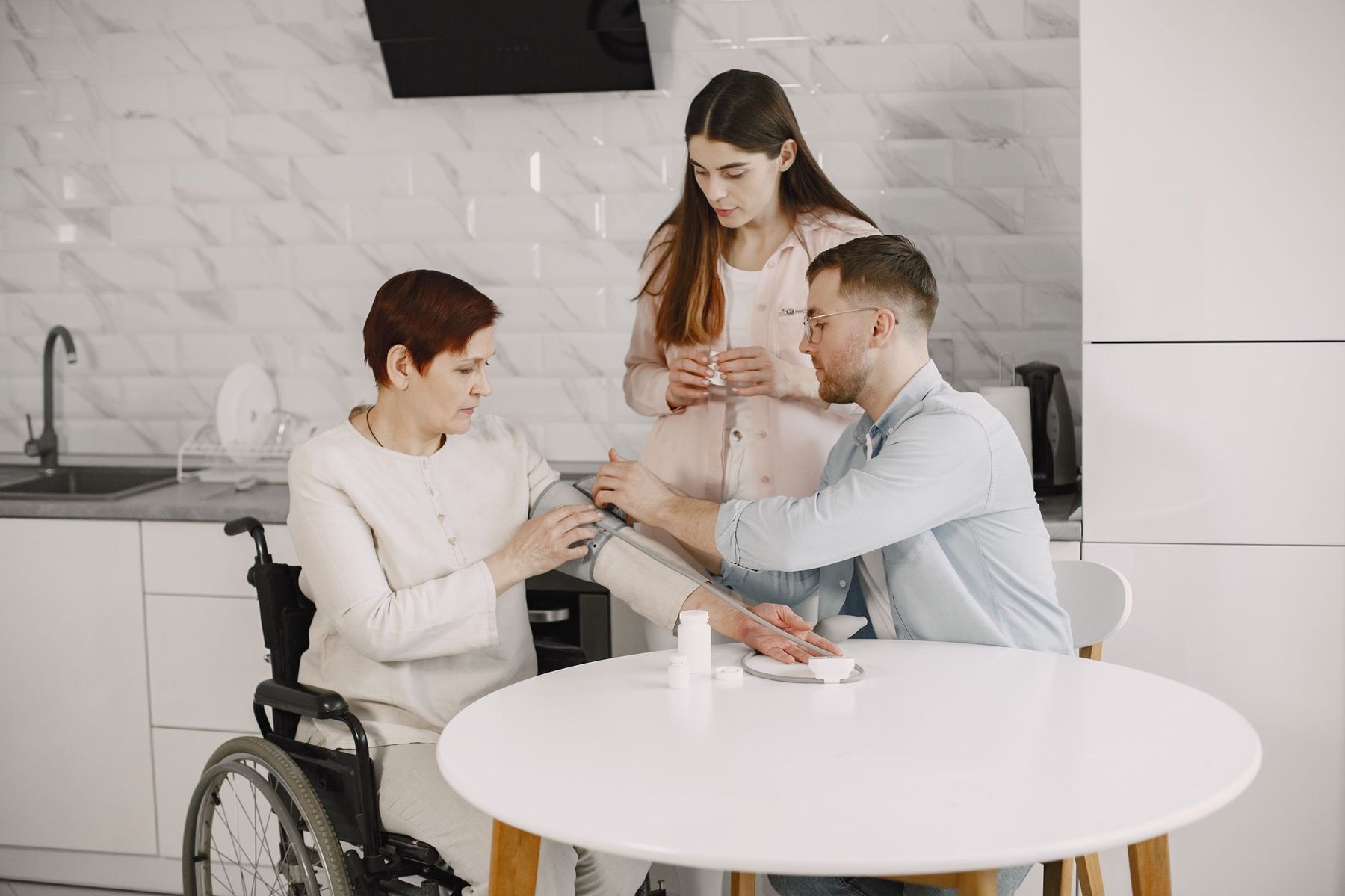
The supports that matter most for children with complex needs in Far North Queensland fall into a few groups. In-home support covers personal care and daily routines. Nursing-level supports, such as PEG feeding, stoma care and seizure monitoring, should be delivered by trained staff working under clinical oversight, with the treating team setting the care plan. Positive behaviour support comes from qualified practitioners. Early intervention therapy runs through occupational therapy, speech pathology and physiotherapy. Respite and short-term accommodation give families a genuine break.
School is another piece of the puzzle. Ask your child’s state school about reasonable adjustments and an individual support plan, and ask whether a special school or special education program in the Cairns region might suit your child better. If your child needs PEG feeding or has a seizure plan, get school staff and your NDIS team talking early so it’s clear who delivers those supports during school hours.
Geography changes everything up here. A family in Smithfield or Edmonton has a different service map from one in Atherton, Innisfail, Mossman or Port Douglas. Travel time eats into therapy hours, and a single sick worker on a 5am shift can leave a rural family without cover. Ask every provider how they staff your area specifically and who replaces a worker at short notice.
Does NDIS registration matter?
For clinical and high-intensity supports, we believe it does. Choose a registered provider when your child’s care involves PEG feeding, seizure monitoring, wound care or behaviour support. Ask to see the registration and confirm which support categories it covers, because registration for one category says nothing about another. For lower-risk supports, families have more room to choose, and a plan manager or support coordinator is the right person to explain how your plan’s management type affects that choice.
Cultural safety is part of good care
Aboriginal and Torres Strait Islander families make up a large share of the community across Cairns, the Cape and the Torres Strait, and cultural safety belongs in every conversation with a provider. Ask whether staff have worked with First Nations families, how they involve extended family and kin in decisions, and whether they will work alongside community-controlled health and family services you already trust.
Our team brings a range of cultural backgrounds, including Pacific Island communities, and we can talk with you about how we match workers to your family’s cultural needs. Every family deserves a team whose values feel familiar, and it is reasonable to ask any provider how theirs reflects yours.
Planning the transition to adult supports
This is where most families feel least prepared, and where our experience is most relevant. Children’s services and adult services are separate worlds. Paediatric teams hand over to adult health services, school-based routines end, and the people who know your child best are often replaced by new faces. The table below is how we would pace the planning.
| Stage | What is usually happening | What to start now |
|---|---|---|
| Under 9 | Early intervention, paediatric team, NDIS or Thriving Kids supports | Keep reports that describe daily support needs, not just diagnosis |
| 9 to early teens | School-based supports, ongoing therapy, needs may shift | Ask therapists to document function, communication and risks in writing |
| 15 to 17 | Handover planning from paediatric to adult health services | Talk with your support coordinator about adult supports and meet adult providers |
| 18 and over | Adult health services, adult NDIS supports, possible Supported Independent Living | Seek advice on decision-making and guardianship from an advocate or the relevant tribunal |
The handover from children’s services to adult support is a care plan in its own right, and it deserves the same attention as a seizure plan or a feeding plan.
The knowledge that matters most in a transition lives in a parent’s head. How does your child show pain when they cannot say it? Which positions settle them? What does the lead-up to a seizure look like for them, as opposed to what the textbook says? Write it down while your child is young, update it every year, and hand it to every new worker.
Good adult providers will ask for exactly this. At Advanced Disability Management, every person we support has client-specific training workshops for their team, registered nurse oversight of high-intensity supports, and collaboration with their occupational therapist, physiotherapist, speech pathologist, dietitian and psychologist. That structure exists so a family’s knowledge carries over instead of getting lost between systems.
Some young adults with complex needs eventually move into Supported Independent Living, with shared or individual arrangements and staff on hand around the clock. Whether SIL is funded is a decision for the NDIA, made on the evidence in the participant’s plan. Starting the conversation at 16 rather than 18 gives families time to visit homes, meet teams and gather the reports a planner will want to see. Families who plan early tend to find the move gentler for everyone.
Decision-making is the other piece. Once a young person turns 18, the legal position on who makes which decisions changes. Supported decision-making, guardianship and administration are processes with their own rules, and families should seek advice from an independent advocate, a legal service or the relevant tribunal well before the birthday arrives.
Families need support too
The national data on unmet need is sobering. Just over a third (36.7%) of people with a profound limitation had their need for help fully met, compared with 60.7% of people with a mild limitation, a gap of 24 percentage points (ABS, 2024). In other words, the higher a person’s needs, the more likely the family is filling the shortfall.
Parents carry a large share of that load. Among people with disability who received informal help, 26.2% received it from a parent, and of Australia’s 1.2 million primary carers, 43.8% had disability themselves (ABS, 2024). Many parents of children with complex needs are managing their own health alongside their child’s.
Our founders lived this. Caring for a child with Sanfilippo Syndrome taught them what it means to have no real break, and what it feels like to hand care to someone who does not yet know your child. That experience shapes how we work with families now. Respite should give parents genuine time off, which only happens when they trust the person in the room.
Practical steps help. Ask your support coordinator whether short-term accommodation or extra in-home support could be considered at your next plan review, keeping in mind that funding decisions sit with the NDIA. Talk to your GP about your own wellbeing, including mental health support through a care plan. Siblings matter too, and the national hub carries resources written for brothers and sisters of children with disability.
Questions to ask any provider
Before you commit to a provider for a child or young adult with complex needs, ask these questions and listen closely to how specific the answers are:
- Who will actually turn up, and how many different workers will my child see in a typical month?
- How is the team trained for my child specifically, beyond general high-intensity modules?
- Is there registered nurse oversight for supports such as PEG feeding or seizure monitoring, and who writes and reviews the support plans?
- If a worker calls in sick before an early shift in our area, who covers it?
- How will you work with our therapists and doctors, and how often do you meet them?
- What is your approach when a young person moves from children’s to adult supports?
Vague answers are an answer in themselves. A provider who knows its work will talk about names, rosters and training records, not slogans.
If you are thinking ahead to adult supports for your son or daughter, or simply want to talk through what the next few years might look like, we would be glad to hear from you. Call us on 0425 168 053, email [email protected], or use the contact page on our website, and we will take the time to understand your family’s situation before anything else.
Can an adult disability provider meet our teenager before they turn 18?
Yes. Introductory conversations, home visits and meet-and-greets before 18 are a sensible part of transition planning. Funded supports depend on what is in the participant’s NDIS plan at the time, but getting to know a future team early gives the young person time to build familiarity and gives families a chance to judge fit without pressure.
What can we do if we disagree with an NDIS decision about our child’s plan?
You can ask the NDIA for an internal review of most decisions, and there are time limits for doing so. If the outcome still seems wrong, external review through the Administrative Review Tribunal is available. Because the rules and deadlines matter, speak with your support coordinator and an independent disability advocate before you lodge anything, so your request is properly supported.
Is short-term accommodation the same thing as respite?
Short-term accommodation is the NDIS funding category most families think of as respite. It covers a participant staying somewhere other than home for a short period, with support included. Whether it suits your family and whether it is funded depends on your child’s plan and goals, so raise it with your support coordinator or planner ahead of your next review.
How should we keep our child’s care information organised for future providers?
Keep one living document that covers communication, routines, signs of pain or distress, medical history, current plans from the treating team and contacts for every professional involved. Store recent therapy reports alongside it. Review it every year and after any hospital stay. A well kept folder saves families from repeating their story to every new worker.