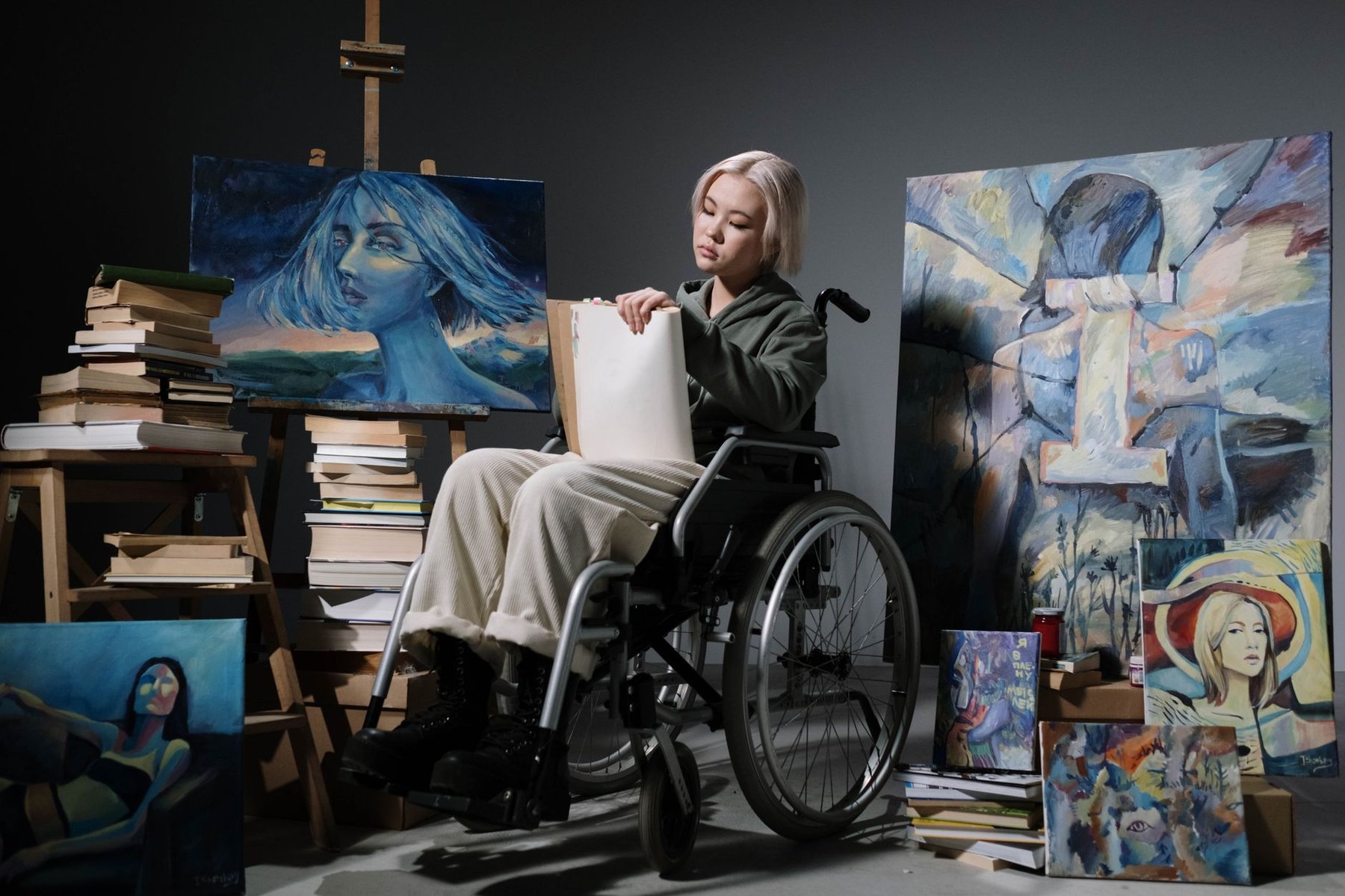
Creative arts programs for NDIS participants in Cairns fall into two distinct categories: registered art or music therapy aimed at measurable functional goals, and general community art classes funded as recreation and social participation. Cairns has solid local options in both categories. Knowing which one applies to your plan determines what you can claim, and from which providers.
That distinction sounds bureaucratic, but it decides whether a Tuesday afternoon pottery class gets funded from community participation or gets knocked back in a plan review. Families who understand the difference before they enrol can often avoid extended back-and-forth correspondence with the NDIA. Understanding the distinction upfront helps reduce the chance of a claim being knocked back later.
What Creative Arts Programs for NDIS Participants in Cairns Actually Look Like
The NDIS treats “art” as two functionally different things, and the difference matters more than most local marketing suggests. Therapeutic art or music therapy is delivered by a qualified therapist working toward a specific, stated goal in a participant’s plan, as defined and evidenced within that plan. General art or music activities, by contrast, sit under community participation. They are recreational, social, and genuinely valuable, but they are not claimed as therapy and don’t need to demonstrate a clinical outcome.
This isn’t a technicality invented by planners to make life harder. It reflects a formal position the NDIS Evidence Advisory Committee reached after reviewing how art and music therapy was being claimed nationally. Therapeutic supports need to point at an outcome beyond enjoyment. Community participation doesn’t, because enjoyment and connection are the outcome. A Cairns participant painting at a Saturday workshop and a Cairns participant doing structured clay work with a registered art therapist toward a stated speech and motor goal are both doing something worthwhile. They’re funded, delivered, and claimed completely differently.
The November 2025 Funding Changes Every Cairns Family Should Know
If your plan mentions art or music therapy, the ground shifted under it in the past year, and almost nothing written for Cairns families has caught up. Following an independent review and referral to the NDIS Evidence Advisory Committee, a new price cap for art and music therapy took effect, aligned with the standard counselling rate.
That followed an earlier interim change that had already moved standard art and music activity into the community participation budget. The higher, therapy-rate funding was retained only where art or music therapy was specifically named and evidenced in a participant’s plan, not claimed by default because a session involved paint or a guitar. Participants who already had therapy named in their plan, backed by evidence specific to their circumstances, were allowed to keep accessing it through the transition. New requests now face a tighter bar: a clear, individualised link between the therapy and a stated functional goal, assessed by the Evidence Advisory Committee’s more measured reading of what the research actually supports.
For Cairns families, the practical upshot is this: don’t assume a therapist’s invoice will automatically attract the higher rate just because the word “therapy” appears on it. The plan has to say so, with evidence behind it.
Where Cairns Participants Are Actually Doing Creative Arts
Cairns has a genuinely good spread of options once you know where to look, spanning visual arts, performance, film, and grassroots community programs.
- ARC Disability Services Inc. runs performing and visual arts programs covering dance, drama, choir and singing, drumming, painting, drawing, ceramics, mosaic, print, card making, filmmaking, and songwriting, catering from complete beginners through to advanced participants, including leadership pathways for artists who want to take on more responsibility within the program.
- Tropical Arts Association Incorporated is a not-for-profit inclusive theatre group in Cairns, open to members of all ages and backgrounds, built around community theatre rather than formal auditions or professional casting.
- Bus Stop Films delivers an Accessible Film Studies Program through Screen Queensland Studios Cairns, with free taster workshops for people with intellectual disability or autism aged 17 and over, a genuine entry point for anyone curious about filmmaking without committing to a full course upfront.
- Flame.Arts, run by Cairns Regional Council, supports young and emerging creatives, artists with disability, and First Nations artists specifically. The associated Flame.Arts Access “Leg Up” grants can provide up to $1,500 toward an arts or cultural project for a person with disability (Cairns Regional Council, 2025), which is worth investigating even outside a standard NDIS plan.
- Arts Access Queensland operates at the state level as a connector rather than a program provider. It’s the right first call if you’re not sure what exists locally, since it runs workshops and professional development and advises venues on accessibility and disability awareness.
None of these require you to already be “artistic” in any formal sense. Most are built around participation first, skill second.
Registered or Not: Why It Matters Who Delivers the Program
Here’s a trap that catches Cairns families more often than it should: not every local practitioner offering “art therapy” is registered with the NDIS. At least one Cairns-based practitioner has been open about this directly, stating she is eligible to register as an art therapist with the NDIS but has not yet done so, meaning she currently works only with self-managed or plan-managed participants. That’s not a criticism of her practice, but it is a fact about eligibility that changes what your funding can pay for.
Her own description of her approach, working “within trauma-informed, neuro-affirming and client centred approaches” to support clients “to express themselves through creativity and to explore their worlds, with self acceptance and sense of play” (Cairns Disability Network, 2025), reads like solid, thoughtful practice.
If your plan is NDIA-managed, you can only claim supports from registered providers. If you’re plan-managed or self-managed, you have more flexibility to engage practitioners who aren’t yet registered, provided the support still fits within your plan’s stated goals and categories. This single distinction decides whether a particular Cairns practitioner is even an option for you, regardless of how good their practice is.
The table below sets out the three main pathways side by side.
| Pathway | Typical funding category | Who delivers it | Registration required? | Plan evidence needed |
|---|---|---|---|---|
| Art or music therapy | Improved Daily Living / Capacity Building | Qualified art or music therapist | Yes, if NDIA-managed | Yes, specific goal and evidence required |
| Community art class or program | Community Participation | Local arts organisation, workshop facilitator | Not always, but check for NDIA-managed plans | General participation goal is usually sufficient |
| Grant-funded project (e.g. Flame.Arts Access) | Outside standard NDIS claiming, separate council grant | Independent artist or organisation | Not applicable | Not applicable, apply directly to council |
What the Evidence Actually Says, and How to Choose the Right Program
Nationally, uptake is real but modest. In the most recent reporting period, a modest number of NDIS participants accessed art therapy and music therapy across the country. That’s a small fraction of the total participant base, and it reflects how tightly these supports have always sat next to a defined clinical purpose rather than general wellbeing.
The Evidence Advisory Committee’s review found the overall evidence base is not conclusive across every disability group, which is precisely why planners now ask harder questions before funding therapy at the higher rate. This isn’t the NDIS being difficult for the sake of it. It’s a reasonable response to an evidence base that supports some claims well and others thinly.
The difference between a therapy and an activity isn’t the paintbrush. It’s the goal written into the plan.
That line matters more than any list of local providers, because it’s the thing almost nobody explains clearly before a family walks into their first planning meeting.
Start with the goal, not the activity. If a participant wants to build confidence, try something new, and meet people in a low-pressure setting, a community art class funded through community participation is the right fit, and it doesn’t need a clinical justification attached. If there’s a specific functional target defined and evidenced in the plan, that’s a conversation for a registered art or music therapist, ideally alongside the participant’s broader allied health team of occupational therapists, speech therapists, or psychologists who can help frame and evidence the goal properly.
A Support Coordinator or Local Area Coordinator can help translate between these two worlds, particularly if a plan is coming up for review and needs stronger evidence to retain therapy funding. Getting this conversation right before a plan review, rather than after a claim is rejected, saves both time and frustration.
Where High Support Needs Meet Creative Participation
Cairns has named, standout programs, and it’s worth knowing how that compares once you look beyond the region. Townsville and Brisbane are served more by a broader accessible-arts network than by single flagship organisations, with resource lists spanning Brisbane, Townsville, Cairns, and the Gold Coast pointing families toward contacts rather than one dominant provider in each city. For families splitting time between regions, or considering a move, this is worth knowing upfront: the Cairns landscape is genuinely more concentrated and easier to navigate than what currently exists further south.
Creative arts programs are sometimes framed as an option only for participants who can attend independently, sit through a session unassisted, and manage their own transport. That framing quietly excludes adults with profound or complex support needs, including those requiring PEG feeding, seizure monitoring, or 1:1 support for most of the day, from something that matters just as much to them as it does to anyone else.
This is where the practicalities around high-intensity support and creative participation actually meet. A participant with significant support needs can still take part in a filmmaking workshop or a community choir, provided the logistics are handled properly: transport assistance to get there, trained support staff who understand the participant’s specific medical needs well enough to manage them confidently in a public setting, and registered nurse oversight where health monitoring needs to continue during the activity. At Advanced Disability Management, this is the kind of coordination we build into daily support planning for the adults we work with across Cairns, Townsville, and Brisbane, alongside allied health collaboration with occupational therapists, physiotherapists, and speech therapists who can help identify which creative pursuits genuinely support a participant’s broader goals. It’s not a separate service bolted on. It’s part of what full, well-supported community participation actually requires for someone with complex needs.
FAQs
Does the NDIS fund art therapy in Cairns? Yes, but only when it’s specifically named in your plan as a therapy working toward a stated functional goal, with evidence to support the claim. Following the November 2025 changes, art and music therapy delivered by a qualified therapist is funded at $156.16 an hour when the plan supports it.
Can self-managed participants use unregistered art therapists? Yes. Self-managed and plan-managed participants can engage practitioners who aren’t yet registered with the NDIS, provided the support still fits within the plan’s stated goals and categories. NDIA-managed participants, however, can only claim supports from registered providers.
What’s the difference between art therapy and a community art class for funding purposes? Art therapy is claimed under Improved Daily Living or Capacity Building against a stated functional goal and must be delivered by a qualified therapist. A community art class sits under the community participation budget, doesn’t require a clinical goal, and is generally more straightforward to access regardless of how a plan is managed.
Who can help me work out which category applies to my plan? A Support Coordinator or Local Area Coordinator can help translate between therapy and community participation categories, which is particularly useful ahead of a plan review where stronger evidence may be needed to retain therapy funding.
Do I need a formal diagnosis to apply for a Flame.Arts Access Leg Up grant?
The Leg Up grants through Cairns Regional Council are aimed at people with disability developing arts or cultural projects, but exact eligibility criteria and documentation requirements are set by the council, not the NDIS. Contact Cairns Regional Council directly, or check with a Support Coordinator, to confirm current requirements before applying.
How do I find a Support Coordinator to help sort out art therapy funding in my plan?
If your plan includes Support Coordination, you can choose a coordinator from a registered provider in your area, including Cairns-based options. If you’re not sure whether you have this funding, check your plan document or ask the NDIA directly. A good coordinator can help translate a therapy goal into language a plan review will accept.
Can someone with high support needs, like PEG feeding or seizure monitoring, still join a community art program?
Yes, with the right support in place. This usually means trained staff who understand the participant’s specific needs, transport arranged in advance, and clear communication with the program facilitator about what support looks like on the day. Talk to your support provider about coordinating attendance well before the program starts, rather than on the day itself.
What happens if my plan already listed art or music therapy before the November 2025 pricing changes?
Participants who already had art or music therapy named in their plan, supported by evidence specific to their circumstances, were generally permitted to continue accessing that funding through the transition. If you’re unsure how the changes affect your specific plan, raise it directly with the NDIA or your Support Coordinator rather than assuming your existing arrangement is unaffected.