Your home should be a sanctuary—a place where you feel safe, independent, and empowered to live life on your own terms. Yet for many people with disabilities across Cairns and Brisbane, everyday activities like accessing the bathroom, entering through the front door, or moving freely through hallways can present significant challenges. The good news? The National Disability Insurance Scheme (NDIS) recognises that your home environment plays a fundamental role in your wellbeing and independence, offering comprehensive funding for home modifications that can transform how you experience your living space.
Understanding how to navigate NDIS home modifications can feel overwhelming, especially when you’re already managing the complexities of disability support. Whether you’re considering simple grab rails for your bathroom or contemplating more extensive structural changes to accommodate a wheelchair, knowing what’s possible, what’s fundable, and how to approach the process can make all the difference between feeling trapped by your environment and feeling empowered within it.
What Types of Home Modifications Does NDIS Fund in Cairns?
The NDIS categorises home modifications into three distinct tiers based on cost, complexity, and structural impact. This classification system helps determine the assessment requirements, approval processes, and funding arrangements for your specific needs.
Simple Home Adaptations represent the most accessible entry point, typically costing under $1,500. These include grab rails, mounted shower chairs, lever-style door handles, and minor adjustments to switches and locks. The beauty of simple adaptations lies in their quick implementation—they’re readily available from everyday suppliers and may require only an informal assessment or basic Occupational Therapist recommendation.
Minor Home Modifications are divided into two categories. Category A modifications (under $10,000) encompass non-structural changes like handrails, accessible tapware, basic ramps, and non-slip flooring, requiring assessment from any qualified Occupational Therapist. Category B modifications ($10,000 to $20,000) involve more complex work such as non-structural door widening or extensive bathroom modifications, necessitating assessment from a specially qualified home modification assessor with senior-level NDIS training.
Complex Home Modifications exceed $20,000 or involve structural changes regardless of cost. These transformative modifications might include widening doorways and hallways, comprehensive bathroom renovations involving floor changes, lift installations, or alterations to load-bearing walls. Such projects require detailed assessments from qualified home modification assessors working alongside building construction professionals, and typically involve a Building Works Project Manager to oversee the entire process.
The tropical climate in Cairns introduces unique considerations for home modifications. High humidity and substantial rainfall necessitate particular attention to drainage systems, non-slip surfaces (especially critical in wet conditions), adequate ventilation, and materials resistant to corrosion and rot. These climate-specific factors should be discussed with your Occupational Therapist and builder during the planning phase to ensure modifications remain safe and functional year-round.
| Modification Category | Cost Range | Assessment Required | Examples | Typical Timeline |
|---|---|---|---|---|
| Simple Adaptations | Under $1,500 | Informal or basic OT | Grab rails, lever handles, shower chairs | 2-4 weeks |
| Minor (Category A) | Under $10,000 | Qualified OT | Handrails, basic ramps, accessible tapware | 3-6 weeks |
| Minor (Category B) | $10,000-$20,000 | Home modification assessor | Bathroom modifications, door widening | 6-10 weeks |
| Complex | Over $20,000 or structural | Home modification assessor + building professional | Major renovations, lifts, structural changes | 2-6 months |
How Do I Know If I’m Eligible for NDIS-Funded Home Modifications?
Eligibility for NDIS home modifications centres around the principle of “reasonable and necessary” support. This isn’t simply about wanting a more comfortable home—it’s about demonstrating that your current living environment creates genuine barriers to your independence, safety, and ability to achieve your NDIS plan goals.
The NDIS considers funding home modifications when you or your carers cannot reasonably access frequently used rooms and spaces due to your disability. Perhaps you’re unable to safely enter or exit your home independently, or maybe your bathroom configuration poses significant injury risks. Your current home environment must have a demonstrable adverse impact on the sustainability of your living and care arrangements.
A suitably qualified Occupational Therapist must conduct a comprehensive assessment and recommend home modifications after considering alternative solutions such as assistive technology or equipment. The modifications must relate directly to your disability, help you achieve your NDIS plan goals, and represent value for money compared to alternative supports.
Property circumstances matter significantly. You must either own your home or, if renting, obtain written landlord approval before proceeding. The property must be structurally suitable for modification, and you should intend to remain living there for a reasonable period—typically at least 12 months for minor modifications and 5+ years for major structural changes. The NDIS prioritises funding for modifications to your primary residence.
What Does the NDIS Home Modification Process Actually Involve?
Understanding the home modification process helps you approach your application with confidence and realistic expectations. The journey typically unfolds across several carefully structured stages, each serving a specific purpose in ensuring modifications meet both your needs and NDIS standards.
Initial Discussion Phase
Begin by discussing your home environment challenges with your Support Coordinator or Local Area Coordinator (LAC). This conversation explores how your current living space limits independence or safety, identifies specific barriers, and determines whether home modifications represent the most appropriate solution. You’ll discuss how proposed modifications connect to your NDIS plan goals—perhaps increasing independence in personal care, reducing carer burden, or enabling you to remain living in your family home.
Occupational Therapy Assessment
An Occupational Therapist conducts a thorough home visit, evaluating your functional capacity, daily activities, and the specific barriers preventing access. They assess alternative solutions (like assistive technology or equipment) before recommending modifications. This assessment must clearly outline how modifications relate to your disability, why they’re reasonable and necessary, the scope of works required, and cost estimates.
For simple adaptations and Category A minor modifications, any qualified Occupational Therapist can conduct the assessment. However, Category B and complex modifications require a home modification assessor—a senior-level OT with specialised NDIS-authorised training, often an Associate Member or higher of the Association of Consultants in Access Australia (ACAA).
Documentation and Quotes
Recent changes to NDIS pricing arrangements mean minor modifications under $20,000 no longer require quotes (except in remote or very remote areas), with funding based on market rates. Complex modifications over $20,000 require two itemised quotes including detailed dimensions, separate costing for each construction stage, descriptions of fixtures with make and model, and GST-inclusive pricing.
Building plans must comply with local council codes and NDIS guidelines, with risk assessments completed where required. For rental properties, written landlord approval is mandatory before any documentation reaches the NDIS.
NDIS Approval Process
Your Support Coordinator submits the complete documentation package to the NDIS, which reviews your application against “reasonable and necessary” criteria. Straightforward cases typically receive decisions within 14 days, though complex modifications take longer. Crucially, you must never commence work until receiving written funding approval—the NDIS will not fund work started prematurely.
Construction Phase
Once approved, you’ll engage an NDIS-registered builder who conducts a site meeting, provides a detailed quote and schedule, and begins work according to approved plans. For complex modifications, a Building Works Project Manager oversees the entire process, ensuring scope, quality, and timeline adherence. The Cairns Regional Council building codes apply, with necessary permits arranged by your building certifier.
Throughout construction, regular communication keeps you informed of progress. Site inspections verify compliance with building codes and NDIS standards, ensuring your modifications meet both functional requirements and safety standards.
Final Inspection and Handover
Upon completion, a building surveyor conducts final inspection (where building permits were required), certificates of compliance are obtained for electrical, plumbing, and other work, and your Occupational Therapist performs a post-completion assessment verifying modifications meet your functional needs. You’ll receive all documentation, warranties, and guidance on maintenance and proper use of your modifications.
What Bathroom and Accessibility Modifications Are Most Commonly Funded?
Bathroom modifications represent the most frequently funded category of home modifications, reflecting the significant injury risk associated with wet areas and the fundamental importance of dignified, independent personal care. The statistics are sobering—bathrooms account for the majority of home injuries for people with mobility limitations, making safety improvements both medically necessary and cost-effective in preventing hospitalisation.
Bathroom Transformation Options
Roll-in or walk-in showers with curbless, level access eliminate dangerous threshold barriers. Many participants opt for bathtub removal and replacement with accessible shower alternatives, creating spacious, safe bathing areas. Strategic placement of grab rails and handrails provides essential stability points, whilst toilet modifications (raised height, accessible positioning) enable independent toileting. Sinks can be lowered with appropriate knee clearance, and non-slip flooring throughout the bathroom dramatically reduces fall risk.
Temperature-controlled shower valves with anti-scald protection safeguard against burns—particularly important for people with reduced sensation or cognitive impairments. Accessible tapware with lever-style controls replaces difficult-to-grip taps, and handheld showerheads with extended hoses offer flexibility and control during bathing.
Interestingly, bathroom floor modifications are often classified as “minor” even when costs exceed $20,000, potentially simplifying the approval process. Wall reinforcement for future grab bar installation can be included, providing flexibility for changing needs over time.
Entry and Internal Access Solutions
Wheelchair ramps—whether portable or fixed—transform home entry from impossible to effortless. Platform steps, decking, and level entry creation eliminate barriers at the front door, whilst door widening for external entry accommodates wheelchairs and mobility aids. The standard minimum width for wheelchair access is 80 centimetres (32 inches), though your specific requirements may differ.
Inside the home, hallway widening (minimum 90 centimetres or 36 inches) enables comfortable navigation, and threshold ramps between rooms create seamless transitions. For multi-level homes, stairlifts, vertical platform lifts, or even home elevators can be funded when structurally feasible and reasonable for your circumstances.
Kitchen and Bedroom Accessibility
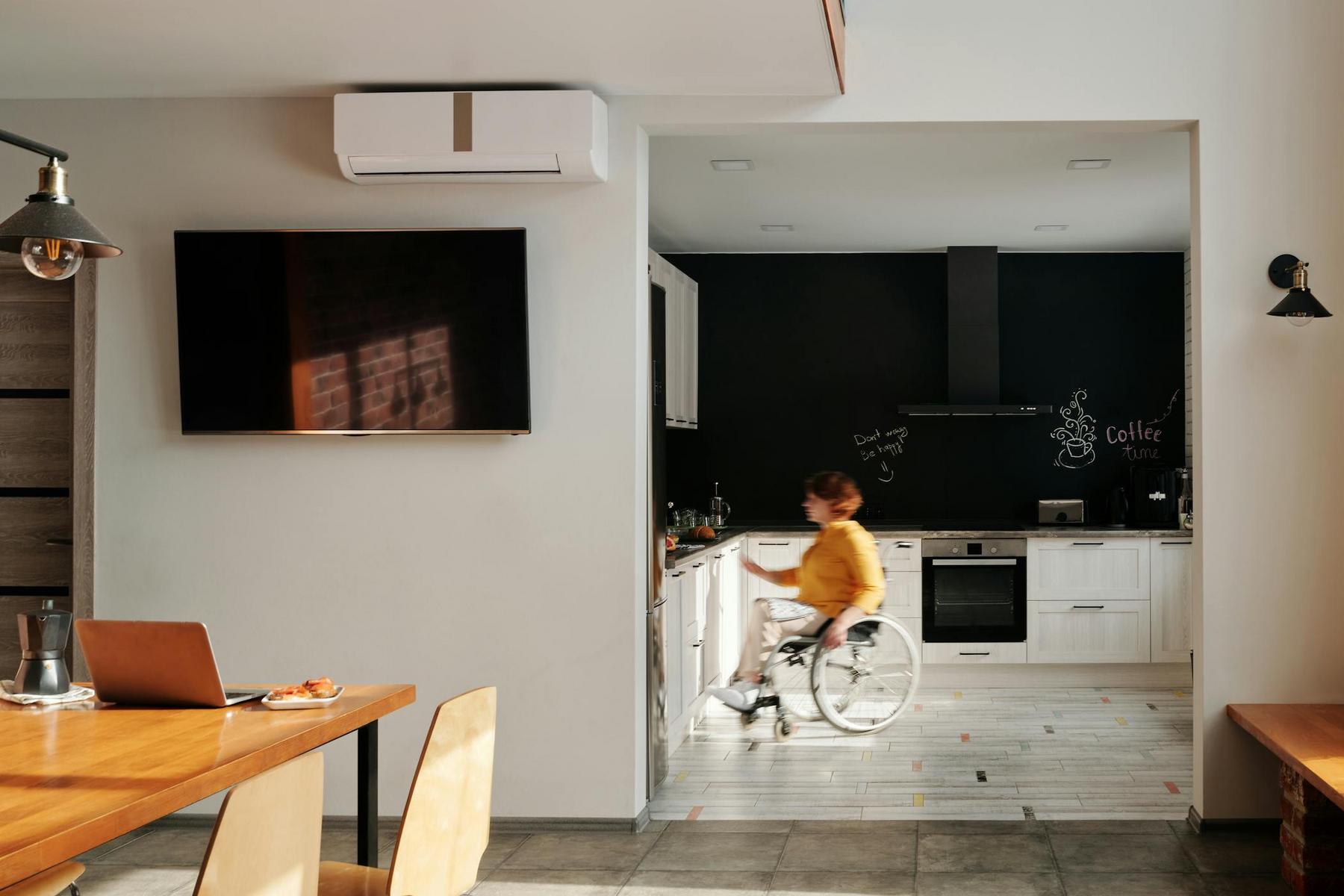
Kitchen modifications might include lowered benchtops and countertops (optimal height: 76-84 centimetres), pull-out or adjustable shelving and drawers, repositioned appliances for accessibility, and appropriate knee clearance underneath work surfaces. Accessible storage solutions—open shelving, lazy Susan systems, pull-out mechanisms—transform cooking and meal preparation from frustrating struggles into manageable activities.
Bedroom modifications often focus on ceiling hoist installations with reinforced structural support, enabling safe transfers. Door widening for wheelchair access, additional power outlets for medical equipment, and adequate turning space (minimum 150-centimetre diameter for wheelchair turning) create functional, dignified sleeping areas.
How Does Climate and Location Affect Home Modifications in Cairns?
Cairns’ tropical climate introduces specific considerations that set home modifications here apart from those in southern regions. With high humidity year-round and substantial wet season rainfall, every modification decision must account for moisture management, material durability, and safety in wet conditions.
Climate-Responsive Design Considerations
Non-slip surfaces become exponentially more critical in tropical climates where humidity creates perpetually slick conditions. External ramps and pathways require particular attention to drainage and surface texture, ensuring water doesn’t pool and create hazardous conditions. Your builder should recommend materials specifically rated for high-slip-resistance in wet conditions—standard specifications from temperate regions may prove inadequate in Cairns’ environment.
Ventilation requirements differ significantly from cooler climates. Modified bathrooms need robust extraction systems preventing mould growth, and materials must resist rot and corrosion. Stainless steel fixtures, treated timber, and corrosion-resistant fastenings represent essential rather than optional choices. Your Occupational Therapist and builder should explicitly address tropical durability in their recommendations and specifications.
External modifications face particular challenges. Timber ramps and decking require appropriate treatment and species selection resistant to termites and moisture damage. Consider that the wet season brings not just rain but intense tropical downpours—drainage must accommodate high-volume water flows, and handrails need rust-resistant treatment.
Regional Service Considerations
Sourcing NDIS-registered builders and qualified home modification assessors in regional areas can present challenges. Whilst Cairns has growing disability services infrastructure, the pool of specialised professionals may be smaller than in Brisbane. This reality can impact timelines—you might wait longer for assessments or qualified builders to become available.
However, regional location also offers advantages. Cairns’ relatively compact size can mean more personalised service and stronger relationships with local providers. Many Cairns-based disability service providers, including those offering support coordination, maintain established relationships with reliable local builders and Occupational Therapists who understand both NDIS requirements and tropical building considerations.
The NDIS recognises that remote or very remote locations may face different pricing pressures. Whilst Cairns doesn’t typically fall into these categories, if you live in outlying areas of Far North Queensland, you may face different quote requirements or need to demonstrate why local service provision costs differ from metropolitan rates.
Why Do Some Home Modification Applications Get Rejected?
Understanding common rejection reasons helps you avoid pitfalls and strengthen your application. NDIS approval isn’t guaranteed simply because you have a disability and desire home modifications—the “reasonable and necessary” test requires meeting specific criteria, and many applications stumble on technical or evidentiary grounds.
Insufficient Evidence of Functional Impact
The most frequent rejection reason involves inadequate demonstration of how your current home environment specifically limits your functional capacity. Generic statements like “the bathroom is difficult to use” won’t suffice. Your Occupational Therapist must document precise functional limitations—for instance, “the 15-centimetre bathtub threshold presents a fall risk during transfers, and the participant has fallen twice in the past six months attempting to navigate it, resulting in emergency department presentations.”
Your assessment must clearly articulate why assistive technology or equipment cannot reasonably address the barriers. If a shower chair and grab rails would enable safe bathing, the NDIS questions why structural bathroom renovation is necessary. The assessment should explain what alternatives were considered and why they’re insufficient for your specific circumstances.
Misalignment with NDIS Plan Goals
Home modifications must connect directly to goals in your NDIS plan. If your plan emphasises employment participation but makes no mention of home-based independence or personal care, justifying bathroom modifications becomes more difficult. Before pursuing home modifications, review your plan to ensure it includes relevant goals around independent living, home-based activities, and reducing carer dependency.
Value for Money Concerns
The NDIS scrutinises whether proposed modifications represent cost-effective solutions. If your quotes significantly exceed standard market rates, the application may be rejected or returned for revised quotes. Similarly, if modifications seem disproportionately expensive relative to the functional benefit—for instance, proposing $80,000 worth of modifications to a home you’re only renting for 12 months—the NDIS may deem them unreasonable.
Premium finishes, luxury materials, or aesthetic improvements beyond functional requirements won’t receive funding. Your builder’s quote should specify standard-grade materials and fittings. If you desire premium upgrades, you can fund the difference yourself, but this should be clearly documented to avoid delays or confusion.
Property Tenure and Suitability Issues
Applications for rental properties without written landlord approval face automatic rejection. Even with approval, if your lease term seems insufficient given the modification scope, the NDIS may question whether the investment makes sense. For major structural modifications in rental properties, expect the NDIS to require evidence of long-term tenancy agreements—typically five years or more.
Structural unsuitability can also cause rejection. If engineering assessment reveals your home’s structure cannot safely accommodate proposed modifications, or if local council planning regulations prohibit the work, your application won’t proceed. This particularly affects heritage-listed properties or homes in specific planning zones.
Premature Applications
Applications submitted without proper assessment documentation, adequate quotes (where required), or necessary permissions face rejection. The NDIS cannot approve modifications based on incomplete information. Ensure your Support Coordinator has assembled a comprehensive documentation package before submission, including all reports, plans, quotes, approvals, and evidence.
Moving Forward: Creating Your Accessible Home in Cairns
The journey towards an accessible home represents more than physical modifications—it’s about reclaiming independence, dignity, and the fundamental right to feel comfortable and safe in your own living space. For Cairns and Brisbane residents navigating the NDIS home modifications process, understanding the requirements, engaging qualified professionals, and maintaining realistic expectations about timelines creates the foundation for successful outcomes.
Your home environment profoundly influences your daily experiences, mental wellbeing, and capacity to pursue personal goals. Investing time in thorough assessment, comprehensive documentation, and collaborative planning with your Occupational Therapist and builder pays dividends throughout the modification process and in the years of enhanced functionality that follow.
The NDIS framework provides substantial support for home modifications, recognising that environmental accessibility often determines whether someone can remain in their community, maintain family connections, and live with autonomy. Whether you’re considering simple grab rails to prevent bathroom falls or contemplating comprehensive modifications enabling wheelchair access throughout your home, the NDIS offers pathways to funding—provided you understand the requirements and approach the process strategically.
Remember that home modifications represent long-term investments in your independence and safety. Taking time to get the planning right, ensuring modifications meet both your current and anticipated future needs, and working with experienced professionals familiar with NDIS requirements and tropical building considerations maximises the likelihood of approval and the quality of outcomes.
Can I receive NDIS funding for home modifications if I’m renting in Cairns?
Yes, NDIS funding for home modifications is available for rental properties, but you must obtain written landlord approval before any work commences. The NDIS typically requires evidence of longer tenancy terms for substantial modifications—generally 12 months minimum for minor modifications and 5+ years for major structural changes. Discussing the benefits with your landlord or considering portable solutions may help if permanent modifications are a concern.
How long does the entire NDIS home modification process take from initial assessment to completion?
Timeframes vary significantly based on modification complexity. Simple adaptations might be completed within 2-4 weeks once approved. Minor modifications typically require 3-8 weeks from assessment through completion. Complex structural modifications generally take 2-6 months for construction alone, with additional time for assessment and approval processes. Regional factors, such as builder availability in Cairns, may also influence timelines.
What happens if the home modifications I need exceed NDIS funding limits?
The NDIS assesses each modification application individually based on a ‘reasonable and necessary’ test rather than adhering to strict funding limits. If your proposed modifications are deemed excessive relative to the functional benefit, or if you desire premium finishes beyond standard specifications, you may need to contribute personally to the additional costs. It’s important to clearly document which aspects are functionally necessary and which are personal choices.
Will NDIS fund air conditioning or heating in my Cairns home?
Generally, the NDIS does not fund standard air conditioning or heating systems as these are considered everyday household expenses. However, if you can provide medical evidence demonstrating that your disability necessitates specific temperature regulation—for example, due to health risks—the NDIS may consider funding. Detailed documentation from your treating medical specialists is required to support such a claim.
Can I make changes to approved home modification plans after NDIS has provided funding approval?
Making changes after approval can be complex. Minor variations might be accommodated through discussions with your Building Works Project Manager and Support Coordinator, but substantial changes to scope, cost, or design typically require a resubmission for approval. It is best to ensure your initial plans comprehensively cover your needs, and if changes become necessary during construction, contact your Support Coordinator immediately to discuss the process.