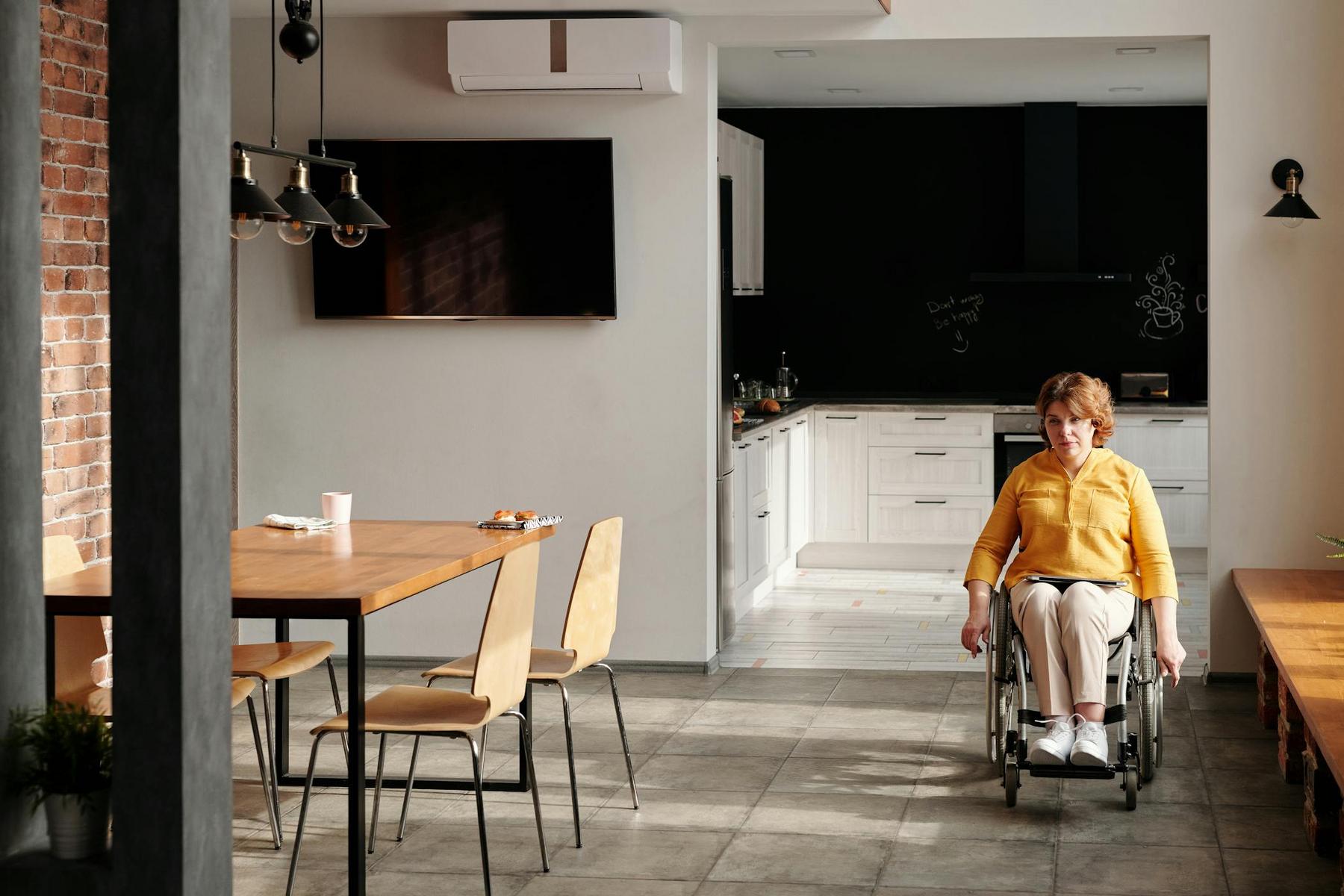
Life with a disability can present daily challenges that most people never think twice about – opening a door, communicating a thought, or simply moving safely from one room to another. For NDIS participants and their families across North Queensland, assistive technology has the power to transform those challenges into possibilities. Yet navigating the world of NDIS assistive technology providers in Townsville can feel overwhelming, especially when you are already managing so much. This guide is here to walk you through everything you need to know – clearly, compassionately, and without the jargon.
What Is NDIS Assistive Technology and Who Can Access It?
The National Disability Insurance Agency (NDIA) defines assistive technology (AT) as any device or system that allows individuals to perform tasks they would otherwise be unable to do, or that increases the ease and safety with which those tasks can be performed. It is one of the most impactful funding categories within the National Disability Insurance Scheme (NDIS), directly enabling greater independence, safety, and community participation.
As at 30 June 2025, the NDIS supports 739,414 participants nationally, with the scheme projected to grow to 860,514 participants by 30 June 2029. In Queensland alone, the total NDIS funding allocation stands at $12.15 billion, with 301,087 participants holding NDIS Worker Screening Check clearances. This remarkable scale reflects just how central the NDIS has become to disability support in Australia – and Townsville sits squarely within this growing network of care.
To access assistive technology funding through the NDIS, supports must meet the “reasonable and necessary” criteria, meaning the AT must directly relate to your disability, align with your plan goals, and represent value for money compared to alternatives. Understanding this threshold is essential before approaching any provider.
What Types of Assistive Technology Does the NDIS Fund in Townsville?
The range of NDIS-funded assistive technology is broader than many participants realise. Across Townsville, registered providers assess and recommend supports spanning several key categories.
Mobility Equipment
This includes manual and power wheelchairs, walking frames, mobility scooters, transfer equipment, hoists, and standing frames. Power wheelchairs, for example, can range from approximately $3,000 to well over $25,000 depending on complexity.
Communication Devices
Speech-generating devices, augmentative and alternative communication (AAC) apps and tablets, hearing aids, FM systems, computer access equipment, and eye-gaze systems all fall under this category. These technologies are life-changing for participants with communication support needs.
Daily Living and Personal Care Aids
Shower chairs, grab rails, bath lifts, adaptive kitchen utensils, dressing aids, smart home environmental controls, and continence support products are commonly funded for eligible participants.
Health Management Equipment
Pressure care cushions, pressure relief mattresses, medication reminder systems, and emergency alert devices support health and safety in daily life.
Home Modifications
The NDIS also funds structural and non-structural changes to a participant’s home – from grab bars and ramps (Category A minor modifications) through to complex bathroom renovations, ceiling hoist installations, and hallway widening.
How Does NDIS Assistive Technology Funding Work? A Cost and Approval Overview
One of the most important things to understand when exploring NDIS assistive technology providers in Townsville is the three-tier funding structure. Each tier carries different documentation requirements, funding sources, and approval timeframes.
| AT Category | Cost Range | Funding Source | Evidence Required | NDIA Approval Timeframe |
|---|---|---|---|---|
| Low-Cost AT | Under $1,500 per item | Core Supports (Consumables) | Minimal – no formal quotes required | Immediate / 28 days |
| Mid-Cost AT | $1,500 – $15,000 per item | Capital Supports | Written therapist evidence + cost estimate | 28 days |
| High-Cost AT | Over $15,000 per item | Capital Supports (Stated in plan) | Full assessment report + detailed quote | 50 days |
It is worth noting that while the NDIA Participant Service Guarantee specifies these timeframes, research has identified that approval delays frequently extend beyond these targets, with some participants experiencing waits of several months. This makes early preparation and thorough documentation critically important.
Average NDIS payments sit at $65,800 per participant annually (2024–25 data), with assistive technology representing approximately 3% of total NDIS spending – totalling $1.4 billion in annualised committed supports as at September 2023 (ANAO Performance Audit, 2025).
Who Are the Key NDIS Assistive Technology Providers in Townsville?
Townsville has a well-established ecosystem of registered NDIS assistive technology providers, each with distinct areas of expertise.
LifeTec Australia – Townsville
With over 47 years of experience in the assistive technology sector, LifeTec Australia is one of the most established AT providers operating in Townsville. Their team offers personalised AT assessments and trials, augmentative and alternative communication (AAC) evaluations, home modifications services, speech pathology, and allied health support. They are particularly well regarded for complex communication technology assessments.
Alliance Rehabilitation – Townsville
Operating from locations in Kirwan and Pimlico, Alliance Rehabilitation provides a multidisciplinary allied health approach to AT provision. Their services span assistive technology assessments, home modification assessments, functional needs assessments, occupational therapy, speech pathology, physiotherapy, and exercise physiology. Their team conducts in-home visits across a substantial portion of Greater Townsville, including suburbs from Aitkenvale and Annandale through to Mount Louisa, Pimlico, Thuringowa Central, and even Magnetic Island.
Apricus Health – North Queensland
Apricus Health delivers community-based occupational therapy across the North Queensland region, including Townsville. Their services are accessible to self-managed, plan-managed, and NDIA-managed participants, covering functional capacity assessments, daily living support, AT prescription, and home modifications.
Independent Living Specialists (ILS) – Garbutt
Located at 437–439 Woolcock Street in Garbutt, ILS offers a comprehensive mobility and assistive technology offering including equipment sales, rental, and servicing. With over 60 showrooms and 40 Assistive Technology Professionals operating along Australia’s east coast, they bring significant depth of product knowledge and choice to Townsville participants.
Vision Australia – Northern Queensland (Townsville)
For participants experiencing vision loss, Vision Australia’s Northern Queensland team – located near the Mater Hospital precinct in Pimlico – provides specialist AT training and access, daily living skills development, and NDIS, My Aged Care, and fee-for-service supports. Their retail store allows participants to experience and trial an extensive range of vision-specific assistive technology.
What Is the Step-by-Step Process for Getting Assistive Technology Approved?
Understanding the approval pathway helps participants move through the system with greater confidence and fewer delays. Here is how the process typically unfolds:
- Identify the need – Document the daily activities affected by your disability and discuss your AT requirements with your Local Area Coordinator (LAC), support coordinator, or plan manager.
- Obtain a professional assessment – For mid-cost and high-cost items, a qualified occupational therapist, physiotherapist, or speech pathologist (AHPRA-registered) will conduct a formal assessment, including equipment trials where appropriate.
- Gather evidence and documentation – Low-cost items require minimal paperwork, but mid-cost and high-cost AT require therapist-written evidence, cost estimates, and detailed assessment reports that clearly justify the “reasonable and necessary” criteria.
- Submit to the NDIA – Documentation is submitted through your NDIS planning meeting, plan review, or as a plan variation request.
- Await the NDIA decision – Timeframes are 28 days for low and mid-cost AT, and 50 days for high-cost AT, though timely submission of complete documentation reduces the risk of delays.
- Receive plan update and funding – Once approved, the AT is added to your plan under either Core Supports (low-cost) or Capital Supports (mid and high-cost).
- Source, implement, and train – Work with your provider to source the equipment, arrange delivery or installation, and receive appropriate training.
How Does Assistive Technology Improve Outcomes for NDIS Participants?
The evidence for the positive impact of assistive technology is compelling. According to NDIS Quarterly Report data for Q3 2024–25, participants aged 15 and over show a 23% relative increase in community participation over time in the scheme (from a baseline of 35% to 43% at latest reassessment). Employment participation for participants aged 15 to 24 more than doubled – rising from 10% to 23%. Furthermore, 80% of participants with two or more years in the NDIS report greater choice and control over their lives, up from 67% at their first reassessment.
These outcomes are not accidental. They are the direct result of timely, well-prescribed assistive technology enabling people to move, communicate, engage, and contribute in ways that would otherwise be out of reach. When the right AT is matched to the right person, independence becomes more than a goal – it becomes a daily reality.
Navigating NDIS Assistive Technology With Confidence
Townsville’s network of NDIS assistive technology providers offers participants and their families genuine choice, expertise, and support across mobility, communication, daily living, and home modifications. From initial assessment through to equipment delivery and ongoing maintenance, the region’s registered providers bring both clinical rigour and genuine compassion to the process.
If you or someone you love is working through an NDIS plan in North Queensland – or indeed across Queensland – it is worth investing the time to understand which funding category applies to your needs, what documentation will strengthen your application, and which providers are best suited to your specific goals. Accessing the right assistive technology at the right time can make an extraordinary difference to daily life, independence, and wellbeing.
What is the difference between low-cost, mid-cost, and high-cost NDIS assistive technology?
Low-cost AT refers to items under $1,500 — such as shower chairs or walking sticks — funded through the Core Supports budget with minimal paperwork. Mid-cost AT (ranging from $1,500 to $15,000) includes items like powered wheelchairs or AAC devices and requires written therapist evidence and a cost estimate. High-cost AT (over $15,000) entails more complex equipment such as custom wheelchairs or sophisticated communication systems and requires a full professional assessment along with detailed quotes.
Do I need an occupational therapist to access NDIS assistive technology in Townsville?
For mid-cost and high-cost assistive technology, an AHPRA-registered occupational therapist, physiotherapist, or speech pathologist is essential to conduct a formal assessment and provide the necessary clinical evidence. For low-cost items, while a formal assessment might not be required, professional advice is still beneficial to ensure you choose the right equipment.
How long does NDIS assistive technology approval take?
The NDIA Participant Service Guarantee suggests a 28-day timeframe for low and mid-cost AT and up to 50 days for high-cost items. However, delays can occur—sometimes extending to several months—if documentation is incomplete or the assessment is complex.
Can NDIS assistive technology funding cover home modifications in Townsville?
Yes, the NDIS funds both minor and major home modifications. This can include small changes like grab rails and ramps as well as more extensive structural modifications such as bathroom renovations or ceiling hoist installations. A qualified occupational therapist must assess and document the modifications to meet the ‘reasonable and necessary’ criteria.
What happens if my assistive technology needs change between NDIS plan reviews?
If your AT needs change significantly between scheduled plan reviews, you can request a plan variation or an unscheduled review. It’s important to liaise with your support coordinator or LAC early to update your clinical evidence and documentation, ensuring that your revised needs are accurately captured in your current plan.