NDIS support on Palm Island and across Cape York exists, but it looks nothing like NDIS support in Cairns or Brisbane. Distance decides almost everything: which provider can reach a participant, how often a planner visits, and whether a doctor is even available locally to sign off a plan. Local organisations, government-funded connector programs, and a handful of specialist providers are working to close that gap, community by community, rather than region by region.
The Tyranny of Distance Isn’t a Metaphor Here
The NDIS became available across Cairns, the Cassowary Coast, Tablelands, Croydon, Etheridge, Cape York and the Torres Strait, extending the scheme to communities that had not previously had access to it. On paper, that rollout put Palm Island and Cape York communities inside the same scheme as every other Queenslander. On the ground, geography still does most of the deciding.
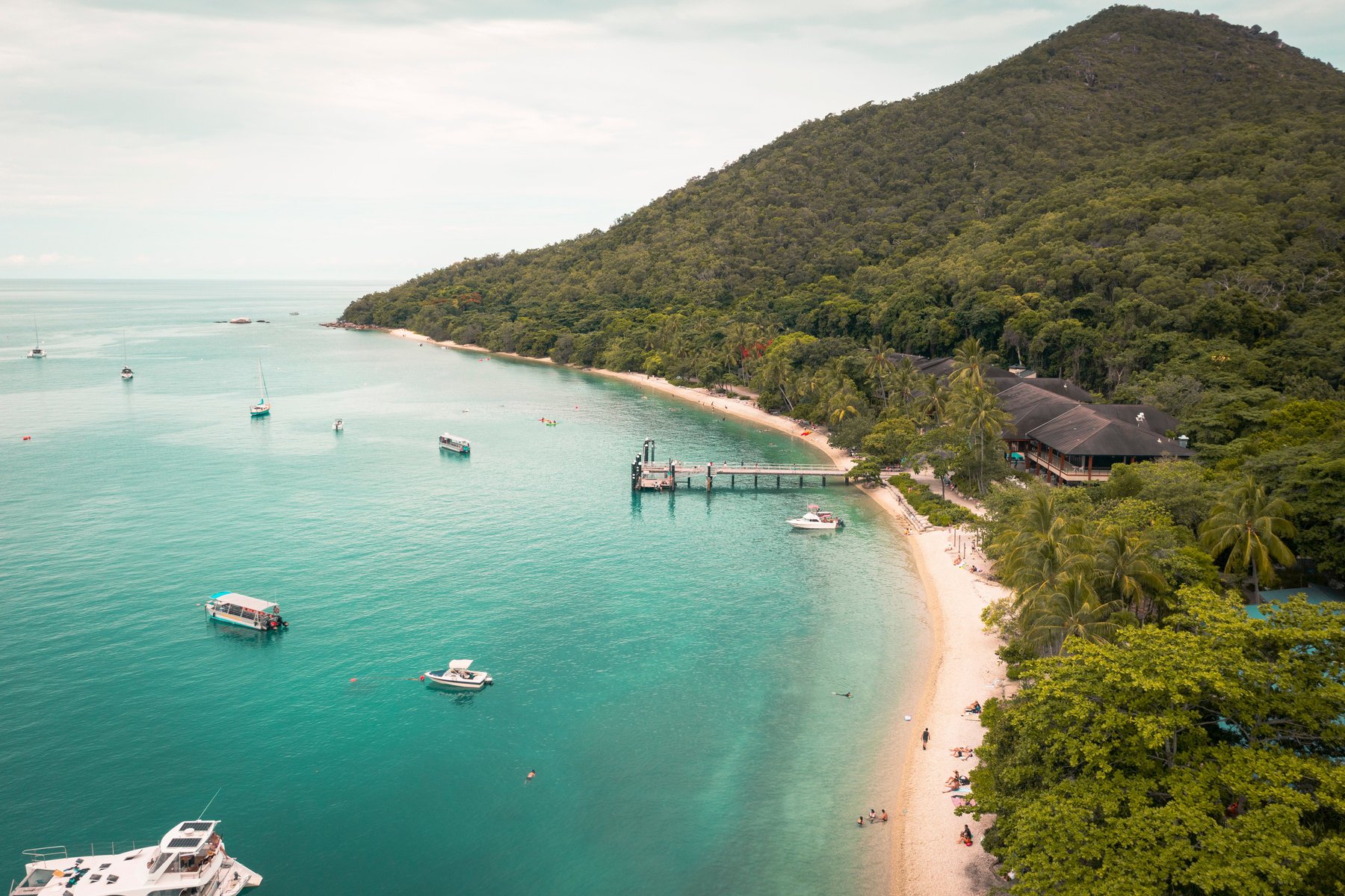
Palm Island sits at a comparable distance from Cairns City and from Townsville, wherever the most direct measure lands. That’s not a coincidence worth glossing over. It means Palm Island participants sit almost exactly between the two regional hubs that are supposed to serve them, and genuinely close to neither. A planner, allied health professional, or assessor travelling from either city is looking at a half-day trip minimum, often involving a barge or flight rather than a straightforward drive.
Palm Island is also one of the most heavily Indigenous localities in Queensland. The Census records a large majority of residents identifying as Aboriginal and/or Torres Strait Islander, far above the state-wide Indigenous share. Any conversation about NDIS access here is, by definition, a conversation about First Nations access to disability support, and the two cannot be separated.
What NDIS Support Looks Like on Palm Island and Across Cape York
Ask what NDIS support actually looks like on Palm Island and in Cape York communities, and the honest answer is: patchy, provider-dependent, and improving slowly rather than suddenly. A locally based registered provider operates on the island itself, running two listed NDIS outlets, one on Palm Island and one from a Townsville office. Its NDIS work spans support coordination, community connection and access support, and links into allied health services including speech therapy, occupational therapy, hearing services, and child psychology delivered through partner providers. As of March 2026, that provider remained actively registered with the NDIS Quality and Safeguards Commission across both outlets, which matters more than it sounds. Continuity of a local provider, year after year, is rare enough in remote disability services that it deserves to be stated plainly rather than assumed.
Further north, the picture is thinner again. A registered provider expanded its footprint into Cooktown to serve southern Cape York residents trying to access the NDIS, offering in-home health and personal care alongside general NDIS support for participants, families and carers. That expansion dates back to 2023, so it’s foundational rather than new, but it remains one of the only dedicated NDIS service footprints between Cairns and the tip of Cape York (Cape York Weekly, 2023). Communities further west and north again, including Kowanyama, Hope Vale and Wujal Wujal, rely far more heavily on visiting planners and outreach workers than on a local provider with a permanent office.
That’s where Remote Community Connectors come in. Under the current NDIA framework, planners regularly travel to remote Queensland communities and work with locally employed connectors to support participants in places like Kowanyama (National Disability Insurance Agency, 2026). Nationally, the Remote Community Connectors program funds a network of connectors across a large number of remote communities. A meaningful share of those connector contracts sit with Aboriginal Community Controlled Health Organisations across Queensland, the Northern Territory, Western Australia and South Australia. A connector isn’t a support coordinator and shouldn’t be confused with one. Their job is local trust and local logistics: knowing who’s who in a community, helping arrange transport, and making sure a visiting planner’s trip actually results in a signed, usable plan rather than a wasted flight.
Why the Barriers Aren’t What You Would Expect
The instinct is to assume remote NDIS access fails because of clinical capacity, that there simply aren’t enough allied health professionals or support workers willing to travel. Sometimes that’s true. But the more common failure point in Cape York is far more mundane, and far more fixable in theory.
A senior care operations lead from a health and disability services organisation put it bluntly after her team was engaged to complete functional capacity assessments for fifteen children in Kowanyama: there were “far too many barriers.”
The obstacle wasn’t service delivery at all. Plans and mental health care plans couldn’t be signed because there was no local GP available, a symptom of the broader workforce shortages affecting remote Cape York health services, and the visiting support coordinator had nowhere to stay because the community centre was already full of people needing emergency housing (Cape York Weekly, 2026). Fifteen children eligible for support, a clinical team ready to assess them, and the whole process stalled on a signature and a bed.
The barrier to NDIS support in Cape York is rarely a lack of clinical willingness. It’s a lack of infrastructure to let that willingness land.
That distinction matters for how families and support coordinators should think about the problem. Pushing harder for more specialist providers to say yes to a remote referral doesn’t solve a shortage of local GPs or a lack of visitor accommodation. Those are separate, structural problems, and they need separate, structural fixes.
There’s a health equity backdrop to all of this that shouldn’t be treated as background noise. In Kowanyama, the median age of death between 2017 and 2021 was 53, well below the national median (Torrens University Public Health Information Development Unit, 2024). Access to disability and health supports in communities like this isn’t a convenience issue. It sits close to the centre of some genuinely serious population health outcomes, which is part of why the current wave of reform is being watched closely by people well beyond the NDIS sector itself.
The Policy Response Taking Shape
Government has not ignored this. FNQ Connect is the clearest example: a community-led initiative working to better connect disability, rehabilitation and lifestyle services, with Kowanyama running as one of three pilot sites alongside the Tablelands and Cairns. The trial carries $4.5 million in joint federal and Queensland government funding through 2025 and 2026 (Queensland Government, 2025). A Department of Health, Disability and Ageing spokesperson described the approach as developing “shared approaches to hubs, care pathways, data and workforce, alongside a new peer-led workforce model designed to strengthen local engagement and improve coordination of supports” (Department of Health, Disability and Ageing, 2026).
None of this should be read as a solved problem. As recently as April 2026, on-the-ground reporting from Kowanyama described the same GP and accommodation barriers persisting despite the pilot being underway. Reform of this kind moves in years, not months, and a funding announcement is the start of a process rather than proof it has landed for any individual family yet.
The scale of the underlying gap gives that patience some context. Remote-area NDIS plan utilisation sat at approximately 68.5% for the first half of 2025, meaning close to a third of funded supports in remote plans went unused in that period (NDIS Data Research, 2025). Utilisation shortfalls against benchmark ran around 14% for remote participants and 27% for very remote participants as of December 2022, with some individual locations experiencing gaps above 40% (NDIS Review, 2023). More than 60% of First Nations participants in remote and very remote communities were receiving disability supports for the first time in their lives when they entered the NDIS (NDIS Review, 2023). That last figure is worth sitting with. For a majority of these participants, the scheme isn’t replacing an old service system. It’s the first one they’ve ever had access to.
Where to Turn: A Community-by-Community Snapshot
The following is not a directory. It’s a working picture of who is actually present in each part of the region, so a family or support coordinator knows where to start rather than where to search.
| Location | Access challenge | Local provider or program | What it offers |
|---|---|---|---|
| Palm Island | Roughly equidistant from Cairns and Townsville, barge or flight access only | A locally based registered provider (Palm Island and Townsville outlets) | Support coordination, community access support, allied health links via partner providers |
| Townsville (regional hub) | Nearest NDIA office for Palm Island participants, still several hours by ferry or plane | NDIA regional office, multiple registered providers | Plan reviews, planning meetings, provider referrals |
| Cooktown and southern Cape York | Limited resident provider footprint | A locally based registered provider | In-home personal care, general NDIS support for participants and carers |
| Kowanyama, Hope Vale, Wujal Wujal | Very remote, no resident GP in some communities, visitor accommodation frequently full | FNQ Connect pilot, NDIA-employed Remote Community Connectors | Coordinated planner visits, functional capacity assessment support, local trust and logistics |
What This Means for Families Weighing Their Options
Distance is not a reason to delay engaging with the NDIS, even though it’s tempting to wait for a “better time” when a planner or provider will be easier to reach. Plans are reviewed on a schedule regardless of where a participant lives, and getting a plan started, even an imperfect one, gives a family and their support coordinator something concrete to build on and refine.
Families in Cairns, Townsville and further afield who are supporting a relative with high-intensity support needs, whether that’s degenerative conditions, significant behavioural support requirements, or 24-hour personal care, face a related but distinct problem: finding a provider with the clinical structure to actually deliver on a complex plan, not just accept the referral. Registered nurse oversight, staff trained for a participant’s specific condition, and genuine allied health collaboration matter just as much in a regional centre as they do in a remote community. The barrier looks different, distance in one case, workforce depth in the other, but the underlying question a family should ask is the same: can this provider actually do what the plan says, consistently, over years rather than months.
That question doesn’t have an easy universal answer, and no family should feel they have to work it out alone.
Frequently Asked Questions
What if there’s no local GP to sign off my plan on Cape York? This is one of the most common hold-ups in communities like Kowanyama. Where a resident GP isn’t available, families can work with a visiting NDIA planner or Remote Community Connector to arrange a telehealth consultation or coordinate signing during a scheduled visit, rather than waiting indefinitely for an in-person appointment.
How do Remote Community Connectors help with NDIS plans? Connectors aren’t clinicians or support coordinators. Their role is local trust and logistics, helping participants understand paperwork, arranging transport to meet visiting planners, and making sure a planner’s trip to a community like Kowanyama or Hope Vale results in a signed, usable plan rather than a wasted visit.
Does living on Palm Island or in a remote Cape York community affect how quickly a plan is approved? It can. Distance affects how often a planner or assessor can visit, which in turn affects how quickly assessments, reviews and sign-offs happen. Engaging early with a local provider or connector, rather than waiting for ideal conditions, generally shortens that timeline.
If you’re supporting a family member on Palm Island, in Cape York, or anywhere across Far North Queensland and want to talk through what NDIS support could look like for your situation, the team at Advanced Disability Management is happy to have that conversation. Call us on 0425 168 053, email [email protected], or reach out through our contact page. No pressure, just a genuine conversation about what’s actually possible.
Can someone living outside Palm Island’s main township still access NDIS support?
Yes. Eligibility for the NDIS is based on disability and support needs, not on how close someone lives to a service hub. In practice, participants further from Palm Island’s township may rely more on visiting planners, Remote Community Connectors, or providers based in Townsville. It typically takes longer to arrange visits, so building in extra lead time for assessments and reviews is worth planning for from the start.
What should I do if a local GP isn’t available to sign off my NDIS plan?
Speak with your support coordinator or the NDIA about alternative pathways, including telehealth appointments with a doctor or specialist, or timing your plan around a visiting health service. GP availability is a known barrier in several Cape York communities, and NDIA planners and Remote Community Connectors are usually aware of local workarounds. Your treating team and support coordinator remain the right people to advise on your specific situation.
How is a Remote Community Connector different from a support coordinator?
A Remote Community Connector is a locally employed role focused on trust, logistics, and connecting NDIA planners with community members, helping arrange transport, accommodation, and communication around planning visits. A support coordinator works directly for a participant, helping them understand and use their plan, connect with providers, and resolve issues. The two roles often work alongside each other in remote communities rather than replacing one another.
Does Advanced Disability Management provide services directly on Palm Island or in Cape York communities?
Advanced Disability Management is based in Cairns and operates across Cairns, Townsville and Brisbane. We regularly support families and participants who are weighing up options across Far North Queensland, including those affected by distance from Palm Island or Cape York. The best way to find out what’s possible for your specific circumstances is to contact us directly so we can talk through your situation.
What can I do if a support worker or assessor cannot find accommodation to visit our community?
This is a genuine structural barrier in some very remote communities, particularly when local housing is stretched by other needs. Raising the issue with your support coordinator, the visiting provider, or the NDIA directly helps build the case for programs like FNQ Connect to prioritise infrastructure fixes. It is not something a family should have to solve alone, and flagging it is a legitimate and useful step.