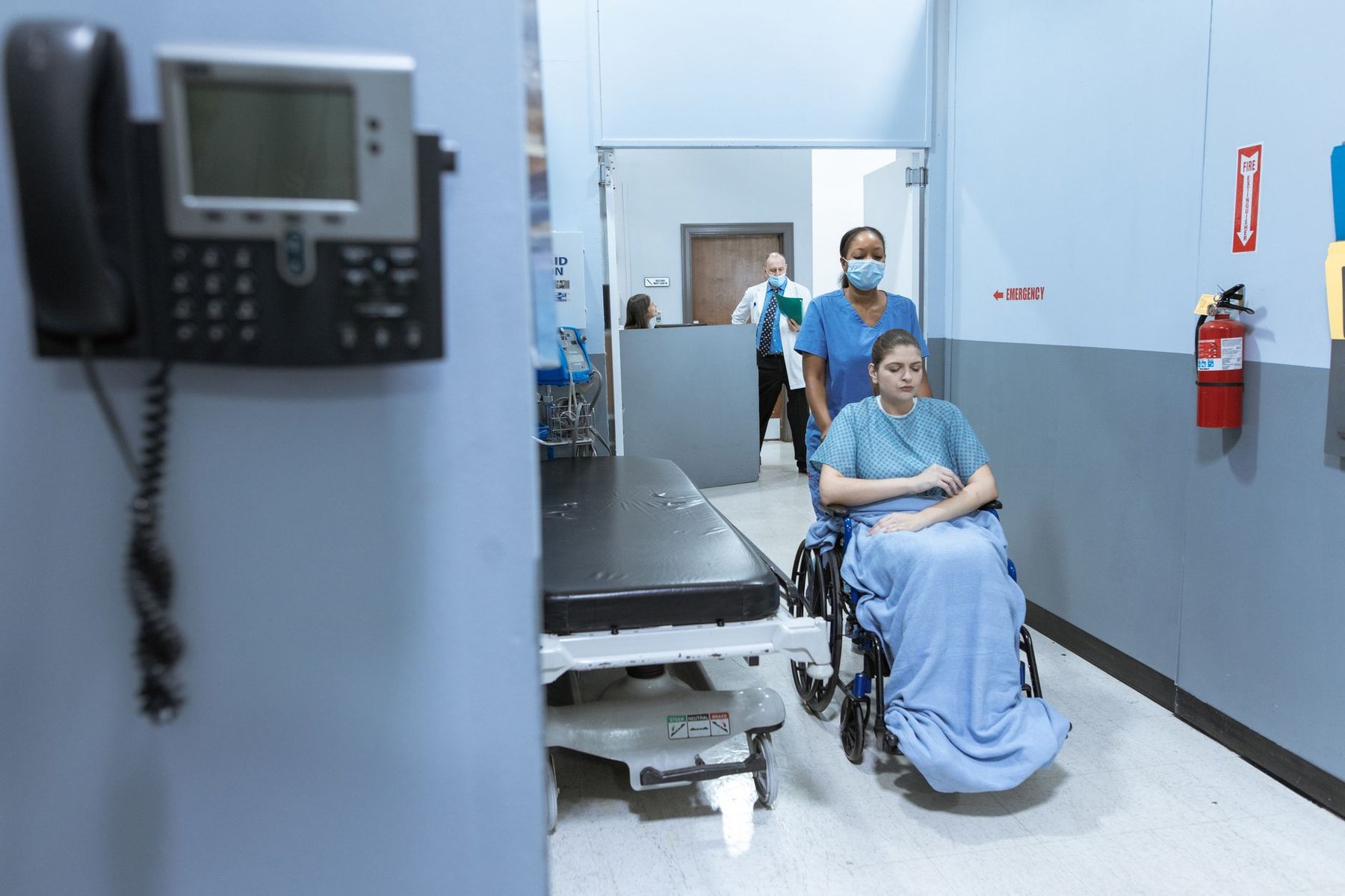
NDIS workforce challenges in Cairns and Townsville come down to one hard truth: there are not enough support workers or allied health professionals to match the pace of participant growth across Far North Queensland. For participants, that means longer waits for shifts, thinner choice of provider, and more staff turnover, particularly for anyone needing high-intensity or specialist support.
Why North Queensland Is a Textbook Thin Market
Economists use a specific term for regions where demand for a service outstrips the number of providers able to deliver it: a thin market. Far North Queensland fits the description almost exactly. Outside the Cairns CBD and Townsville’s main suburbs, the number of registered providers drops fast, and it drops fastest in allied health. Long travel distances between Cairns, the Tablelands, Cape York and the coastal communities push up the cost of every home visit a worker makes. A physiotherapist who might see six clients in a day in Brisbane could manage two on a day trip north of Mareeba once travel time is factored in. Add wet season road closures and cyclone disruption into the mix, and service continuity becomes genuinely fragile for parts of the year.
None of this is unique to disability services. Aged care, mental health and general practice all report the same regional strain. But the NDIS funds providers per service delivered rather than for standing capacity in a region, which makes thin markets particularly punishing here. A provider cannot justify keeping a full roster of trained, high-intensity staff on standby in a town of a few thousand people when billable hours are unpredictable. That is the structural reason families in Cairns and Townsville describe a narrower field of providers than a family with an equivalent plan in Brisbane, even where the funding on paper looks identical.
The Numbers Behind the NDIS Workforce Challenges in Cairns and Townsville
Queensland’s disability workforce has genuinely grown. It just has not grown fast enough to keep pace with demand.
| Metric | 2019 | 2021 | Change |
|---|---|---|---|
| QLD active NDIS participants | 55,000 | 102,000 | +85% |
| QLD disability workforce | 42,200 | 61,000 | +44.8% |
(Jobs Queensland, 2021)
Participant numbers nearly doubled between 2019 and 2021 while the workforce serving them grew at a noticeably slower rate, and Jobs Queensland’s own modelling projected a further 25% increase in aged and disabled care workers by 2024-25, a target that assumes training pipelines and pay conditions keep pace with demand (Jobs Queensland, 2021). Nationally, they have not kept pace. NDIS Review analysis found the sector needed roughly 128,000 additional workers, close to 40% growth, by June 2025 just to meet demand as it stood, with annual turnover already running between 17% and 25%, well above the 12% average across the wider economy, and 43% of workers reporting burnout at least half the time on the job (NDIS Review, 2023). Those figures were collected nationally, but nothing about them evaporates north of the Tropic of Capricorn. Professional isolation, higher living costs and the sheer distance between towns tend to make burnout and turnover worse in regional Queensland than in the capital cities where most of that data originates.
More than half of Australian disability providers surveyed in 2022, 56%, reported difficulty retaining support workers, up sharply from 40% two years earlier, while the sector’s rate of casual employment sat at 37% against 18% across the broader health and social assistance industry (National Disability Services, 2022). Casual work suits some people. It is a poor foundation for a participant who needs the same familiar face for PEG feeding or seizure monitoring, week after week, because clinical familiarity and trust take months to build and can be undone by a single roster change.
Training gaps compound the churn: one in four NDIS workers received less than a single day of training in the past year, and only around one in three felt they got the supervision they needed to do the job well (Cortis & van Toorn, UNSW Social Policy Research Centre, 2020).
Queensland’s own worker screening checks move faster than most states, with a median processing time of three business days against up to fourteen in the Northern Territory (NDIS Commission, 2023), so paperwork is not the region’s bottleneck. What happens to a worker after they clear that check, how much training, how much supervision, how much reason to stay, is where the region loses people.
A shortage of NDIS workers in North Queensland is not a waiting-list problem. It is a trust problem, because every roster gap means a new face learning a participant’s needs from scratch.
Zoom out further and the scale of the challenge gets clearer still. Demand for the entire national care and support workforce is projected to double by 2049-50, against a projected economy-wide shortfall of roughly 285,000 workers (National Skills Commission, 2021). Cairns and Townsville are not an isolated pocket of difficulty. They are a regional expression of a national structural problem, made sharper by geography.
Allied Health: The Sharpest Shortage Point
Support worker shortages get most of the public attention, but allied health is where the gap bites hardest for participants with complex needs. NDIS Review analysis of market capacity found gaps of about 14% for remote participants and 27% for very remote participants, with some locations exceeding 40% (NDIS Review, 2023). Remote and very remote Australia has far fewer medical practitioners and allied health professionals per person than the major cities, and much of the regional allied health workforce that does exist is not registered to deliver NDIS-funded supports at all. A family can live within reasonable reach of a physiotherapist or speech pathologist and still be unable to use their plan to see one.
For adults needing occupational therapy, physiotherapy, speech therapy or dietetics alongside high-intensity personal care, that gap is not an inconvenience. It’s the difference between a therapy program that actually gets delivered and one that exists only on paper in the plan review. This is one reason we built registered nurse oversight and structured allied health collaboration into how we run supported independent living, rather than treating a visiting OT or physio as an optional extra. Complex care, PEG feeding, wound management, seizure monitoring, does not work as a bolt-on service. It has to be coordinated with the same team, on the same page, week to week.
First Nations Workforce Pathways and Cairns’ Demographics
Cairns carries one of the largest Aboriginal and Torres Strait Islander populations of any regional Australian city, and workforce policy is finally catching up to that fact. Growing a First Nations-led disability workforce, through community-controlled organisations, tertiary pathways, mentoring and identified positions, is now a formal recommendation of the NDIS Review. The Disability Royal Commission’s 2025 progress report addresses remote workforce development specifically for First Nations people with disability (Disability Royal Commission, 2025), and national estimates suggest around 13,000 additional workers will be needed to support First Nations NDIS participants by 2031 (Department of Health, 2025).
This matters in Cairns and Townsville beyond a compliance box to tick. A support worker who shares language, family networks or lived cultural context with a participant tends to build trust faster and read unspoken cues that a visiting clinician never picks up. We see a version of the same principle in our own team, where a number of staff bring direct personal experience of caring for family members alongside their formal training. It is not a substitute for the First Nations-specific workforce this region still needs to build. It points to the same underlying lesson: workforce models that reflect the community they serve tend to hold up better than generic staffing plans imported wholesale from the south-east.
What’s Changing in 2026: Pricing, Training, and Policy
Pricing moved first. The NDIA lifted Disability Support Worker price limits by 3.95% from 1 July 2025, responding to Fair Work Commission wage decisions and superannuation guarantee changes, which pushed the standard weekday community participation rate to $70.23 an hour (NDIA, 2025). National Disability Services has since pushed for a larger pricing supplement specifically for support worker related supports, arguing that upcoming SCHADS Award changes need to flow through to what providers can actually pay staff, and the NDIA is now consulting on the 2026-27 Annual Pricing Review through to February 2026, covering support coordination, therapy supports and social and civic participation pricing (National Disability Services, 2025). Whether that consultation closes the retention gap is not yet settled. It does show the sector finally treating pay, not just headcount, as the lever that matters most.
Training infrastructure is catching up as well. A $35 million investment in a new Cairns TAFE campus for care and support workers, announced in 2024, is a direct response to the pipeline problem: a growing NDIS market in Far North Queensland cannot be staffed without a local place to train the people who will fill it (Aged Care Insite, 2024). National Disability Services’ 2025 Workforce Census confirms the pressure has not eased nationally, with shortages still described as critical and casual employment still climbing (National Disability Services, 2025). None of this fixes Cairns or Townsville overnight. The settings are shifting in a direction that should, over the next couple of years, put more trained and better paid workers into the region, provided pricing decisions actually reach the frontline pay packet rather than stalling further up the chain.
What This Means for Participants and Families Right Now
Waiting for policy to catch up is not a plan a family can live on today. A few practical habits make the current market easier to navigate.
- Ask any prospective provider exactly how many current staff are trained for your specific supports, such as PEG feeding, seizure response or wound care, rather than support work in general, and how they cover a shift when that particular worker is unavailable.
- Ask about the ratio of casual to permanent staff on your roster. A provider that can name a consistent, mostly permanent team is telling you something real about turnover.
- Loop your support coordinator into the provider search rather than accepting the first available option. Thin markets tend to reward persistence over speed.
- Ask whether allied health input is coordinated with your direct support team or delivered as a separate, disconnected service that never talks to the people doing daily care.
Registered nurse oversight, training tied to a participant’s actual needs rather than a generic induction, and a genuinely consistent staff roster are not luxuries in a market this tight. They are the difference between a support arrangement that survives a wet season staffing crunch and one that falls over the first time someone calls in sick.
If you are trying to work out what good, reliable support should look like for your own family in Cairns, Townsville, or anywhere across Far North Queensland, we are happy to talk it through without any pressure attached. Call us on 0425 168 053, email [email protected], or reach out through our contact page, and we can talk through what your particular situation actually needs.
How long does it usually take to find a support worker for high-intensity needs in Cairns or Townsville?
Timeframes vary a lot depending on the complexity of the support required and how many providers currently have capacity. Straightforward community support may be arranged within a few weeks, while specialised supports like PEG feeding or seizure management can take longer because staff need specific training first. A support coordinator can help track down providers with genuine capacity rather than a long waiting list.
Does living in a regional area affect how much NDIS funding I receive?
Funding levels are set according to individual assessed need, not location, so a plan is not automatically smaller or larger because someone lives in Cairns rather than Brisbane. What often differs regionally is how far that funding stretches, because travel costs and thinner provider markets can affect how easily a participant can actually use the supports listed in their plan.
What can I do if my current provider cannot cover shifts during wet season or after a cyclone?
Raise it directly with the provider first and ask about their contingency staffing plan for weather disruption. If gaps continue, a support coordinator can help identify backup providers or adjust supports temporarily. It is worth discussing continuity planning with any provider before you sign on, rather than discovering the gap during the next wet season.
Are there NDIS workforce initiatives specifically for First Nations participants in Far North Queensland?
Yes, policy attention has grown in this area, with national recommendations focused on community-controlled organisations, tertiary training pathways, mentoring and identified worker positions. Families interested in these options are best placed speaking with a support coordinator or a local Aboriginal and Torres Strait Islander community-controlled health or disability organisation for current, region-specific programs.
How do I check whether a provider’s allied health collaboration is genuine rather than just advertised?
Ask direct questions: who coordinates between the therapist and the daily support team, how often they communicate, and whether therapy goals show up in the participant’s actual support plan rather than sitting in a separate report. A provider with real collaboration should be able to describe this process specifically, not just confirm that allied health services are available.