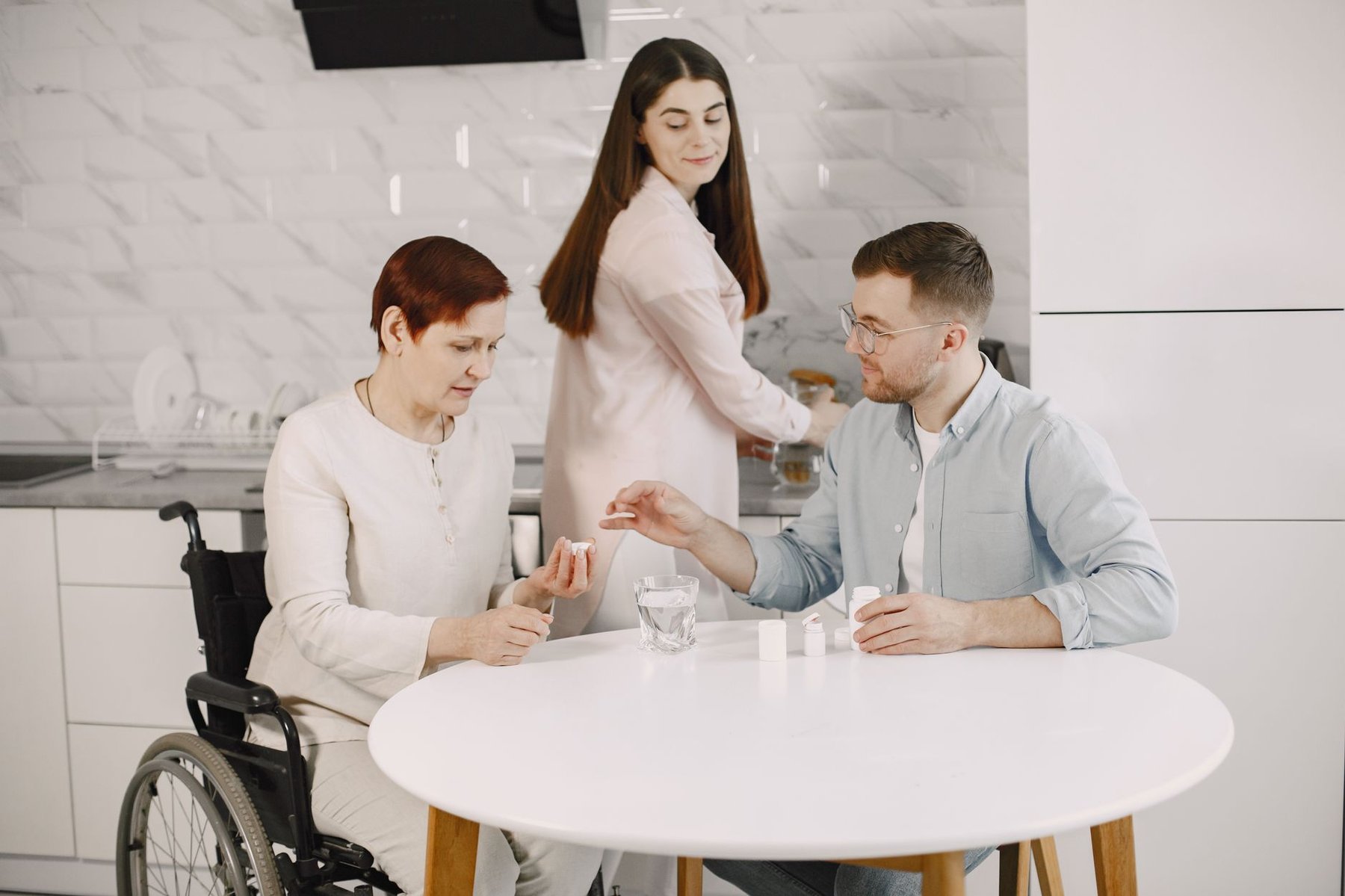
Urinary catheter support NDIS rules place this well outside routine personal care. It sits inside a strict regulatory category called High Intensity Daily Personal Activities, meaning only support workers employed by a provider specifically accredited for this support can deliver it, under registered nurse oversight, following the participant’s own care plan and infection control protocols.
That classification matters more than almost anything else in this space, and it’s the detail most families never get told plainly. A support worker can be personally skilled, competency-assessed, and genuinely caring, but if the organisation they work for hasn’t gone through provider-level accreditation for this specific High Intensity Daily Personal Activity, that worker legally cannot deliver catheter care to an NDIS participant (NDIS Commission, 2024). This isn’t bureaucratic box-ticking. Catheter management touches the urinary tract directly, carries real infection risk, and can escalate into a medical emergency within hours if something goes wrong. The NDIS treats it accordingly.
Urinary Catheter Support NDIS: What the Rules Require
The NDIS Commission’s High Intensity Support Skills Descriptors set out exactly what a worker must be able to do before they touch a participant’s catheter: work from the current support plan, prepare properly for infection control, check the catheter is functioning and the bag is correctly positioned, monitor and record urine output, and escalate any sign of infection or complication immediately to a health practitioner (NDIS Commission, 2024). None of that is optional, and none of it is something a family should have to check informally by asking a support worker if they’ve “done a course.”
The provider is the one who carries the accreditation. That’s the nuance most consumer-facing guides skip entirely, and it’s the first question a family should ask any prospective support provider: are you accredited to deliver this specific High Intensity Daily Personal Activity, not just is your staff member trained. A worker’s individual competency assessment sits inside that provider accreditation. Remove the provider layer and the whole arrangement falls outside what the NDIS Practice Standards permit.
Who Can Do What: Insertion, Ongoing Management and Scope of Practice
There are three catheter types relevant to high intensity NDIS support: indwelling (Foley), intermittent, and suprapubic. Each has a different insertion method, drainage pattern, and complication profile, and each demands a slightly different conversation about who is allowed to do what.
Insertion of an indwelling catheter or a suprapubic catheter is a task for a health practitioner, full stop. Intermittent catheterisation is different: in some circumstances it may be performed by a trained, competency-assessed support worker, but only where the full High Intensity requirements and clinical oversight are in place (NDIS Commission, 2024). This is the exact distinction that trips up a lot of the content currently written for families, some of which describes support workers “assisting with insertion” in one section and then contradicts itself later by saying they can’t insert or remove catheters at all. The honest answer isn’t complicated once you separate the two questions properly: insertion of an indwelling or suprapubic device belongs to a health practitioner; ongoing management, monitoring, and (in the right circumstances, with the right training) intermittent catheterisation sits with a competency-assessed high intensity support worker.
Accreditation isn’t a certificate a worker keeps in a drawer. It’s a provider-level commitment that shapes every rostering decision, every training session, and every shift handover.
Funding Catheter Care and Consumables
Catheter care typically sits under Core Supports Assistance with Daily Life, a named category in a participant’s plan. Where the support requires clinical oversight, such as registered nurse supervision or worker training specific to a participant’s condition, that additional layer is often fundable under Capacity Building categories instead (NDIS, 2026). The consumables themselves, meaning catheters, drainage bags, straps and tape, are funded separately again, as Assistive Technology consumables drawn from a participant’s Core Consumables budget, when the need is disability-related and evidenced by a continence assessment or letter from a registered nurse, alongside supplier quotes (NDIS, 2026; Continence Foundation of Australia, 2023).
That funding structure explains why planning meetings for participants with catheter needs tend to run longer and require more paperwork than a standard review. It’s worth arriving with a continence nurse or GP letter that names the catheter type, the frequency of support required, and the reason routine elimination doesn’t happen naturally for that participant. Support coordinators who work with high intensity supports regularly will know how to frame this; if a family is managing the plan themselves, it’s worth asking the planner directly which category each element sits under before the meeting ends, rather than discovering a gap later.
Price limits for High Intensity Support, which covers catheter care, updated for the 2026-27 financial year:
| Time Period | Hourly Price Limit |
|---|---|
| Weekday daytime | $79.60 |
| Weekday evening | $83.72 |
| Weekday night | $85.27 |
| Saturday | $106.93 |
| Sunday | $137.87 |
| Public holiday | $168.81 |
These are national figures; Queensland doesn’t have a separate published rate for this line item (NDIS, 2026).
Daily Management, Infection Prevention and Knowing When to Escalate
Catheters are common in Australian healthcare settings, and the infection risk attached to them is well documented, not theoretical. Point-prevalence research across Australian hospitals found catheter-associated urinary tract infection sitting at roughly 0.9%, with broader healthcare-associated urinary tract infection prevalence at 1.4% across the surveyed facilities (BMJ Open, 2014). Catheter use is common across acute-care and aged-care settings, and the cumulative cost to the Australian healthcare system is significant, with healthcare-associated urinary tract infections contributing to lost bed-days annually.
The risk isn’t static once a catheter is in place. It climbs with time, the longer the device remains inserted, and a large share of hospital-acquired urinary tract infections are linked specifically to indwelling catheters. That’s exactly why the daily management side of this support matters as much as the clinical procedure itself. Managing drainage bag capacity appropriately, in line with the participant’s care plan, is part of the daily catheter support our workers deliver under registered nurse oversight, both to reduce infection risk and to prevent strain on the equipment.
A worker delivering catheter support needs to recognise, and act on, the following without delay:
- Fever, chills, or the participant reporting new pain or discomfort
- Cloudy, strong-smelling, or blood-tinged urine
- No urine output, or a sudden drop in the usual volume
- Leaking around the catheter site, or the bag disconnecting
- Any sign the participant is unusually unwell, confused, or distressed
None of these signs are something a support worker should manage alone. The correct response is immediate escalation to a health practitioner, following the participant’s own care plan, and documenting what was observed. Health decisions about catheter complications belong with the participant’s doctor, continence nurse, or the broader allied health team, never with a support worker acting on their own judgement.
The Autonomic Dysreflexia Risk for Spinal Cord Injury
For participants with a spinal cord injury, particularly at higher injury levels, a blocked or malfunctioning urinary catheter can trigger autonomic dysreflexia. This is a medical emergency. It requires an immediate call to Ambulance on 000, strict adherence to the person’s individual care plan, and a support worker who does not leave the person alone while help is on the way. Very little of the content currently written for families and support coordinators mentions this connection at all, which is a serious gap given how many NDIS participants with high level spinal cord injuries rely on catheter support daily. Any worker delivering catheter care to a participant with a spinal cord injury needs to know the specific signs relevant to that person, drawn from their individual care plan, not a generic checklist.
Why We Built Our Catheter Support Model the Way We Did
We started Advanced Disability Management after navigating exactly this kind of high intensity, high stakes care for our own child, who lives with a rare and complex medical condition. We know what it costs a family to hand over a task like catheter management to someone new, and we built our model around removing that fear rather than managing around it.
Every worker delivering catheter support through ADM operates under registered nurse oversight, with training built around each participant’s specific condition and care plan, not a generic module ticked off once and forgotten. Many of our care team bring a genuine, personal commitment to caring for family that goes well beyond a job description learned from a manual. That disposition shows up in the small things: the way a bag is checked without being asked, the patience during a task that could otherwise feel clinical and impersonal. Combined with the accreditation and clinical oversight the NDIS requires for this High Intensity Daily Personal Activity, it’s a model built for families who’ve been let down before and need to trust the next provider will actually show up prepared.
Getting the Right Support in Place
Distance changes what good catheter support looks like once you’re outside a major metro centre. A family in inner-city Brisbane can usually get a continence nurse review within days. A family in Innisfail, Mareeba, or further out into Far North Queensland may be looking at a longer drive, a telehealth appointment instead of an in-person review, or a wait for the next visiting specialist clinic. That gap doesn’t reduce the standard of care a participant is entitled to, but it does change how a provider needs to structure support around it.
Tropical climate adds a layer most national guides never mention. Higher fluid loss through sweat in Cairns and Townsville’s build-up season changes hydration needs, and hydration status directly affects urine concentration and infection risk. A worker who understands the practical difference between managing catheter care in a Melbourne winter and a Cairns wet season is applying real, regionally grounded judgement, not following a script written for somewhere else. Continuity matters here too: a participant relying on catheter support 24 hours a day needs consistent, competency-assessed workers rostered against their actual roster, not a rotating cast of casual staff learning the routine from scratch each week.
Families researching urinary catheter support under the NDIS for the first time are usually trying to solve two problems at once: finding a provider properly accredited to deliver the support safely, and finding people their loved one will actually feel comfortable with, day after day. Both matter. Accreditation without warmth produces competent but distant care. Warmth without accreditation isn’t a legal option for this particular support, and shouldn’t be one anyone accepts. The families who navigate this well tend to ask direct questions early: is your organisation accredited for this specific support, who provides clinical oversight, and how do you handle escalation if something looks wrong at 2am on a Sunday.
Support coordinators in Cairns, Townsville, and Brisbane increasingly steer families toward providers who can answer those questions without hesitation, because accreditation and clinical oversight are the factors that determine whether a provider can legally deliver this specific High Intensity Daily Personal Activity at all.
If you’re weighing up catheter support options for yourself or someone you care for, we’re happy to talk it through, no pressure, no obligation. Call us on 0425 168 053, email [email protected], or reach out through our contact page, and we’ll walk through what your situation actually needs.
Can a family member perform intermittent catheterisation at home instead of a support worker?
Yes, family members and informal carers can often be shown intermittent catheterisation technique by a health practitioner or continence nurse for their own relative, since the NDIS High Intensity requirements around provider accreditation apply specifically to paid support workers delivering funded supports, not to informal family caregiving arrangements. It’s worth discussing this directly with the participant’s treating team.
What evidence do I need at an NDIS planning meeting to get catheter care funded?
Planners generally look for a letter or assessment from a continence nurse, urologist, or GP confirming the catheter type and disability-related need, alongside a description of the daily support required and quotes from a provider for both the support hours and any consumables. Support coordinators can help pull this together before the meeting.
How often should catheter drainage bags be changed, not just emptied?
Bag change frequency depends on the catheter type, the product manufacturer’s guidance, and the participant’s individual care plan, so this is a decision for the treating health practitioner or continence nurse rather than a fixed rule. Support workers follow whatever schedule is documented in that specific plan.
Does NDIS funding cover travel costs for continence nurse appointments in regional Far North Queensland?
Transport support can sometimes be included in a participant’s plan depending on their individual circumstances and how their supports are structured, but this varies case by case and is a decision made by the NDIA. Speaking with a support coordinator or planner about transport needs specific to appointments outside major centres is the right next step.
What happens if a provider isn’t accredited but a worker says they’re trained in catheter care?
Under NDIS Practice Standards, provider-level accreditation for this specific High Intensity Daily Personal Activity is required regardless of an individual worker’s personal training or experience. If a provider can’t confirm their own accreditation for this support, that’s a genuine red flag worth raising with a support coordinator or the NDIS Commission before proceeding.