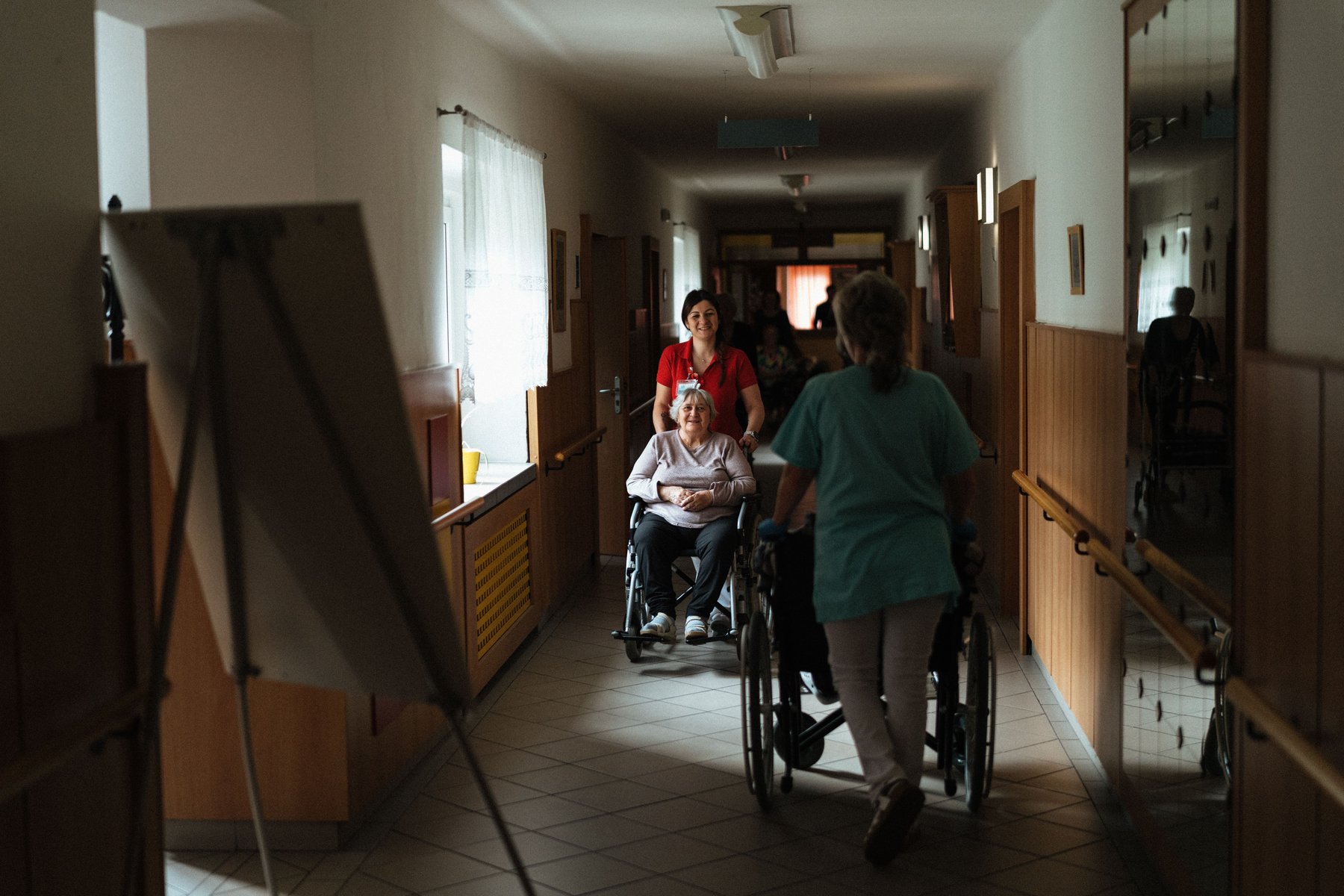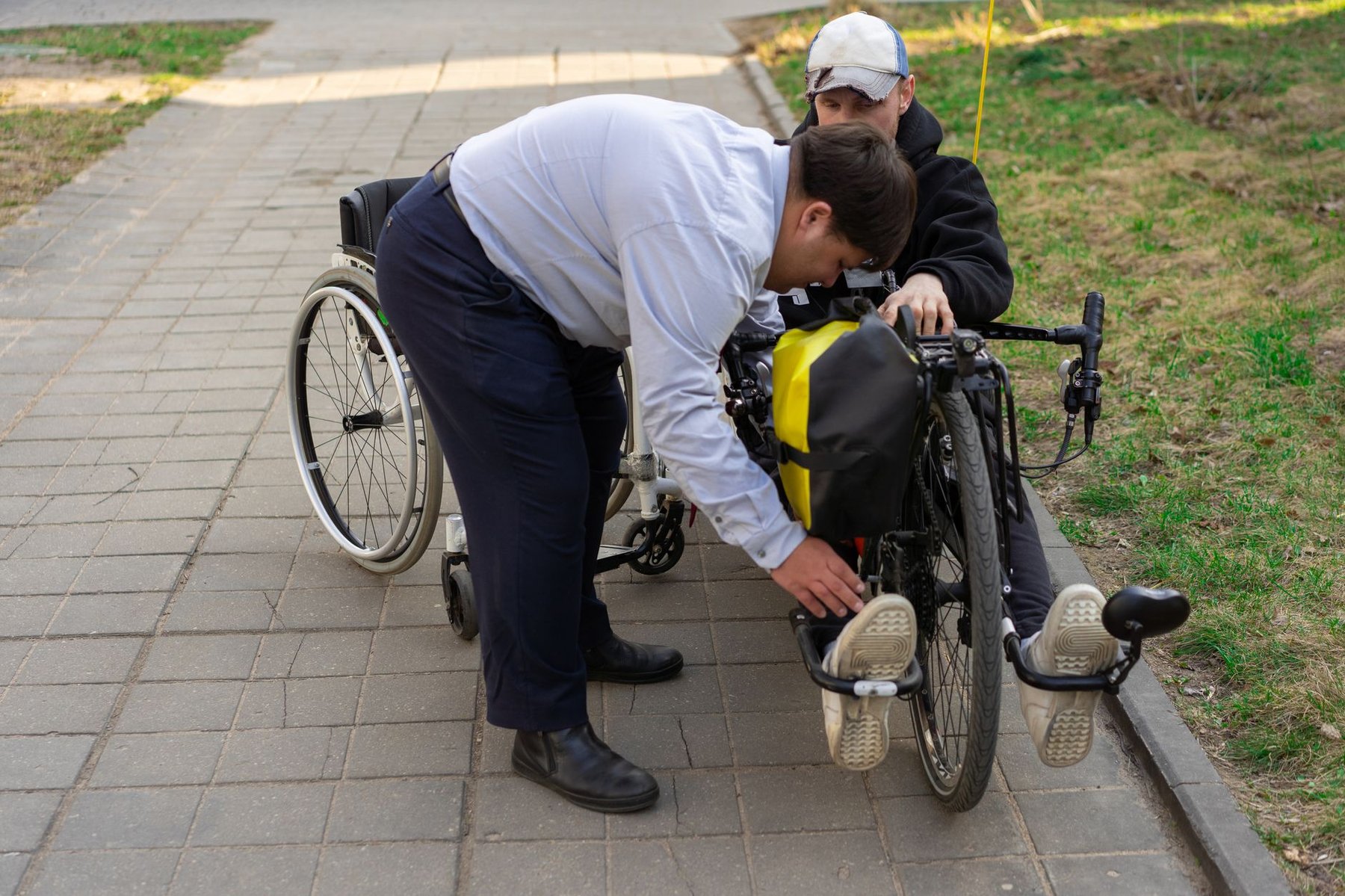
Consistent support workers for complex needs matter because the people who know a participant best pick up what others miss: a subtle change in mood, a new sign of discomfort, a preference that never made it into the care plan. Familiar workers build trust, spare the person from explaining themselves again and again, and help high-intensity supports continue without interruption.
That kind of continuity is hard to secure in Queensland, where annual turnover reaches 28% for casual disability staff (NDS, 2025). Having the same worker also only helps when that worker is skilled, so families in Cairns, Townsville and Brisbane need to know which provider questions actually test continuity.
What “complex needs” means when you are the one providing support
There is no single agreed definition of complex needs. IDMH Connect, the clinical resource run by UNSW’s Department of Developmental Disability Neuropsychiatry, describes two recurring elements. The first is disability combined with other health, social or economic issues. The second is a gap between the support a person needs and the services actually available (IDMH Connect/UNSW, n.d.). The same resource notes that rigid service models and multiple overlapping needs tend to produce fragmented services and poor continuity of care (IDMH Connect/UNSW, n.d.).
In practice, for the adults we support, complex needs usually means 1:1 support for 12-24 hours a day. It can mean PEG feeding, wound management or seizure monitoring. It can mean a rare or degenerative condition where abilities change over months, or behaviours of concern that carry meaning only someone familiar with the person can read. Many of the people we support communicate without speech, or with speech that only close family and long-standing workers reliably understand.
Put all of that together and the cost of a stranger walking in the door becomes obvious. A new worker is not just unfamiliar with the person’s name and routine. They are unfamiliar with how this particular person says “I’m in pain”, “I’m frightened” or “I’ve had enough”.
What familiarity changes day to day
Trust and emotional safety
Trust is built through repetition. A person who has been assisted with personal care by the same two or three people for months knows what to expect: how they will be spoken to, the order things happen in, whose hands will be involved. Personal care is intimate. When the faces keep changing, every shower, every transfer and every meal becomes a fresh negotiation, and many people respond to that with understandable distress or withdrawal.
Communication without constant re-explaining
Families know this one intimately. Each new worker needs the same briefing: how Mum likes her tea, which sounds mean contentment and which mean pain, why the afternoon routine runs in a particular order. Written profiles help, but they never capture everything. A consistent worker carries that knowledge in their head, so the participant spends less energy being understood and more energy living.
Noticing change early
This is the benefit we would rank highest for people with high medical needs. IDMH Connect advises that disability workers should support the same people because consistent staffing “can improve their ability to notice any behavioural changes” (IDMH Connect/UNSW, n.d.). Those changes can signal an unrecognised physical or mental health problem. For someone who cannot easily report symptoms, a worker who knows their baseline is often the first to see that something is different, and the first to raise it with the nurse, the family or the GP.
The same resource recommends that behaviour support be delivered the same way by all staff (IDMH Connect/UNSW, n.d.). That only happens reliably when the team is small enough to be trained together and stable enough to stay trained.
Steady progress on goals
NDIS goals around life skills, community participation or communication move forward in small increments. A worker who has seen last month’s progress knows where to pick up. A rotating roster tends to restart from zero, and the participant’s plan review then shows effort without much momentum.
A joined-up wider team
People with complex needs typically have a physio, an occupational therapist, a speech pathologist, a dietitian, perhaps a behaviour support practitioner and a support coordinator. Allied health recommendations only work if the people delivering daily support actually apply them. A consistent worker can be shown a mealtime plan or a positioning routine once, apply it every day, and report back on what is and isn’t working. Federal health policy recognises this link, noting that people with intellectual disability need continuity of care during transitions and good handover between services (Department of Health and Aged Care, 2024).
Why consistent support workers for complex needs are hard to keep in Queensland
The honest answer is workforce churn, and Queensland is doing worse than the national picture. Annual turnover in Queensland reached 19% for permanent disability staff and 28% for casual staff, both above national rates (NDS, 2025). Casual work makes up a larger share of the Queensland workforce than in NSW, with 44% of staff employed casually compared with 31% in NSW (NDS, 2024).
The shift away from secure roles is sector-wide. Permanent full-time positions fell from 30% to 21% of the disability workforce (NDS, 2025). Government research estimates that 17-25% of NDIS workers leave each year, at least 45,900 people (Department of the Prime Minister and Cabinet, 2022). Earlier work from the NDIS Review found roughly one in four part-time and casual workers planned to leave within a year, against 18% of full-time workers (NDIS Review, 2023).
Every departure costs something. Onboarding a single new worker has been estimated at $2,130 to $3,320 (NDS, 2024). The larger cost, though, lands on the participant, who loses someone who knew them.
A roster full of names is not a team. Continuity means a handful of people who know the person well enough to notice when something is wrong.
Far North Queensland adds its own pressures. Distances between Cairns, the Tablelands and coastal communities are long, the regional workforce pool is smaller, and the wet season brings floods and cyclones that can cut roads for days. The NDIS Practice Standards require registered providers to plan for keeping critical supports running during emergencies and disasters (NDIS Quality and Safeguards Commission, 2024). For someone who relies on PEG feeding or seizure monitoring, a cyclone plan that names which familiar workers can reach the house matters far more than a generic policy document.
Consistency is only half the answer
Having the same worker every day is necessary. It is not sufficient.
The evidence points to worker skill as the multiplier. In an Australian study, support workers who received communication training went on to support people with intellectual disability who showed more initiation, more choice and control, more participation in self-care and community activities, and fewer behaviours of concern (ASID, 2019). A familiar worker who has never been trained in the person’s communication method will be familiar and still frequently misunderstand them.
This is where many families get caught. They find a worker their family member likes, hold onto them, and then discover that the worker has never been shown how to support a seizure plan, never been trained in the person’s communication system, or has no clinical oversight to call on at 2am. Warmth without training leaves families carrying the clinical load themselves.
Our position is simple. For complex needs, the target is a small, stable team of workers who have each been trained specifically for this person, with registered nurse oversight behind them. Skill that is general and not client-specific falls short. So does consistency without clinical backup.
What to ask a provider before you commit
Most providers will tell you they value continuity. The useful questions are the ones that test how they deliver it. The Practice Standards give you a baseline to measure against: absences and vacancies must be covered by a suitably qualified or experienced person, the participant’s needs and preferences must be documented and shared with workers, and unavoidable changes must be explained to and agreed with the participant, all proportionate to the complexity of the supports (NDIS Quality and Safeguards Commission, 2024).
| Question to ask | What a strong answer sounds like |
|---|---|
| How many different workers will be on the roster each fortnight? | A specific, small number, with named core workers and named backups |
| How are sick days and leave covered? | By backup workers who already know the person and have shadowed shifts |
| How are new workers introduced? | Shadow shifts alongside an established worker before working alone |
| Where is the person’s support profile kept, and who updates it? | A living document, reviewed regularly, updated after changes in health or routine |
| Who provides clinical oversight for high-intensity supports? | A registered nurse, with client-specific training delivered to each worker |
| How do you work with the allied health team? | Direct communication with therapists, with recommendations built into daily routines |
| What happens during a cyclone or flood? | A written continuity plan naming who can reach the person and how |
Listen for specifics. Vague answers such as “we always try to send the same people” usually mean the roster is filled from a general pool on the day.
When turnover happens anyway
Even the best teams change. Workers move, retire, study or have babies. What separates a manageable transition from a disruptive one is preparation. These are the steps we recommend families insist on:
- Ask for notice of planned departures and a handover period where the outgoing and incoming worker overlap on shifts.
- Request that the support profile is reviewed and updated before the change, not after.
- Keep a short, personal “about me” document of your own, in the person’s voice where possible, that you can hand to any new worker.
- Raise concerns early with the provider, and if they are not resolved, speak with your support coordinator about options.
Hospital stays deserve a specific mention. A roundtable on complex behaviour support needs recommended that NDIS funding continue where possible during hospital admissions so that trusted worker relationships stay intact (Parliament of Australia, 2024). Whether funded supports can continue during a particular admission depends on the plan and NDIA rules, so check with your support coordinator or plan manager before an admission if you can.
The 2026 NDIS changes that affect worker continuity
Several changes this year and next affect how families keep the workers they trust. Changes to pricing arrangements for some unregistered providers have been flagged, which may matter to families who self-manage and directly engage independent workers. Expanded mandatory registration for higher-risk supports, including Supported Independent Living, is also expected. Legislation introduced in 2026 is also linked to reported changes to some participant budget categories at plan reassessment and renewal.
None of these changes has an identical effect on every plan, and details can shift as they are implemented. Talk to your support coordinator, plan manager or an independent advocate about how they may apply to your situation before making decisions about providers or workers.
How we approach continuity at Advanced Disability Management
Our founders started ADM after caring for their own child with Sanfilippo Syndrome. They know what it is like to hand someone you love to a worker you have never met, and to explain the same routine for the tenth time in a month. That experience shaped how we build teams.
We work with small, familiar groups of workers around each person, and we invest in client-specific training workshops so every worker understands that individual’s supports, communication and routines. Registered nurse oversight sits behind high-intensity supports such as PEG feeding, wound management and seizure monitoring, and we work directly with each person’s occupational therapist, physiotherapist, speech pathologist, dietitian and psychologist so their recommendations become part of everyday support. Health decisions stay with the person, their family, their doctor and their allied health team; our role is to deliver the agreed supports well and to notice and report change.
We hire for respect and patience, train every worker in how each person likes to be spoken to and cared for, and build a culture that encourages workers to stay with the people they support.
For families who have been the full-time carer for years, the aim is a team trusted enough that stepping back from the caring role feels possible, not a trade of one kind of worry for another.
If you would like to talk through what consistent, skilled support could look like for your family member, we are happy to have that conversation with no obligation. Call us on 0425 168 053, email [email protected], or use the contact page on our website, and we will take it from there at your pace.
Can we choose which support workers are rostered for our family member?
Participants have choice and control under the NDIS, and a good provider will involve you in matching workers to the person. You can ask to meet workers before shifts start, request changes if a match is not working, and ask that preferences around gender, language or cultural background are respected. Providers cannot always guarantee a particular person on every shift, but they should explain any constraints openly.
How long does it usually take for a new worker to get to know someone with complex needs?
It varies with the person, their communication style and the intensity of their supports. For high-intensity care, expect several shadow shifts with an established worker before the new worker supports the person alone, plus client-specific training. Real familiarity, the kind that lets a worker notice subtle changes, builds over weeks and months of regular contact rather than a single induction.
Is it better to hire independent workers directly or go through a registered provider for complex care?
Both options exist for self-managed participants, and each has trade-offs. Independent workers can offer close relationships, while registered providers carry obligations under the NDIS Practice Standards, such as backup cover, documentation and emergency planning. For supports involving clinical oversight, consider who covers absences and who supervises high-intensity tasks. Your support coordinator or plan manager can help you weigh options against your plan.
What should we do if we are unhappy with how a provider handles staff changes?
Start by raising the concern directly with the provider, ideally in writing, and ask for a clear plan to fix it. Registered providers must have a complaints process. If the issue is not resolved, your support coordinator can help you explore other providers, and you can also contact the NDIS Quality and Safeguards Commission, which handles complaints about NDIS providers.