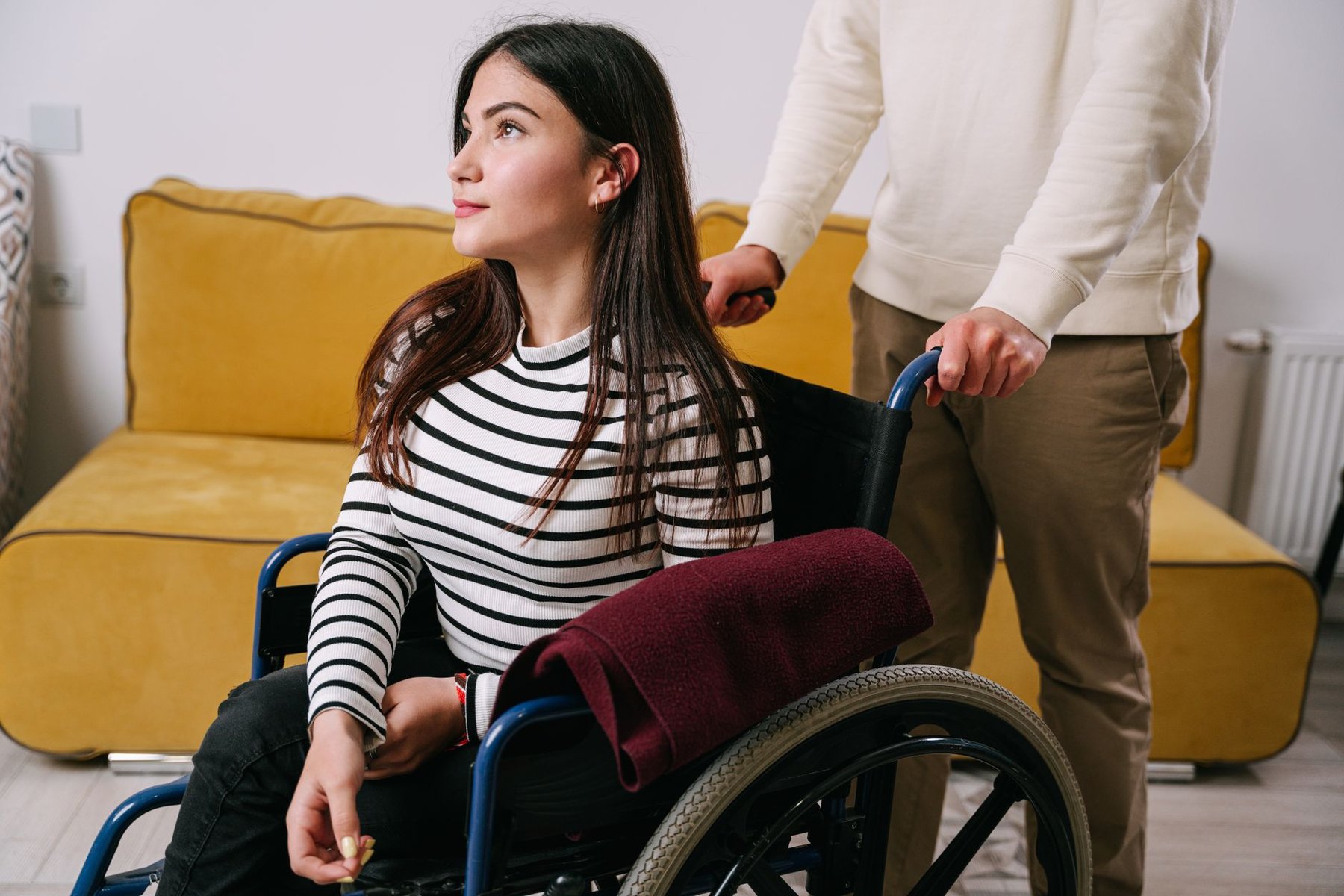
Supporting someone with multiple sclerosis at home works best when you plan care around the person’s hardest days instead of their average ones. Good multiple sclerosis support at home brings together flexible personal care, allied health input, a cool and safe home, and real relief for the family carer. People under 65 usually fund it through the NDIS. From 65, it usually comes through My Aged Care.
Everything else in this article builds on that. We are a Cairns-based, registered NDIS provider, and our founders spent years caring for their own child with Sanfilippo Syndrome. That shapes how we see home support for any condition that changes over time. The care has to fit the person and the family as they actually live. It can’t be built around the version of the condition that turns up at a planning meeting.
Why MS is different from most home support needs
Most home support is built for predictable needs. You know what help is needed, at what time, and roughly how long it takes. Multiple sclerosis doesn’t work like that. MS brings fluctuating symptoms: fatigue, weakness, balance, bladder function, vision and thinking can all change from week to week. They can even change between morning and afternoon. Someone who showers on their own on Tuesday may need two-person help with transfers on Thursday.
More families are living with this than many people realise. An estimated 37,756 Australians were living with MS in 2024, up 77.4% since 2010. Queensland’s rate of 99.8 per 100,000 is still among the lowest in the country (MS Australia, 2025). A lower rate has a practical downside in regional Queensland. Fewer support workers in Cairns and Townsville have ever supported someone with MS, so families end up explaining the condition to every new carer.
Need also grows quickly as disability increases. The yearly cost of MS per person rises from about $42,688 for people without disability to $135,780 for people with severe disability (MS Australia, 2025). Much of that gap is daily support at home. Families should expect support needs to rise over the years. They should plan for that early, before a crisis forces it.
Signs that a household needs more help are usually practical. Falls or near-falls become more frequent. Showering takes so much energy that nothing else happens that day. Someone starts missing or doubling medication. Meals get skipped because preparing them takes too much effort. Or the partner who does the caring hasn’t slept properly in months. Any one of these is enough reason to talk to your GP, neurologist or support coordinator about what to do next.
Heat, humidity and the Far North Queensland home
Advice written for Melbourne or the United States misses something important here. For many people, heat sensitivity temporarily worsens MS symptoms. In Cairns and Townsville, a hot day can last the whole wet season.
That comes at a cost. Many people with MS rely heavily on air conditioning, and some find it hard to afford. In the tropics, running out of cooling can mean losing a whole day of function. It can also bring a spike in fatigue and a higher chance of a fall.
We think every home support plan in Far North Queensland should treat cooling as part of the care. Our support workers keep rooms cool before showers and transfers. They time outings for the cooler parts of the day and watch for heat-related changes in energy or mobility. When something looks different, they report it to our registered nurse and the participant’s health team instead of handling it alone.
The building itself matters too. The same 2025 review found that the most common home modifications for people with MS were grab rails, shower and toilet changes, benches, ramps and wider doorways. For heat, it pointed to insulation, window coverings, roof ventilation and efficient cooling. An occupational therapist is the right person to assess what a particular home needs and to write the evidence for any funding request. The same applies to assistive technology and equipment. Common items include hoists, shower chairs, mobility aids, pressure-care mattresses, continence aids, and cooling vests or other cooling devices. An OT can assess which equipment suits the person and recommend it in a report to support an NDIS funding request. Whether the NDIS funds a modification is the NDIA’s decision. Clear OT evidence linking the change to the person’s disability gives the request its best footing.
Building multiple sclerosis support at home around the bad days
Here is the main lesson from supporting families with fluctuating and degenerative conditions:
A support plan written for the good days will fail on the bad ones, and the bad days are when it matters most.
In practice, this means rosters, staffing levels and skills should match what the person needs during a relapse, a heatwave or a period of heavy fatigue. On good days, support workers can step back and let the person do more for themselves. On hard days, the same team can step in without anyone having to argue for extra help.
What daily support at home actually covers
For adults with progressive MS or high support needs, daily support usually includes personal care such as showering, dressing and toileting. It also includes safe transfers and help with moving around, meal preparation, and medication prompts as set out by the prescriber. Getting to appointments, community activities and time with friends is part of it too. Some people need high-intensity supports. These can include PEG feeding, where swallowing has been affected and a medical team has recommended it, along with skin integrity and wound management, or seizure monitoring.
At Advanced Disability Management, our staff deliver these high-intensity supports under registered nurse oversight. They also attend regular training workshops specific to each client. We don’t train staff for “MS” in general. We train them for this particular person: how they transfer, how they show tiredness, and what they like in the morning.
Allied health belongs inside the home routine
Physiotherapy, occupational therapy, speech pathology, dietetics and psychology often happen in a clinic and then get forgotten until the next session. We think that wastes the investment. When a physio sets a stretching routine or an OT changes how a transfer is done, support workers should practise it every day, with the therapist’s guidance. A speech pathologist’s advice on food textures should shape every meal. We work closely with each participant’s allied health team so their recommendations become part of daily life. All clinical decisions stay with those professionals and the person’s doctors.
Continuity is the whole game
People with MS often deal with symptoms that are hard to see and hard to explain, such as fatigue, cognitive changes, numbness or pain. A carer who has supported someone for six months can tell when they are struggling before a word is said. A new casual worker can’t. Low staff turnover and a consistent small team are the most valuable things a provider can offer here.
Our care team brings together people from many cultural backgrounds. We recruit for patience and warmth, back that up with person-specific training and shared values, and work to keep the same people on the roster year after year.
The family carer is carrying more than anyone sees
Most MS care in Australia is done by family. In MS Australia’s research with KPMG, 87% of people with MS had an unpaid or informal main support person, and more than half named a partner or spouse (MS Australia and KPMG, 2022). The same research found 79% of carers said caring affected their emotional wellbeing (MS Australia and KPMG, 2022). An international review of 108 studies found the same problems again and again: carer burden, anxiety and depression, poor quality of life and poor sleep (Health & Social Care in the Community, 2022).
Our founders know this from experience. When you care for someone you love around the clock, you stop noticing how tired you are. A spouse doing transfers, bathing and night-time repositioning is also trying to stay a partner. Many families find that bringing in support is less about giving up the caring role and more about getting back the relationship underneath it.
Carers in Australian research have asked for practical help more often than for more information. That matches what we see. A night of unbroken sleep is worth more than a pile of brochures. Many carers find that once a trusted team handles the physical work, they have the energy to enjoy their partner, parent or adult child again. If you are the main carer, your own GP and carer support services are good places to talk about your wellbeing. Your needs count in their own right.
Respite is one of the most practical ways to ease family carer burden. Options include in-home overnight support, so a trained worker handles night-time care while the carer sleeps, and short-term accommodation, where the person with MS stays somewhere supported for a few days. For NDIS participants, respite can be funded through the plan, often as short-term accommodation or extra in-home support. Carers can also contact Carer Gateway for planned and emergency respite, counselling and other support.
Funding home support: the NDIS in 2026 and beyond
People with MS can apply for the NDIS if they are under 65 and meet the disability requirements. People aged 65 and over use My Aged Care, which runs the Support at Home program. Support coordinators and local MS organisations can help with both application processes.
The NDIS is changing a lot this year. The NDIS Amendment (Securing the NDIS for Future Generations) Bill 2026 received Royal Assent on 20 August 2026 (APH Bills Digest, 2026). From 1 October 2026, budgets for social, civic and community participation are being cut by 50%, and improved daily living skills budgets by 10%, as plans are renewed or reassessed. The government has said supports essential for critical care and daily living are excluded from these cuts (Department of Health, 2026). For families who rely on personal care at home, that exclusion is the most important detail. Even so, it is sensible to read any new plan carefully and ask your planner or support coordinator to explain each change.
The table below sets out the key dates as published (Department of Health, 2026).
| Date | Change | What families can do |
|---|---|---|
| 1 July 2026 | Provider registration mandatory for Supported Independent Living | Check that any SIL provider you consider is registered |
| 1 October 2026 | Budget reset for community participation and daily living skills at plan renewal | Review new plans line by line with your support coordinator |
| April 2027 | New Framework Planning sets budgets through a support-needs assessment | Start building functional evidence now |
| 1 January 2028 | Existing participants begin access reassessment against new criteria over three years | Keep records current so evidence reflects real, fluctuating needs |
The registration requirement for SIL comes from the NDIS Commission’s reform program (NDIS Commission, 2026). Under the new arrangements, the NDIA will also fund support coordination directly through a new service, instead of taking it from the participant’s plan.
Evidence that reflects fluctuation
The new support-needs assessments will look at functional capacity, life stage and environment. For MS, the danger is an assessment done on a good day. Before any NDIS plan review or assessment, we encourage families to keep a simple record of:
- how much help is needed during relapses and periods of heavy fatigue, compared with stable periods
- falls, near-falls and changes in transfer method
- heat-related flare-ups and how long they last
- cognitive changes that affect safety, such as missed medication or leaving appliances on
- the number of unpaid hours the family carer provides each day and night
Bring in your neurologist, GP and allied health team, because their reports carry weight. Funding decisions belong to the NDIA. Clear, dated evidence of real need gives the planner what they need to decide well. If you disagree with a decision, ask your support coordinator or an independent disability advocate about review and appeal options.
Planning for 65
The age-65 transition is the gap almost nobody talks about. Someone who joins the NDIS before 65 can generally stay a participant after turning 65. Someone with MS who has not applied by then will go through the aged care system, which runs on different rules, funding levels and contributions. Under My Aged Care Support at Home, an aged care assessor visits to work out the person’s needs and assigns a funding level. That funding can pay for in-home services such as personal care, nursing, allied health, domestic help, meals, transport and some equipment or home modifications. Participants pay contributions towards some services, depending on their income and assets. If a family member is in their late fifties or early sixties and their needs are growing, speak to a support coordinator or advocate about eligibility now. Don’t wait until a birthday removes the choice.
Choosing a home support provider for MS
Many providers say they can support MS. Fewer can do it when needs are high and changing. When you talk to providers, ask:
- Who provides clinical oversight, and is there a registered nurse involved in high-intensity supports?
- How will staff be trained for this particular person, and how often is that training refreshed?
- How many different support workers will we see in a typical month?
- How will you work with our physio, OT and speech pathologist so their advice is used every day?
- What happens during a relapse or heatwave when needs suddenly increase?
- Are you a registered NDIS provider for the supports we need?
The answers will tell you whether the provider sees MS as a list of tasks or as a person whose needs change. Trust the answer to the third question most. A provider that rotates staff constantly can’t build the familiarity that makes MS care safe.
We built Advanced Disability Management around 1:1 and high-intensity support for adults with complex, progressive and rare conditions across Cairns, Townsville and Brisbane. That includes Supported Independent Living, 24-hour care, transport and community participation. We also work with each person’s allied health team. The aim is the same for every family: care the person trusts, and a household that can rest again.
If you are working out what home support could look like for someone you love, we are happy to talk it through with no obligation. Call us on 0425 168 053, email [email protected], or use the contact page on our website, and we will start with the person and go from there.
Can someone with MS stay at home if they need 24-hour care?
In many cases, yes. People with high support needs often live at home with rostered support across the day and night, sometimes through Supported Independent Living arrangements. Whether it works depends on the home’s layout, the person’s health needs and what funding is approved. An occupational therapist and support coordinator can help you assess whether home remains a safe and practical option.
What happens to home support during an MS relapse?
A well-designed plan already allows for relapses, so support can increase without starting from scratch. Providers can add hours or adjust routines within the funding available. Any change in symptoms should be reported to the person’s neurologist or GP, who will direct medical treatment. If a relapse permanently increases needs, talk to your support coordinator about a plan review.
Can family members be paid to provide MS care under the NDIS?
The NDIS generally does not fund family members to provide supports, although exceptions can apply in limited circumstances. Rules differ depending on how a plan is managed. Ask your plan manager, support coordinator or the NDIA directly before making any arrangement, because the answer depends on individual circumstances and current NDIS rules.
How do we introduce paid carers to someone who is used to family doing everything?
Go slowly. Many families start with short shifts covering one routine, such as a morning shower or an outing, while a family member stays nearby. Choose a small, consistent team and share the person’s preferences, history and humour, not just their care tasks. Trust tends to build through familiarity, and the person with MS should lead decisions about who supports them.