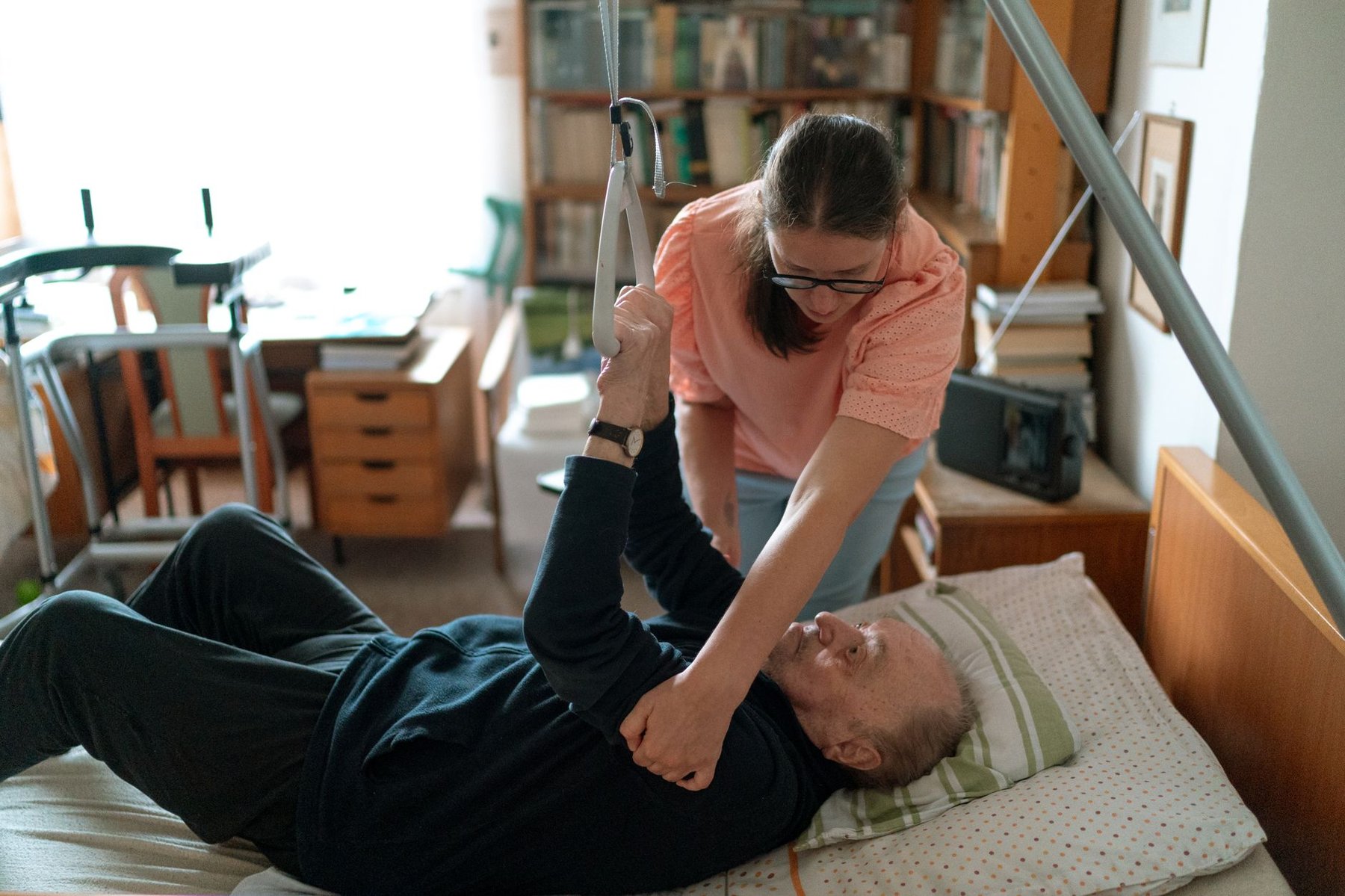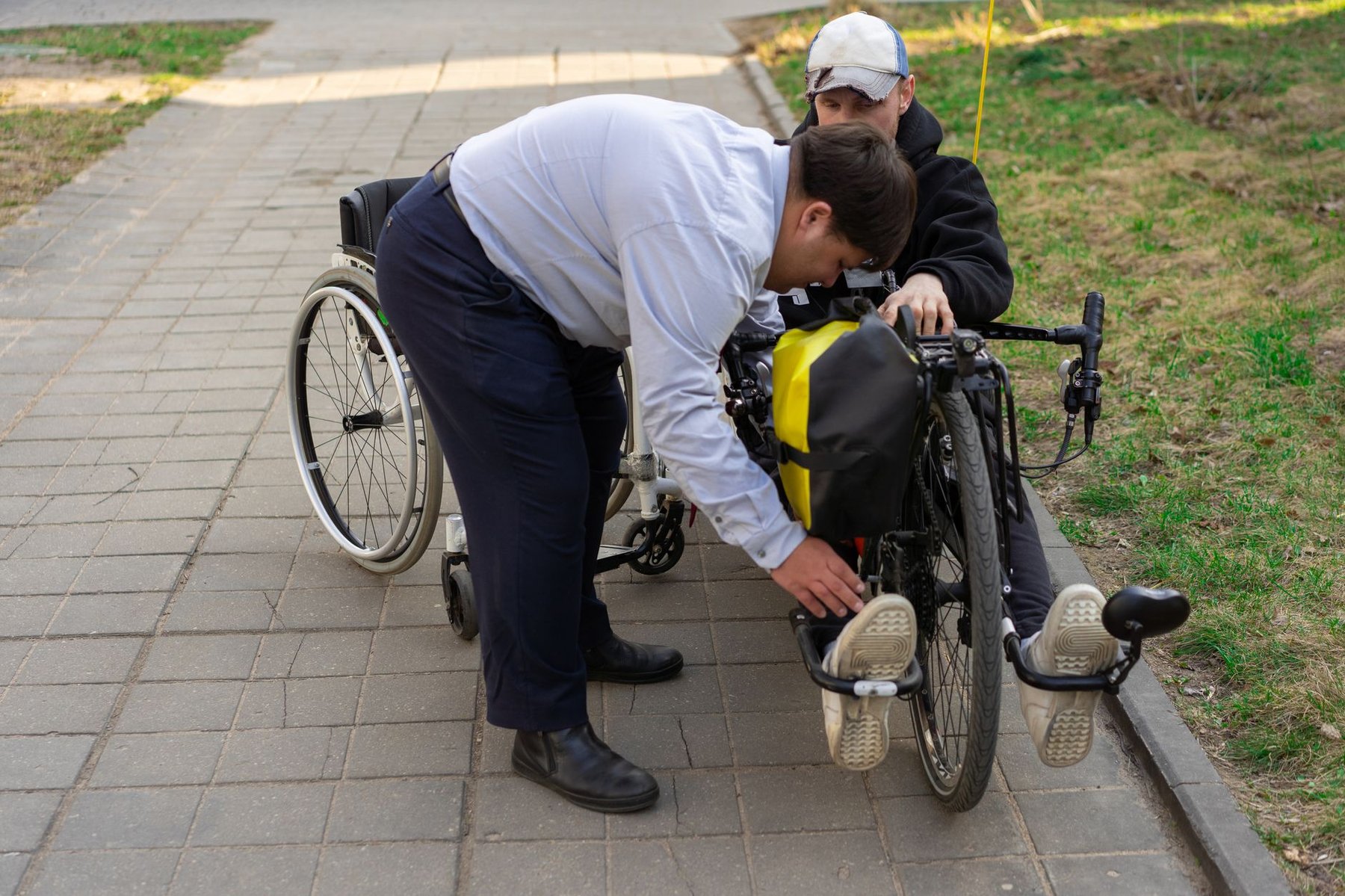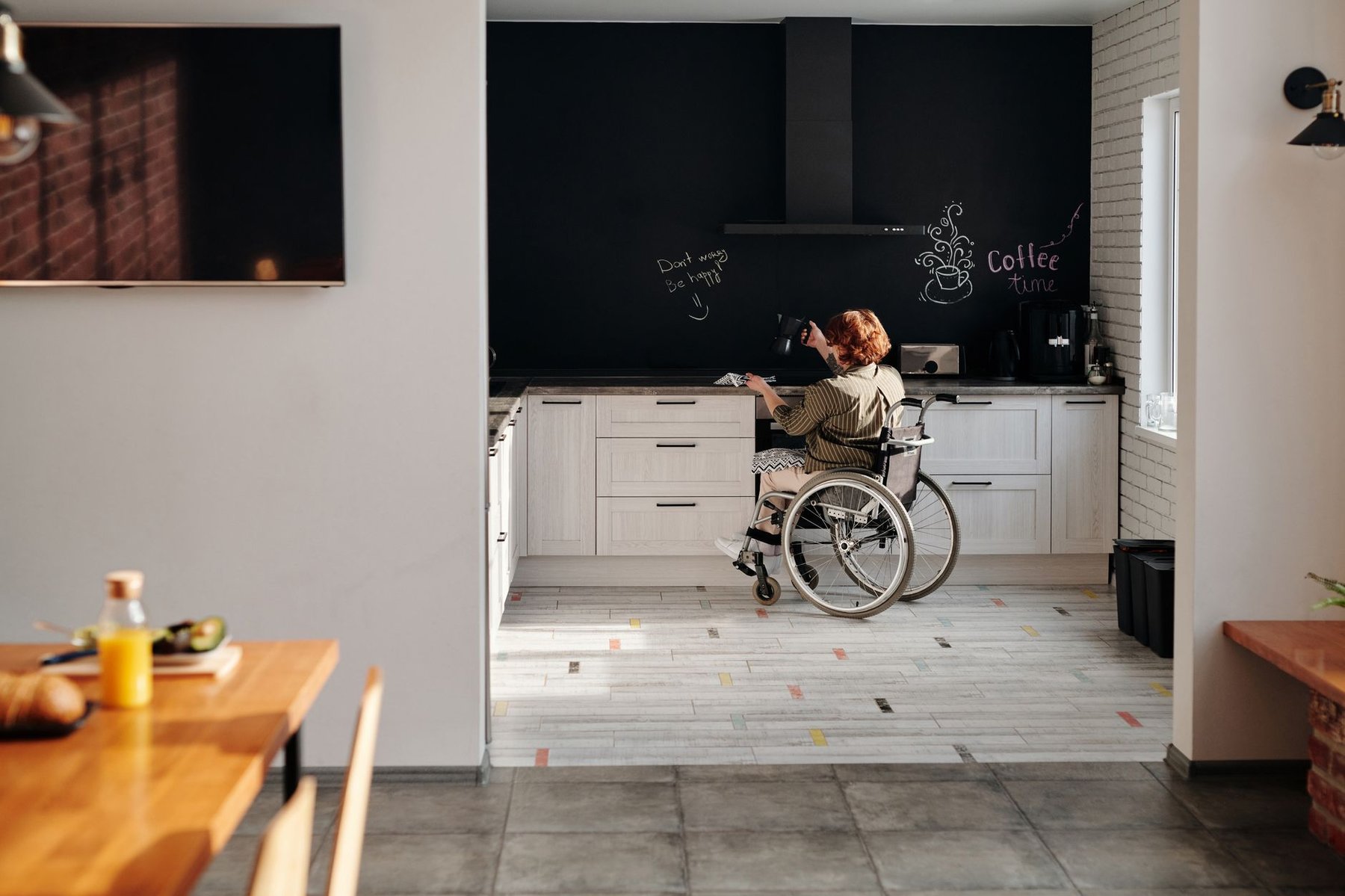
In Queensland, returning home after spinal cord injury usually follows a set path. It starts with acute hospital care, moves to rehabilitation at the Spinal Injuries Unit in Brisbane, and then continues as community rehabilitation with lifelong outreach support. The families who manage the move well start on funding, home modifications, equipment and support workers weeks before the discharge date rather than in the days after it.
The handover from hospital to home is where plans most often fail, so that’s where this guide focuses. We’ve written it for participants and for the parents, partners and guardians who sit at the kitchen table working this out.
From the Spinal Injuries Unit to your own front door
Queensland’s spinal cord injury care runs through the Queensland Spinal Cord Injuries Service (QSCIS). Its model moves a person from acute medical care, to inpatient rehabilitation in the Spinal Injuries Unit (SIU) at the Princess Alexandra Hospital, to rehabilitation in the community backed by statewide outreach (Queensland Health, 2025). Each stage has a different team. The handovers between those teams are where information gets lost, so families who keep their own copy of every plan, letter and equipment list tend to have an easier time.
The Transitional Rehabilitation Program (TRP) connects hospital and home. It provides team-based rehabilitation in the community so people can leave hospital sooner and keep working on their goals in their own surroundings (Queensland Health, 2025). Ask the SIU team early whether TRP is an option. Don’t wait until a discharge date has been set.
After TRP comes the Spinal Outreach Team, known as SPOT. It covers the whole state and works by phone, email, video call and home or community visits. Access is lifelong, and people can refer themselves (QSCIS, 2025). State guidance says every person with a spinal cord injury should receive an introduction letter to SPOT when they’re discharged. Check that letter is in the discharge folder before you leave the ward, and look up SPOT’s current contact details on the Queensland Health website rather than relying on an old brochure.
Sorting out funding before the discharge date
Most of the confusion we see comes from funding. Several different schemes can apply after a spinal cord injury, and they don’t overlap neatly. The SIU team helps families connect with and understand the NDIS, the National Injury Insurance Scheme Queensland (NIISQ) and My Aged Care. It also supports return to work through its Back2Work program (QSCIS, 2025). Use that help. The hospital social worker has walked many families through these decisions and knows which forms matter.
| Funding route | Who it is generally for | What it may cover | Where to start |
|---|---|---|---|
| NDIS | People under 65 with a permanent and significant disability | Reasonable and necessary supports such as personal care, Supported Independent Living, equipment, home modifications and capacity building | SIU social worker, the NDIA, a support coordinator |
| NIISQ | People seriously injured in a motor vehicle accident in Queensland | Lifetime treatment, care and support for eligible participants | SIU team and the NIISQ Agency |
| SCIR funding | People who completed their primary rehabilitation in the SIU | Essential modifications so the person can return to their own home, such as ramps and bathroom changes | SIU team |
| My Aged Care | Older Australians | Aged care services at home or in residential care | SIU team and My Aged Care |
Get this sorted early. The funding route shapes who pays for the hospital bed at home, the shower commode, the ramp at the front step and the support workers on the first night, and each scheme has its own assessment process and timeline. A person injured in a car accident, for example, goes through NIISQ, a separate scheme from the NDIS, and families often lose weeks by applying to the wrong one first.
NDIA planners see spinal cord injury regularly. There were 6,353 NDIS participants with spinal cord injury listed as their primary disability in mid-2025 (NDIA, 2025). That means the NDIA has established processes for it. It doesn’t mean any particular support will be approved. Funding decisions belong to the NDIA. If you’re unsure about eligibility, reviews or appeals, talk to your planner, support coordinator or an independent disability advocate before you decide anything.
Returning home after spinal cord injury to Cairns or Townsville
Families in Far North Queensland have a problem that Brisbane families mostly don’t. The specialist unit is a long way from home, often a two-day drive, and rehabilitation can mean months of the family living apart or one parent relocating to Brisbane. When discharge day comes, the person leaves the only team that knows them well and heads to a region where nobody has met them yet.
SPOT helps close that gap. Its published outreach areas include Cairns and Hinterland and Townsville, and because it works by video call and phone as well as in person, a family in Edmonton or Kirwan can stay connected to specialist advice without the trip south. Treat SPOT as your long-term clinical anchor. Local supports don’t replace it.
The local side needs its own plan, and it needs one before the person arrives home. Book a GP appointment for the first week and send the GP the discharge summary ahead of time. Confirm who supplies continence products and other consumables locally, and how long delivery takes to your postcode. Find out whether community nursing is part of the plan. Line up local allied health (occupational therapy, physiotherapy and any others the SIU recommends) so therapy continues without a gap. Ask the SIU team how Far North Queensland’s heat and humidity might affect the person’s health and routines, because a plan written in a Brisbane winter may not suit a Cairns wet season.
Support workers are the piece families most often leave too late. The first shift at home shouldn’t be the first time a support worker hears about the person’s routines. A local provider can join discharge planning meetings by video, review the SIU’s care plan, and run client-specific training for the team before the person comes home. At Advanced Disability Management, registered nurse oversight and client-specific training workshops are standard in how we set up high-intensity support, and that preparation matters most when the specialist team is hundreds of kilometres away.
What happens if the plan isn’t ready
Most discharge guides skip this part. Sometimes the person is medically ready to leave and the supports at home aren’t. In August 2025, 290 younger NDIS participants were stranded in Queensland hospitals (Queensland Government, 2025). For younger people, the hold-up is mostly the availability and coordination of disability supports, not a clinical issue.
Being honest about that risk is useful, because it shows what you can control. The NDIA’s hospital discharge process only starts when the NDIA knows the person is in hospital. Ask the hospital social worker to notify the NDIA as soon as it’s clear the person will need NDIS supports, and keep a written record of the date.
Sometimes the problem is the house itself. If the existing home can’t be made accessible in time, ask the SIU team and your support coordinator about interim accommodation while modifications are finished. If it can’t be modified at all, which is common with high-level injuries, Specialist Disability Accommodation (SDA) is an NDIS option to raise with your planner or support coordinator. The NDIA decides whether SDA is funded, so raise it early.
The NDIS Quality and Safeguards Commission has issued a Practice Alert on transitions of care between hospital and home. It stresses early, ongoing communication between the hospital, the participant and their support network (NDIS Quality and Safeguards Commission, 2025). In practice, that means providers should be talking to the ward well before discharge. If you’ve chosen a provider, invite them into the conversation now.
If things stall, escalate calmly and in writing. Contact the NDIA hospital liaison through the social worker, ask your support coordinator what interim supports might bridge the gap, and consider an independent advocate if decisions are delayed or disputed. Formal review and appeal processes exist, but they come with their own rules and timeframes. Get advice from an advocate or legal service before you go down that path.
The first year at home is the one that needs the most structure
Coming home is a milestone. It also starts the period when the risk of hospital readmission is highest. A Victorian population study found 35% of people were readmitted for a condition related to their spinal cord injury within two years, and 26% of those readmissions were for bladder or urinary problems (Spinal Cord, 2025).
The lesson for families is simple: daily care routines should follow the treating team’s instructions. The SIU team trains participants and carers in bladder, bowel and skin care, in safe transfers, and in recognising warning signs such as pressure injuries and autonomic dysreflexia (a dangerous spike in blood pressure). Those routines work when everyone on the roster follows them the same way. They break down when a new support worker improvises. Clinical questions go to the person’s doctor, SPOT or the treating team. They don’t go to a carer’s best guess, and they don’t go to an online forum.
Before you leave the ward, confirm you have the following:
- The SPOT introduction letter and a copy of the full discharge summary
- A written care plan covering daily routines, from the SIU team
- Equipment delivered, fitted and tested at home, not just ordered
- Home modifications complete, or a safe interim arrangement agreed with the occupational therapist
- A local supply of consumables and a reorder process
- A GP appointment booked for the first week
- Support workers who have been trained on this person’s specific routines
- Written emergency information and a clear list of who to call, and when
That list looks basic. It’s also where most early problems start.
The part nobody can plan on paper
The practical checklist is only half of coming home. The emotional side of the move matters just as much, for the person and for everyone around them.
We think families should take two things from that. First, the adjustment is real, and it belongs to the person. The house looks the same, but daily life in it has changed, and people need room to grieve, to be frustrated and to set their own goals without being managed. Second, hope and realism can sit together. Nobody needs to argue a person out of their hope for recovery in order to build a safe routine around who they are today.
Talking to people who have already made the move home helps too. Ask the SIU team about peer mentoring, or contact a spinal cord injury peer support organisation. Hearing how someone else handled the first months can make your own plans feel more achievable.
The discharge date isn’t the finish line. It’s the day rehabilitation moves into your kitchen, and the people in that kitchen need as much preparation as the equipment.
Families need care too. A parent or partner who becomes the full-time carer overnight often has no real break for months. Our founders know that position firsthand. They cared for their own child with Sanfilippo Syndrome and learned what it takes to hand complex care to someone else and actually rest. Planning for the carer’s wellbeing belongs in the discharge plan alongside the ramp and the hoist. It isn’t a luxury to sort out later.
Choosing the people who will support you at home
For adults with high-level injuries and significant daily support needs, the support team shapes daily life more than any piece of equipment. Choose them with the same care you would give choosing a specialist.
Ask any provider you’re considering these questions:
- Is there registered nurse oversight of high-intensity supports, and how often does the nurse review the care plan?
- How will staff be trained on this person’s routines before the first shift, and who signs off that they’re ready?
- How will you keep the same small team, and what happens when someone is on leave?
- How will you communicate with SPOT, the GP and allied health so everyone works from the same plan?
- How will the participant’s own preferences and goals shape the roster and daily routine?
Listen for specifics. A provider that answers with names, processes and examples is telling you something different from one that answers in brochure language.
At ADM, our care team is made up of experienced support workers from a range of backgrounds, including Vanuatu, Papua New Guinea and Fiji. We pair that experience with registered nurse oversight, client-specific training and close work with occupational therapists, physiotherapists, speech therapists, dietitians and psychologists. That’s how high-intensity support can feel personal and still be clinically sound.
If you’re planning a return home to Cairns, Townsville or Brisbane and want to talk it through, we’d be glad to hear from you. Call us on 0425 168 053, email [email protected], or use the contact page on our website. It’s simply a conversation about what the person needs, with no obligation attached.
Can I ask for a different discharge date if we are not ready at home?
You can raise concerns with the treating team and hospital social worker at any time. Discharge timing is a clinical and planning decision made with the participant and family, so explain clearly what is missing, such as equipment, modifications or trained support workers. The team can often suggest interim arrangements. Put your concerns in writing and ask your support coordinator or an advocate to help if you feel unheard.
Do support workers need special training for spinal cord injury care?
Support workers should be trained on the specific person they support, not just on spinal cord injury in general. Routines for personal care, transfers and skin care vary from person to person. Ask any provider how they deliver client-specific training, whether a registered nurse oversees high-intensity supports, and how they confirm each worker is competent before working alone with the participant.
Can a family member be paid to provide care under the NDIS?
NDIS rules generally do not allow funding to pay family members for informal care, though there are limited exceptional circumstances. The rules and their interpretation can change, so check directly with the NDIA, your planner or your support coordinator before making arrangements. Many families use funded supports so the family member can return to being a partner or parent rather than a full-time carer.
What if we live in a rental property and need modifications?
Renters usually need written landlord approval before any structural modification, and some changes may need to be reversed at the end of a lease. Talk to the occupational therapist early about options, including portable or non-permanent solutions. Your support coordinator, the SIU team or a tenancy advice service can help you understand the process and your rights before you approach the landlord.
Is Supported Independent Living an option straight after rehabilitation?
For some participants, moving into a shared or individual Supported Independent Living arrangement may be considered instead of returning to the family home. Whether it is funded depends on NDIA assessment of the person’s needs and circumstances. Discuss living options with the participant first, then with the SIU social worker and support coordinator, so the choice reflects what the person wants for their life.