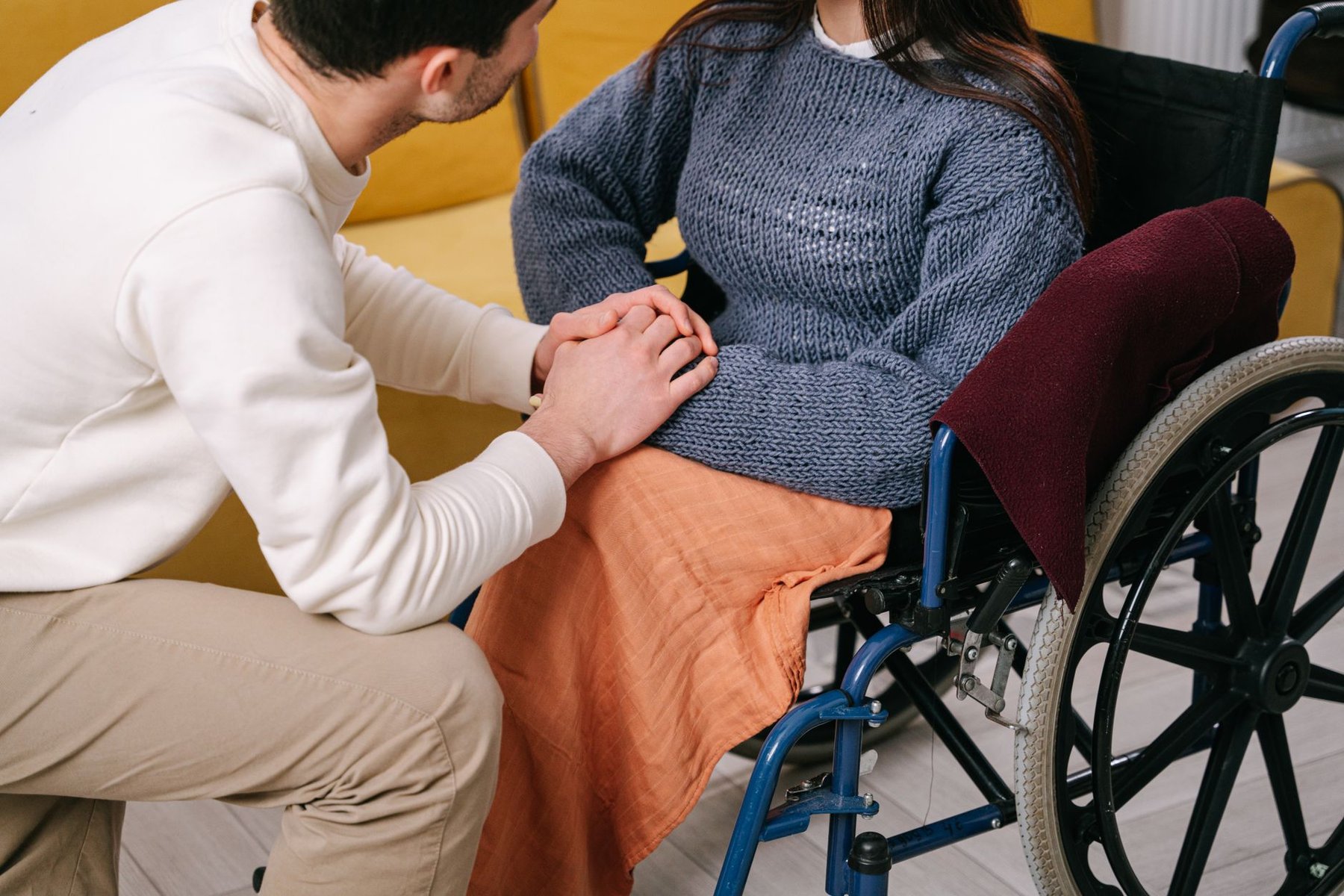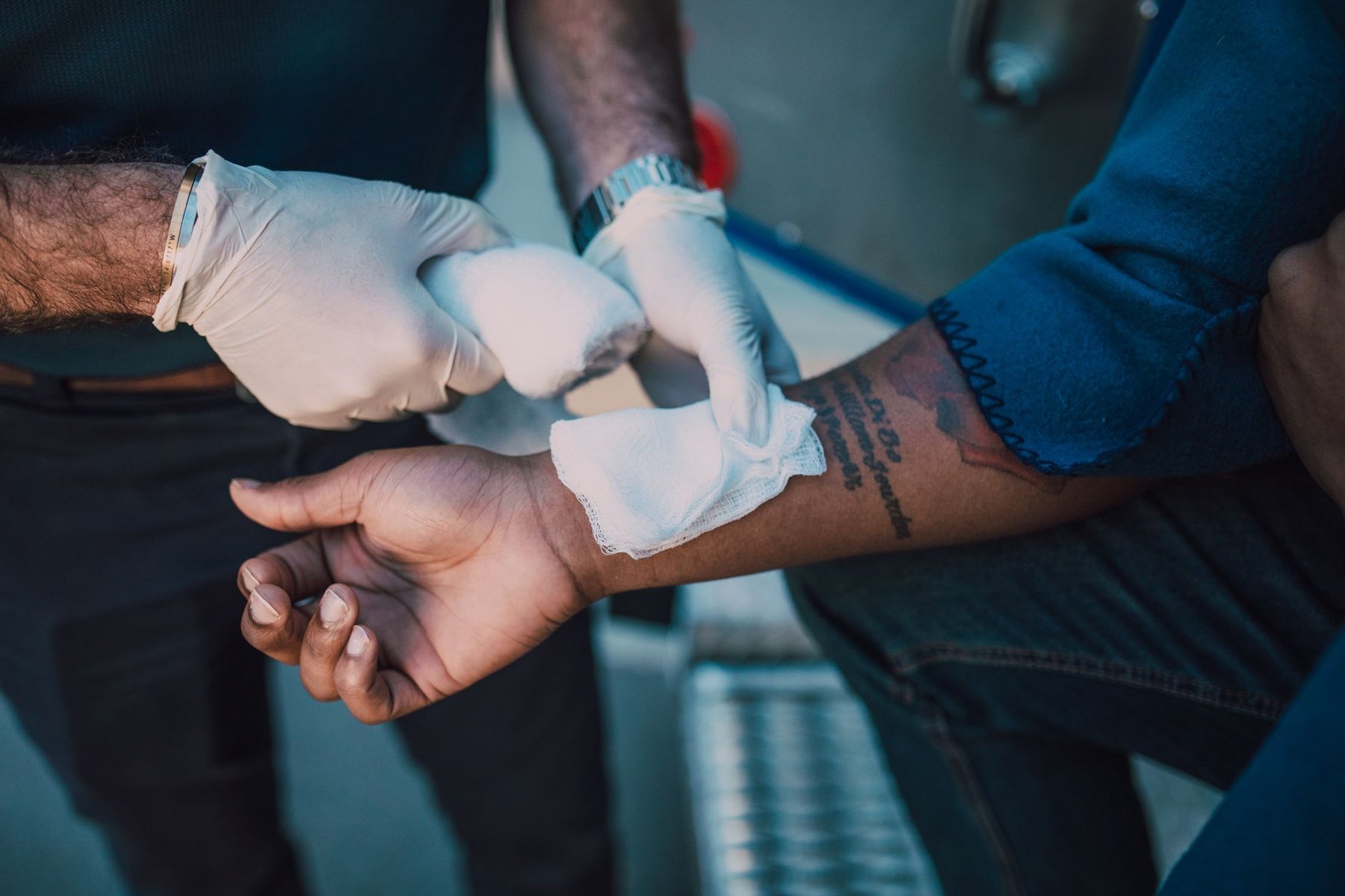
Complex wound care at home works when a registered nurse designs the plan, a trained support worker delivers day-to-day dressing changes, and the GP and allied health team stay informed of progress. That coordination is the core of how complex wound care is meant to be delivered at home. For Cairns and Far North Queensland families managing pressure injuries, diabetic foot ulcers, or surgical wounds that refuse to close, this is exactly where clinical oversight and home-based support need to work together.
Around 450,000 Australians are living with a chronic wound at any given time (Monash University, 2025), and the true number is almost certainly higher again, since national data on wound prevalence in community settings is acknowledged as patchy at best (Australian Government Department of Health, 2021). Most families never see themselves in that figure until they’re living it: a parent with a pressure injury from hours in a wheelchair, a partner with a diabetic foot ulcer that won’t close, an adult child recovering from surgery with a wound that needs daily attention. The clinical need is real. So is the cost of getting the coordination wrong.
Why Complex Wound Care at Home Needs a Clinical Team
A wound that isn’t healing is rarely a dressing problem. It’s usually a circulation problem, a pressure problem, a nutrition problem, or an infection risk that hasn’t been caught early enough. Chronic wounds cost the Australian healthcare system around $3 billion a year (Australian Government Department of Health, 2021), and a more recent estimate puts the combined burden on health and aged care above $6.6 billion annually (Wounds Australia, 2024). Hospital admissions for chronic wound complications alone ran to $352 million in 2019-20, with a further $115.7 million spent on related procedures (Australian Medical Association).
Those figures exist because wounds that could have been managed well at home end up escalating into emergency department visits, surgical debridement, or extended hospital stays. The gap is rarely the dressing technique. It’s the absence of a clinician carrying out a proper wound bed assessment: checking the wound bed itself, surrounding skin, nutrition, mobility, and the early signs that something is turning septic rather than settling. A support worker changing a dressing without that oversight is doing a task. A registered nurse designing the regimen, training the support worker on this participant’s specific wound, and reviewing progress at set intervals is running a clinical process. Only one of those involves the ongoing clinical review that a wound management plan is built around.
The Wounds That Need More Than a Dressing Change
Not every wound is complex, and not every complex wound looks the same. Pressure injuries dominate the picture in hospital and residential care settings, driven by prolonged sitting or lying without adequate repositioning. Diabetic foot ulcers develop where reduced circulation and nerve sensation mean an injury can go unnoticed until it’s serious. Venous leg ulcers stem from poor blood return in the legs and tend to be slow, recurring, and stubborn. Surgical and traumatic wounds carry their own risks around infection and tissue breakdown while the body is still recovering from the original injury or procedure.
Guidance aligned with Wounds Australia’s national standards identifies repositioning, alongside keeping skin clean and dry and making sure the person is well nourished, as a core element of pressure injury care (Wounds Australia, 2023). None of that happens by accident. It happens because someone, a support worker trained on this participant’s specific plan, is repositioning on schedule, checking skin integrity at each shift change, and flagging changes rather than waiting for the next nurse visit.
Generalist Support Worker or Registered Nurse: Who Does What
This is the distinction families most often get wrong when comparing providers, and it matters more than almost anything else in this space. Generalist disability support work covers routine daily tasks. High-intensity wound care is different: it involves specialised techniques, a higher level of clinical risk, and procedures such as vacuum-assisted closure or management of deep tissue injury that sit squarely with a registered nurse.
Under the NDIS Practice Standards Supplementary Module for High Intensity Daily Personal Activities, complex wound management requires an individualised wound management plan developed with an appropriately qualified health practitioner. Support workers cannot simply be handed a dressing pack and a diagram. They must be trained specifically on that participant’s wound regime, including how to recognise signs of infection or deterioration and when to escalate, before they’re permitted to assist (NDIS Quality and Safeguards Commission). Applying dressings and wound-healing devices generally sits outside a generalist support worker’s scope entirely and is reserved for someone with the clinical qualifications to do it safely.
A dressing change is not wound care. Wound care is the plan behind the dressing change, and if no clinician designed that plan, the dressing change is just guesswork with good intentions.
This is why the provider you choose matters as much as the frequency of visits. A support worker with genuine care but no wound-specific training, working without a nurse checking in, is not equipped to catch a wound turning the wrong direction. Registered nurse oversight isn’t a compliance box. It’s the mechanism that catches problems while they’re still small.
How an NDIS Plan Actually Pays for Wound Care
NDIS funding for wound care at home typically draws from three separate support categories, and understanding which is which helps families ask the right questions of their support coordinator or planner.
| Support Category | What It Typically Covers | Example |
|---|---|---|
| Core Supports | Low-cost consumables and daily living assistance directly tied to wound care | Dressings, bandages, support worker time for repositioning and hygiene |
| Capacity Building | Assessment, planning, and training | Wound assessments, carer education on dressing technique and infection prevention |
| Assistive Technology | Equipment that prevents or manages wounds | Pressure-relieving mattresses, positioning cushions, specialised seating |
None of this is guaranteed by simply asking. Funding decisions sit with the NDIA and the participant’s planner, based on evidence of need, usually a report from a treating health professional or occupational therapist. A support coordinator or plan manager is the right person to help structure a request; nobody should assume a category will fund a specific item without that assessment trail in place.
From Assessment to Review: What a Structured Wound Plan Looks Like
Good wound care at home follows a cycle, not a one-off visit. The Australian and New Zealand Clinical Practice Guidelines for wound assessment describe this using the HEIDIE framework: history, examination, investigations, diagnosis, implementation, and evaluation. In practice, that means a nurse takes a full history of the wound and the person’s broader health, examines the wound and surrounding tissue, arranges any investigations needed, forms a working diagnosis of wound type and healing stage, implements a specific treatment plan, and then evaluates progress at each subsequent visit.
That evaluation step is where most home-based wound care either succeeds or quietly fails. A wound that looks stable on a Tuesday can deteriorate by Friday, and the only way to catch that shift is regular, structured review, not an assumption that “no news is good news.” Community nurses coordinate with the person’s GP the moment complications arise rather than waiting for the next scheduled appointment, and that responsiveness is exactly what families should expect from any provider delivering this kind of support.
Support workers trained on a participant’s individual plan are taught to watch for a small set of warning signs between nurse visits:
- Increasing redness or swelling around the wound margin
- New or worsening pain, particularly if it wakes the person or intensifies suddenly
- A change in odour, or exudate that looks different in colour or volume
- Fever, chills, or the person seeming generally unwell
- A wound edge that looks like it’s spreading rather than closing
None of these signs are something a family carer needs to diagnose alone. They’re prompts to contact the treating nurse, GP, or, out of hours, the appropriate medical service, so a clinician can assess what’s actually happening.
Far North Queensland’s Own Wound Care Challenge
Wound care in the tropics is not the same problem as wound care in Sydney or Melbourne. Cairns and the broader Far North Queensland region carry humidity levels that make dressing adhesion harder to maintain and raise the baseline risk of skin maceration and infection, particularly across the wet season. A dressing that would last three days in a temperate climate may need checking daily here.
Distance compounds the problem. Specialist wound clinics are concentrated in major centres, and families in regional and remote parts of Far North Queensland can face a long round trip for a single wound review appointment. This is precisely the gap that telehealth wound monitoring is now being built to close. National projects combining video consultations with AI-assisted wound imaging are being trialled specifically to extend specialist-level wound assessment into aged care and remote settings without the travel burden (CSIRO, 2025), and a dedicated remote wound care toolkit backed by roughly $6.5 million in Medical Research Future Fund funding is expected to reach clinical platforms in 2026 (MobiHealthNews, 2025). Early research into telemedicine models for chronic wounds is examining how they compare with less frequent in-person review alone (JMIR mHealth, 2025).
For a Cairns family, that means the future of complex wound care at home is unlikely to be purely local nurse visits or purely video review. It’s likely to be both, with a registered nurse attending in person for the hands-on work and using photo or video review between visits to catch early changes without waiting weeks for the next scheduled appointment.
What Working With ADM Looks Like
We built our high-intensity personal care service, including wound management, PEG feeding support, and seizure monitoring, around registered nurse oversight because we’ve lived the alternative. Our founders navigated years of complex, high-needs care for their own child with Sanfilippo Syndrome, and that experience shaped a model where clinical rigour and genuine warmth aren’t traded off against each other.
Every support worker delivering wound-related care for a participant is trained specifically on that person’s wound regime, under nursing oversight, consistent with the NDIS Practice Standards for high-intensity supports. We coordinate directly with each participant’s GP, wound specialist, and allied health team, including occupational therapists assessing pressure-relieving equipment and dietitians supporting the nutrition that underpins healing. Many of our care staff bring years of hands-on family caregiving experience alongside their formal training, and that shows up in the steadiness families notice over time.
We operate across Cairns, Townsville, and Brisbane, with services reaching further into Far North Queensland where specialist wound care is otherwise hard to access. Families don’t need to choose between clinical competence and a support team who genuinely knows their loved one. Both should be the baseline.
If your family is navigating a wound that isn’t healing the way it should, or you’re comparing providers and want to understand what genuine clinical oversight looks like in practice, reach out to Advanced Disability Management on 0425 168 053 or [email protected]. We’re happy to talk through the participant’s specific needs, no pressure, just a conversation about what good care actually requires.
Can a family member legally change a wound dressing at home without a nurse present?
It depends on the wound and who has assessed it. Routine, low-risk dressings may be manageable by a trained family carer following guidance from the treating clinician. Complex or high-intensity wounds generally require a registered nurse or trained support worker operating under an individualised wound management plan. Always check with the participant’s GP, wound specialist, or support coordinator before taking this on yourself.
What should we do if a wound looks worse outside of business hours?
Contact the participant’s GP after-hours line, a local hospital emergency department, or the relevant state health advice line if you notice signs like spreading redness, fever, or sudden pain. Do not wait for the next scheduled nurse visit if something looks seriously wrong. Providers delivering high-intensity wound care should also have an escalation contact for exactly this situation, so ask your provider what that process looks like.
Do we need a new NDIS plan review to get funding for wound care supports?
Not necessarily. Many wound-related supports can sometimes be funded from within an existing plan, particularly under core supports or capacity building categories. Adding new equipment through assistive technology, or increasing funded hours, often requires updated evidence from a health professional. Speak with your support coordinator or plan manager about what evidence the NDIA typically expects before requesting a change.
How often will a registered nurse need to visit for complex wound care?
Visit frequency depends on the wound type, healing stage, and risk level, and is set out in the individualised wound management plan developed with a qualified health practitioner. Some wounds are reviewed weekly, others more often during active treatment phases. Support workers trained on the specific regime typically handle care between nurse visits, with photo or telehealth review increasingly used to monitor progress without extra travel.
Does NDIS funding cover pressure-relieving mattresses and cushions?
Pressure-relieving equipment is typically funded under the assistive technology category, but it usually requires an assessment, often from an occupational therapist, confirming the specific item is needed to prevent or manage a wound. This assessment forms part of the evidence the NDIA considers. A support coordinator or treating allied health professional can guide the family through what documentation is generally required.