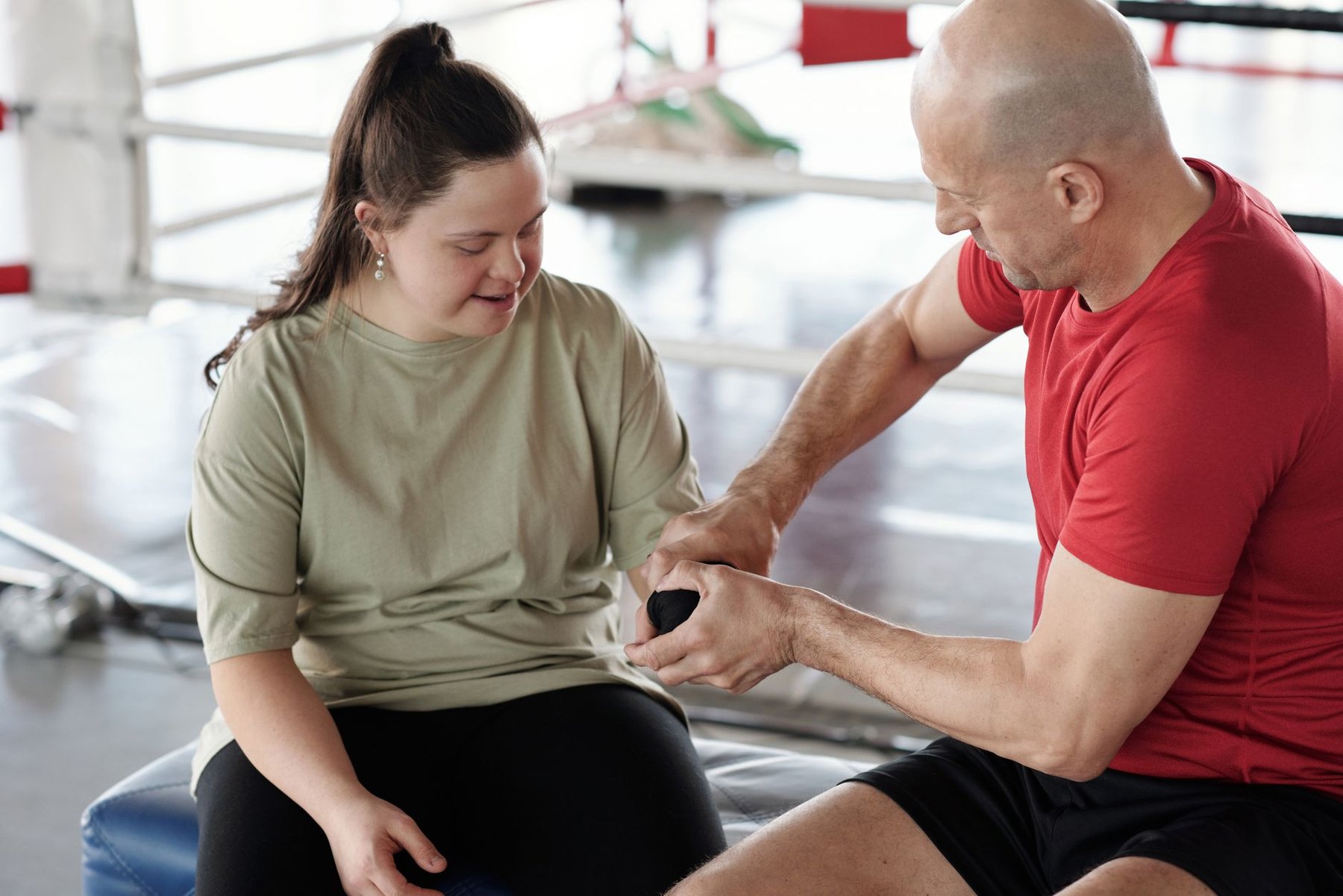
Good Huntington’s disease support at home rests on three things: a safe, predictable home, a care team that grows as the condition changes, and planning done early, while the person can still shape their own decisions. For NDIS participants in Queensland, that means combining specialist neurology input with trained in-home support workers and allied health, then reviewing the plan as needs increase.
Huntington’s disease (HD) is an inherited, progressive neurological condition that affects movement, thinking, mood and behaviour. Most of the well-known caregiving guides online are American. They point families to US organisations and say nothing about Medicare, the NDIS, or what it takes to get specialist care from Cairns or Townsville. This guide is written for Queensland families.
We founded Advanced Disability Management as parents caring for our own child with Sanfilippo Syndrome, which is also a degenerative condition. The conditions are different, but one lesson carries straight across: when a condition progresses, the plan has to anticipate the next change before it arrives. Everything below follows from that.
How care needs change across the stages of HD
Clinicians and families often describe HD in three broad stages: early, middle and late (Cleveland Clinic, 2022). The stages blur together, and no two people move through them at the same pace. The framework is still useful because it tells you what to set up now so you are not scrambling later.
| Stage | What families typically notice | What support at home often looks like |
|---|---|---|
| Early | Mood changes, clumsiness, difficulty with complex thinking and planning. Most everyday activities continue. | Light-touch support, physiotherapy and exercise for balance, building routines, meeting the care team, and starting advance care planning conversations |
| Middle | Work, driving and household tasks get harder. Swallowing changes, weight loss, falls and social isolation appear. | Regular in-home support, community participation, speech pathology and dietetics, OT assessment for home modifications, transport assistance |
| Late | Getting out of bed becomes difficult. Care is needed day and night. | 24-hour or 1:1 support, high-intensity personal care, registered nurse oversight, palliative care involvement |
The middle stage is where most families find home support breaking down. The person no longer manages alone, but they also don’t look like someone who needs full-time care. Funding, routines and relationships set up before this stage tend to hold. Families who leave it until then often end up making rushed decisions after a fall or a hospital admission.
Making the home work: safety, routine and fewer decisions
Chorea (the involuntary, dance-like movements common in HD) changes how a person moves through their own home. Doorframes, coffee tables and loose rugs that never mattered before become hazards. Cognitive changes also make it harder to switch between tasks or follow multi-step instructions. A safe home for someone with HD is physically clear and mentally simple.
These basics are worth doing early, before anyone needs them:
- Clear cords and clutter from walkways and use slip-resistant mats in the bathroom and kitchen.
- Rearrange furniture so there are wide, open paths, and pad sharp corners where the person often moves.
- Test smoke alarms and agree on how stove and kettle use will be managed as judgement changes.
- Lock away firearms, power tools and anything else that could cause serious harm in an impulsive moment.
- Keep a daily checklist covering medication, meals, bathing, dressing, exercise and social contact, so every carer works from the same page.
The checklist matters more than it looks. When several family members and support workers share care, it becomes the household’s memory. It also gives the neurologist and GP something concrete to review, which beats trying to remember at an appointment whether falls got more frequent in March or April.
Medication decisions belong with the person’s doctor. Our job, and the job of any support team, is to follow the prescribed plan accurately, record what was given, and report changes promptly.
Once the middle stage arrives, an occupational therapist should assess the home. OT recommendations are also the evidence the NDIS looks for when you request home modifications, assistive technology or, later, a change of living arrangement.
Mealtimes, swallowing and weight
Current online guides cover nutrition in a sentence or two. It deserves much more, because mealtime problems are among the most common reasons home support starts to struggle.
People with HD lose weight for several reasons at once. Chorea burns extra energy. Poor coordination makes eating slow and messy, and food gets spilt. Appetite can drop (HDA Northern Ireland, 2016). Energy needs in advanced HD can be striking, with some people needing up to about 5,000 kcal a day just to hold their weight (Huntington Society of Canada, n.d.). That figure is not a universal target. A dietitian should set the person’s actual needs and review them regularly, and support workers then follow that plan at every meal.
Swallowing difficulty (dysphagia) needs repeated checking, and a formal dysphagia and swallowing assessment by a speech pathologist should be repeated as the condition progresses. Speech pathologists look for coughing or choking during meals, a wet or gurgling voice after eating, meals that take much longer than they used to, food held in the cheeks, and repeated chest infections (Huntington’s Disease Association, n.d.). If your support team notices any of these, raise it with the GP or speech pathologist straight away. Don’t wait for the next scheduled review.
Families often take over feeding completely, out of love and worry. Where a speech pathologist and OT judge it safe, supported self-feeding is usually the better choice. It protects independence and dignity, and with the right utensils, seating and posture it can be as safe as being fed. An OT can assess what equipment would help.
Tube feeding is the conversation most families put off longest. Have it while the person can still take part. A gastrostomy (PEG) is a medical decision for the person, their doctor and their family, and the person’s own wishes should be recorded in an advance care plan well before swallowing becomes severe. If a PEG is placed, our trained staff deliver PEG feeding as a high-intensity support under registered nurse oversight, following the plan set by the treating team.
In a progressive condition, the care plan should always sit one stage ahead of the person, never one stage behind.
Behaviour, mood and keeping the relationship intact
HD changes the brain regions that manage emotion, impulse control and flexible thinking. Families commonly see irritability, apathy, rigid thinking, difficulty starting tasks and sudden frustration. Depression and anxiety are also common and need proper clinical attention from the person’s GP, psychiatrist or psychologist.
The most useful shift for carers is understanding that these behaviours come from the condition. An occupational therapist at Cleveland Clinic suggests using “we” language, such as “we need to wash your hands” or “we need to make dinner”, so that requests feel shared rather than directive (Cleveland Clinic, 2022). We train our staff in exactly this approach. A few more principles we rely on:
Predictable routines lower the number of decisions a person has to make in a day, and fewer decisions usually means less frustration. Offer two choices rather than an open question. Allow extra time for responses, because processing slows even when understanding is still there. Learn the person’s triggers, such as noise, rushing, unfamiliar people or hunger, and plan the day around them. When frustration rises, step back, lower your voice and remove the demand for a while. Arguing about facts rarely helps.
Communication changes too. Speech often slows and becomes slurred in the middle stage, and by the late stage some people can no longer speak, even though they still understand much of what is said. Carers can help by asking yes/no questions, waiting patiently for a reply and using picture or alphabet boards. A speech pathologist can also assess for augmentative and alternative communication (AAC) devices, which the NDIS can fund as assistive technology.
Where behaviours of concern put the person or others at risk, the NDIS can fund a positive behaviour support practitioner to write a behaviour support plan. Every worker in the home should know that plan and follow it consistently.
Consistency of staff is the part families feel most. Someone with HD may find a new face every shift unsettling, and the worker won’t yet know the small signals that show the person is tiring or overwhelmed. We keep teams small and stable around each participant and run client-specific training workshops so new team members learn the person, not just the condition. Our carers are trained to stay patient and calm when routines are hard.
Building Huntington’s disease support at home around the NDIS
Your NDIS plan should be built for the stage your family member is about to reach, as well as the one they are in now. The NDIA makes all funding decisions, so no provider can promise what a plan will include. You can, however, improve the quality of the evidence the planner sees.
Request a support coordinator early. HD involves a lot of moving parts: neurology, allied health, equipment, housing and, eventually, palliative care. Huntington’s Queensland merged into Huntington’s Australia in October 2023, and the national organisation offers NDIS support coordination with HD-specific knowledge, including for people in regional areas (Huntington’s Australia, 2025). A coordinator who understands HD can help you choose providers and organise assessments.
Gather functional evidence before you need it. OT functional assessments, speech pathology reports and therapist letters describing how needs have changed carry real weight. Ask each allied health professional to write in functional terms. “Requires two-person assistance for transfers” tells a planner far more than “mobility has declined”.
Ask for a plan reassessment when circumstances change. You don’t have to wait for the scheduled review. A significant decline, a hospital admission or a carer who can no longer continue are all reasons to contact the NDIA or your support coordinator.
Budget around instalments. New plans approved from 19 May 2025 generally release funding in smaller instalments, usually quarterly (Huntington’s Australia, 2025). Families moving to heavier support part-way through a plan should map their spending against those release dates with their plan manager or coordinator.
Understand what each funding type does. Supported Independent Living (SIL) funds the support workers who help with daily living, often around the clock. Specialist Disability Accommodation (SDA) funds the building itself, not the support. SDA is not automatic for HD. It requires evidence, usually from an OT, of extreme functional impairment or very high support needs. Some families need both, some need neither, and the right mix depends on the person.
Guardianship, enduring powers of attorney and advance health directives are legal processes. Get advice from the Office of the Public Guardian, a lawyer or a disability advocate while the person can still make and record their own choices. If you need to challenge an NDIS decision, an independent advocate can explain the internal review and tribunal pathways.
Getting specialist care from Cairns and Townsville
This is the gap no other guide covers. Queensland’s specialist HD service sits within Royal Brisbane and Women’s Hospital Neurology, and it brings together neurology, psychiatry, neuropsychology, speech pathology and a Huntington’s Australia welfare worker. You need a GP or specialist referral to access it (Metro North Health, n.d.). We are not aware of a dedicated HD clinic in Cairns or Townsville.
For Far North Queensland families, that means a mix of local GP and neurologist care, telehealth with Brisbane specialists, visiting specialist clinics, and local allied health. It can work well, but someone has to hold it together. We recommend three habits:
Keep a shared symptom log that every support worker adds to. Short notes on falls, choking episodes, sleep, mood and weight give a Brisbane specialist on a video call a clear picture they couldn’t otherwise get. With the person’s consent, short videos of movement changes or mealtimes can tell a clinician more than a description.
Group appointments together. When travel to Brisbane is unavoidable, ask whether the neurology, speech pathology and psychiatry reviews can happen in the same trip. Transport assistance and a familiar support worker travelling with the person can make the trip far less draining.
Connect with peer support. Huntington’s Australia runs support groups, including online groups that suit regional families, and MS Queensland also connects people with HD to specialist services. Talking with other HD families is one of the few things that reliably reduces isolation in a rare condition.
A note on research: an experimental gene therapy for HD was submitted for accelerated approval in the United States in 2026 (uniQure, 2026). It is not approved anywhere, it is not available in Australia, and it doesn’t change what support at home looks like today. Still, it is a real sign of progress, and the specialist team in Brisbane is the right place to ask about trials.
When the family carer needs to step back
Many family carers of people with HD have been caring for years, sometimes after already caring for a parent with the same condition. Exhaustion in that situation is not a personal failing. It is what happens when one or two people try to provide care that, by the late stage, takes a whole team.
Bringing in paid support doesn’t mean stepping away from the relationship. Families often find the opposite: once personal care, overnight monitoring and mealtimes are shared with a trained team, they get back time to be a spouse, a son or a parent again. Short-term accommodation and in-home respite can help families test that arrangement before making bigger decisions.
Some families eventually weigh home against residential care. For adults under 65 with high support needs, SIL in a supported home is often a better fit than an aged care facility, because it allows 1:1 support, familiar staff and a pace of day built around one person. In late-stage HD, ADM provides 24-hour and 1:1 care, including PEG feeding, seizure monitoring and wound management, delivered by trained staff under registered nurse oversight and in collaboration with the person’s OT, physio, speech pathologist, dietitian and psychologist. Bring palliative care in early. It focuses on comfort and quality of life, and it can sit alongside home support for a long time, not only at the very end.
The right decision is the one that fits the person’s recorded wishes and that the family can sustain. Neither home nor a supported setting is automatically the more loving choice.
If you’re working out what support could look like for your family member, we’re happy to talk it through, whether you’re planning early or managing a change that has already happened. Call us on 0425 168 053, email [email protected], or get in touch through the contact page on our website.
Can someone with Huntington’s disease apply for the NDIS if they have no symptoms yet?
Carrying the gene alone does not usually meet NDIS access requirements, because eligibility depends on how a permanent disability affects daily functioning. Once symptoms begin to affect everyday life, a person under 65 can apply. The NDIA makes every access decision, so it helps to talk with a GP, neurologist or local area coordinator about when to apply and what evidence to gather.
Where can family members get advice about genetic testing for Huntington’s disease?
Predictive testing for HD is offered through public genetic health services with pre-test and post-test counselling, because the result has major personal and family implications. A GP can make a referral. Huntington’s Australia can also explain the process and connect families with support. Decisions about testing are personal and should be made with qualified genetic counsellors, not care providers.
What if my family member does not want support workers in the house?
This is common, and the person’s right to make their own choices comes first. Starting small often helps, for example one familiar worker for a few hours a week doing an activity the person enjoys. Keeping the same worker builds trust. If refusal creates serious safety concerns, raise them with the treating team, support coordinator or an independent advocate.
Can support workers travel with a participant to appointments in Brisbane?
In many cases, yes, if the participant’s NDIS plan includes funding for supports that cover travel and accompaniment. Whether a particular trip can be funded depends on the plan and how the funding is allocated, so check with your plan manager or support coordinator before booking. Having a familiar worker along can make long trips much easier.
Can Supported Independent Living be provided in a person’s own home?
SIL is often delivered in shared homes, but it can also be provided in individual living arrangements where the NDIA agrees it is the right fit for the person’s needs. The setting, the number of people sharing support and the level of funding are all decided through the NDIS planning process, usually with evidence from a support coordinator and allied health professionals.